Rabies vaccines require a cold chain plan that follows the product label, local health authority rules, and the shipper’s validated SOP. The packaging should protect the approved temperature range, vial condition, label readability, and receiving release decision.
Rabies vaccines are often time-sensitive, so the packout should make receiving checks fast and unambiguous.
If a product includes diluent, the packout and documentation should keep vaccine, diluent, and instructions together.
Freeze protection is critical whenever conditioned gel packs sit close to vials in a small shipper.
Cold chain planning data
| Temperature window | Commonly 2-8 C; always follow the manufacturer package insert for vaccine and diluent handling. |
|---|---|
| Humidity or moisture | Control condensation so vial labels, diluent cartons, and instructions remain legible. |
| Pre-cooling | Pre-condition shipper and coolant to a stable 2-8 C profile before loading vaccines and diluent. |
| Packaging pressure | Use vial support and inner cartons so vials do not contact hard gel packs or move during transit. |
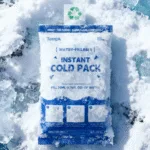
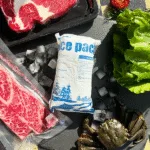
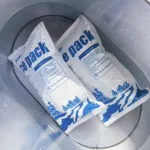
| Coolant placement | Use conditioned gel packs or phase-change packs separated from vials by corrugate, foam, or a validated insert. |
| Transit duration | 24-48 h is common for replenishment routes; emergency lanes need validated fast handoff and receiving checks. |
| Common losses | Freeze exposure, warm excursion, label wetting, broken vials, missing diluent, and delayed quarantine decisions. |
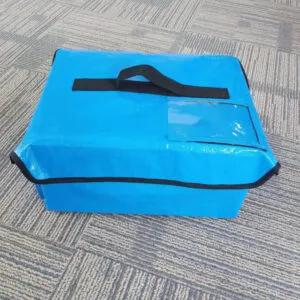
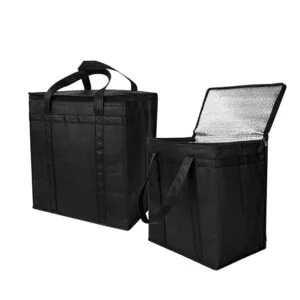
| Suitable Tempk packout | Tempk 2-8 C insulated shipper with conditioned coolant, vial tray support, continuous logger, and receiving checklist. |
Recommended packout approach
Start with product that is already within the approved storage range. Condition the shipper and coolant before loading, use a barrier between coolant and product cartons, and place the temperature logger in a representative product zone rather than directly against coolant.
Helpful decision tools
Check the details before you choose packaging
These quick tools can help you compare route risk, sizing needs, coolant choices, and packaging details before you request a quote.
Coolant & PCM Reference
Compare coolant and PCM options when a route needs added temperature support.
Compare optionsInsulation Material Drop Resistance
Review drop resistance and handling factors before choosing insulation materials.
Check resistanceIce Pack Calculator
Estimate gel ice pack quantity for chilled shipments and practical route planning.
Estimate ice packsFor refrigerated vaccines, the main packaging risk is often freeze exposure from poorly conditioned gel packs. For frozen or ultra-low temperature programs, dry ice mass, ventilation, carrier rules, replenishment timing, and logger placement require a separate validation plan.
Quality checks before release
Before commercial use, test the actual carton size, product load, coolant mass, route length, ambient season, and receiving window. At arrival, check temperature data, carton dryness, label condition, vial movement, coolant condition, and any product-specific excursion instructions.
Tempk can support 2-8 C, frozen, or dry ice-compatible packout planning, but final release decisions should always follow the vaccine manufacturer’s instructions and the customer’s quality system.
Reference basis
Temperature guidance is based on CDC vaccine storage and handling resources and WHO vaccine cold chain practice. Always confirm the current package insert before shipment.