COVID-19 vaccines require a cold chain plan that follows the product label, local health authority rules, and the shipper’s validated SOP. The packaging should protect the approved temperature range, vial condition, label readability, and receiving release decision.
COVID-19 vaccine programs should not use a generic vaccine box without checking the current product label and local health authority instructions.
Some routes may need refrigerated handling, while others may involve frozen or dry ice logistics. These are separate packout validations.
The receiving team should know how to read the logger, inspect shipper condition, and quarantine product if the approved range is not confirmed.
Cold chain planning data
| Temperature window | Product-specific: refrigerated, frozen, or ultra-low temperature requirements depend on manufacturer labeling. |
|---|---|
| Humidity or moisture | Keep cartons dry and protect vial trays, labels, and secondary packaging from condensation. |
| Pre-cooling | Condition the shipper, coolant, data logger, and staging area to the product's approved range before loading. |
| Packaging pressure | Protect vial trays and cartons from hard coolant, dry ice blocks, and vibration during parcel or validated courier transport. |
| Coolant placement | Use gel packs, phase-change material, frozen packs, or dry ice only when the product label, SOP, and carrier rules allow it. |
| Transit duration | Validate each route by product, shipper size, coolant mass, replenishment plan, and delivery window. |
| Common losses | Temperature excursion, dry ice depletion, condensation, label damage, vial tray movement, and quarantine at receiving. |
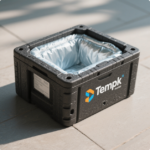
| Suitable Tempk packout | Tempk validated insulated shipper, product-specific coolant map, continuous temperature logger, and receiving excursion workflow. |
Recommended packout approach
Start with product that is already within the approved storage range. Condition the shipper and coolant before loading, use a barrier between coolant and product cartons, and place the temperature logger in a representative product zone rather than directly against coolant.
Helpful decision tools
Check the details before you choose packaging
These quick tools can help you compare route risk, sizing needs, coolant choices, and packaging details before you request a quote.
Insulation Material Reference
Compare insulation material choices for different cold chain packaging needs.
Compare materialsInsulation Material Drop Resistance
Review drop resistance and handling factors before choosing insulation materials.
Check resistanceRoute Risk Checker
Review lane conditions before selecting packaging for real operating requirements.
Check route riskFor refrigerated vaccines, the main packaging risk is often freeze exposure from poorly conditioned gel packs. For frozen or ultra-low temperature programs, dry ice mass, ventilation, carrier rules, replenishment timing, and logger placement require a separate validation plan.
Quality checks before release
Before commercial use, test the actual carton size, product load, coolant mass, route length, ambient season, and receiving window. At arrival, check temperature data, carton dryness, label condition, vial movement, coolant condition, and any product-specific excursion instructions.
Tempk can support 2-8 C, frozen, or dry ice-compatible packout planning, but final release decisions should always follow the vaccine manufacturer’s instructions and the customer’s quality system.
Reference basis
Temperature guidance is based on CDC vaccine storage and handling resources and WHO vaccine cold chain practice. Always confirm the current package insert before shipment.