


Temperature intentPlan around 0-4 C or the product label requirement, with pre-chilled fillings and fast shipper loading.
Sandwiches & Wraps Cold Chain Packaging Solution
Sandwiches and wraps need chilled control for fillings, but customers judge the shipment by bread texture, wrap shape, label condition, and how cleanly the item presents after delivery. The packout should cool the filling without soaking paper, crushing bread, or freezing edges.
What the package needs to control
Coolant ruleUse gel packs or PCM on the sides or top with a moisture barrier. Do not press frozen packs directly into bread or paper wraps.
Packaging focusBread texture, shape retention, paper dryness, and filling temperature need to be checked together.
Choose the packout by route condition
| Route condition | Packaging setup | Preliminary coolant range | Placement and receiving check |
|---|---|---|---|
| Local chilled handoff, 4-8 h | Insulated carton or bag-in-box format, stack divider, side gel packs, paper protected from moisture. | 0.4-0.9 kg gel packs or PCM for a 1-3 kg payload. | Check filling temperature, bread surface, wrap shape, and label dryness. |
| Same-day route, 8-18 h | EPP or insulated carton, inner tray, moisture barrier, side/top coolant with spacer. | 0.9-1.8 kg gel packs or PCM for a 1.5-4 kg payload. | Use dividers so coolant cannot slide into bread during handling. |
| Warm route or delivery delay, 18-24 h | Thicker insulation, stronger inner tray, balanced coolant around but not on top of sandwiches. | 1.8-2.8 kg gel packs or PCM, validated with actual stack height. | If bread gets soggy, improve moisture barrier and airflow before increasing coolant. |
Use these ranges as a starting point for packaging review. Confirm the final coolant mass with the product label, pre-chill state, shipper size, route duration, ambient profile, and a temperature logger test.
How Tempk would build the shipment
Pre-chill without drying the product
Cold fillings help the route, but exposed bread can dry out or absorb moisture. Keep the production package closed before loading.
Separate paper from condensation
Use a moisture barrier or inner sleeve so thawing gel packs do not wet labels, paper wraps, or bread surfaces.
Control stack pressure
Use a tray, divider, or carton insert to prevent heavy coolant and upper layers from deforming wraps.
Inspect presentation at receiving
Record filling temperature, bread texture, wrap shape, label condition, condensation, and remaining coolant.
Common failure points to prevent
For prepared foods, a cold arrival is only part of the decision. The shipment also needs to look clean, stay dry, protect texture, and pass the receiver’s quality check.
- Soggy bread or wet wrap paper from condensation.
- Flattened sandwiches after coolant or upper boxes press down.
- Warm fillings when the packout protects presentation but lacks cooling time.
- Frozen bread edges from direct gel pack contact.
Validation curve and receiving evidence
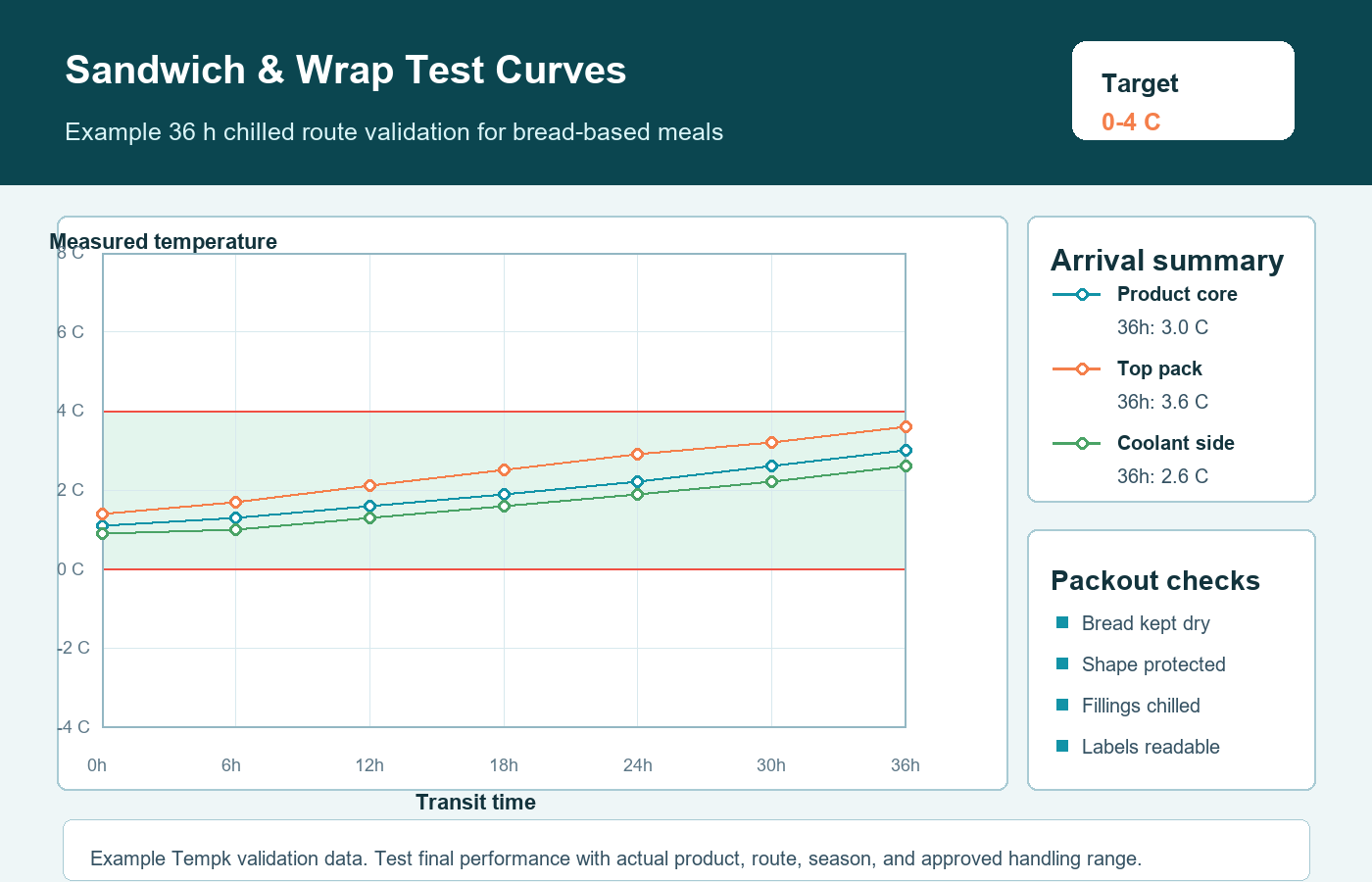
Review the curve with the actual product, coolant mass, shipper size, lane duration, and season. Add arrival photos and receiving notes so the packout is judged by temperature and product condition together.
Related pages for packout planning
Practical route notes
Protect bread texture and chilled fillings together
Sandwiches and wraps need chilled temperature, but bread and tortillas can become wet if condensation is poorly controlled. The packout should keep fillings safe without sacrificing texture.
Where this product usually fails
Typical complaints are soggy bread, crushed wraps, label wetting, dressing leakage, and warm centers in stacked packs.
Packaging setup to test first
Use rigid trays or sleeves, keep heavy coolant off the sandwich stack, and add a condensation buffer where packs sit close to paperboard.
Coolant choice
Use chilled gel packs around the stack, not directly under paper-based packs. PCM is useful when the route includes warm delivery vans or delayed office receiving.
Route validation check
Check center temperature, bread texture, label dryness, and pack crush. Taste and texture checks matter for this product type.
Packout detail
Sandwich and wrap routes must protect bread texture
Use case
Sandwiches and wraps need chilled handling, but too much condensation can make bread, tortillas, and paper sleeves unacceptable. The coolant plan should hold the filling temperature while keeping paper-based packaging dry.
Packaging choice
Use side-positioned chilled gel packs or PCM with a moisture buffer. Do not stack heavy coolant directly on soft wraps, and keep sauces or dressing cups upright inside the inner pack.
What Tempk should validate
Tempk should validate center temperature, bread texture, sleeve dryness, label condition, and crush resistance. For office or catering delivery, include a post-delivery waiting period in the test.
Custom packout support
Need this lane built around your product and route?
For fixed carton sizes, payload limits, branding requirements, seasonal lanes, or validation targets, Tempk can adapt this solution into a custom cold-chain packout.
Need this prepared food route checked before shipment?
Send the product format, target temperature, payload size, package dimensions, route duration, ambient condition, and receiving standard. Tempk can help compare insulation, gel pack or PCM layout, liners, dividers, and validation steps.
Request a packout review