


Temperature intentFollow the product label. Many fertility injection lanes are planned around 2-8 C when refrigeration is required.
Fertility Injections Cold Chain Packaging Solution
Fertility injection shipments can be time-sensitive and small in volume. The packaging needs product-label-first refrigeration, no freeze exposure, stable vial or syringe support, and clear handoff evidence for clinic or patient delivery.
What the package needs to control
Coolant ruleUse conditioned coolant or PCM with a buffer layer. Small vials and syringes should not touch frozen gel packs.
Packaging focusVial or syringe support, upright handling where required, handoff timing, and logger evidence drive the packout.
Choose the packout by route condition
| Route condition | Packaging setup | Preliminary coolant range | Placement and receiving check |
|---|---|---|---|
| Clinic courier, 2-8 h | Small insulated carton, vial or syringe insert, side coolant with buffer layer. | 0.3-0.7 kg conditioned gel packs or PCM for a small clinical payload. | Record handoff time and inspect vial or syringe support. |
| Patient delivery, 8-24 h | EPP or insulated carton, inner support tray, dry sleeve, conditioned coolant around but not touching product. | 0.7-1.8 kg conditioned gel packs or PCM for a 0.5-2 L payload. | Check logger record, sub-zero risk, carton condition, and delivery time. |
| High-risk ambient or weekend lane, 24-36 h | Thicker insulation, balanced coolant, larger buffer area, extra handoff controls. | 1.8-3.0 kg conditioned gel packs or PCM, route-qualified before use. | If delivery timing is uncertain, validate dwell or use a more controlled service level. |
Use these ranges as a starting point for packaging review. Confirm the final coolant mass with the approved label, payload count, shipper size, route duration, ambient profile, logger placement, and internal quality procedure.
How Tempk would build the shipment
Confirm the labeled handling requirement
Use the product label and pharmacy or clinic procedure before selecting coolant or shipper size.
Support small primary packs
Vials and syringes can shift in a large cavity. Use a tray, sleeve, or divider to keep them stable.
Avoid freeze shock
Keep conditioned coolant separated from the product with foam, corrugated, or molded inserts.
Control the handoff window
Because treatment timing can matter, validate the full route including pickup dwell, courier handoff, and final receiving time.
Common failure points to prevent
For medicine parcels, a cold-feeling package is not enough. The receiver needs a documented shipment that stayed inside the required range and protected the product package.
- Vial or syringe movement during parcel handling.
- Sub-zero exposure near frozen coolant.
- Warm exposure after delivery delay or missed handoff.
- Wet labels or unclear temperature evidence at receiving.
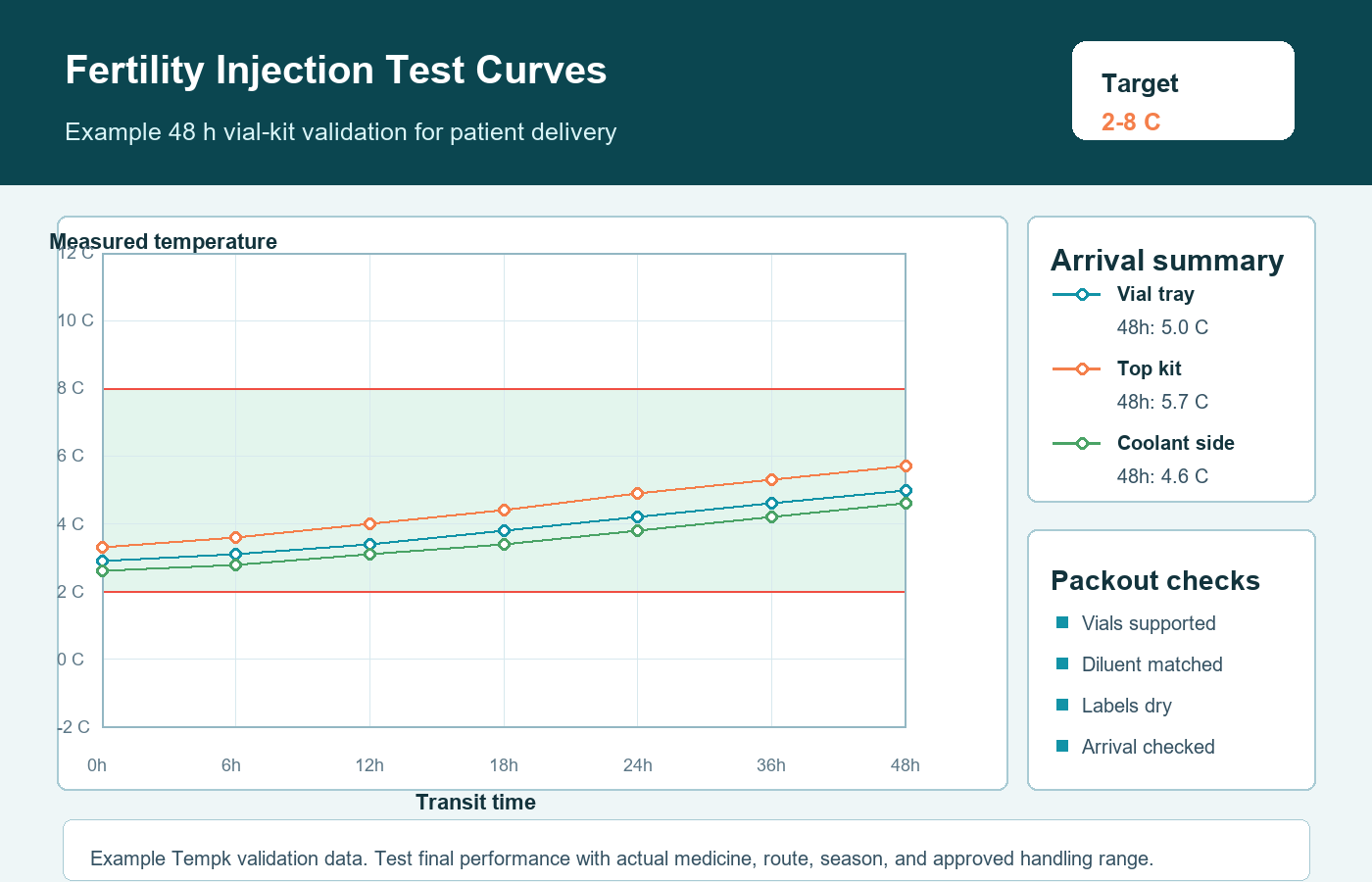
Validation curve and receiving evidence
Review the curve with the actual payload, coolant mass, shipper size, lane duration, and season. Add receiving notes for carton condition, label clarity, product movement, and any direct coolant contact.
Related pages for packout planning
Practical route notes
Pack fertility injections around appointment timing
Fertility injections are often tied to treatment schedules. The cold-chain plan must protect the medicine and reduce anxiety for patients receiving time-sensitive therapy.
Where this product usually fails
The practical risks are late delivery, freeze contact, missing receiving instructions, wet cartons, and small vials moving inside the payload area.
Packaging setup to test first
Use a rigid payload cavity with vial or syringe protection, a separate document pocket, and enough cushioning to stop movement during courier handling.
Coolant choice
Use 2 to 8 C PCM or conditioned gel packs based on the required duration. Do not use dry ice unless the specific therapy is labeled and validated for frozen service.
Route validation check
Test with the actual kit contents and appointment window. Check logger data, vial condition, patient instructions, and ease of opening without disturbing the payload.
Packout detail
Fertility injection shipments should reduce timing anxiety
Use case
Fertility injections are tied to treatment timing, so the shipper needs reliable temperature control and a simple receiving experience. The payload should keep vials or syringes protected and make the required action clear to the patient.
Packaging choice
Use 2 to 8 C PCM or conditioned gel packs with a rigid payload cavity. Keep medicine, documents, and any accessories organized so the recipient does not need to search through coolant to find the therapy.
What Tempk should validate
Tempk should validate route time, appointment window, payload count, and delivery delay. The check should cover logger data, vial condition, moisture, instructions, and ease of transferring the medicine into refrigeration. For time-critical therapy, include a missed-delivery scenario so the packaging decision reflects real patient risk.
Custom packout support
Need this lane built around your product and route?
For fixed carton sizes, payload limits, branding requirements, seasonal lanes, or validation targets, Tempk can adapt this solution into a custom cold-chain packout.
Need this medicine route checked before shipment?
Send the product label temperature, payload size, carton dimensions, service level, ambient condition, delivery handoff, and logger requirement. Tempk can help compare insulation, conditioned gel packs, PCM, buffer layers, inserts, and validation steps.
Request a packout review