How to Source a Manufacturer Dry Ice Pack for Flowers Transport
The most useful manufacturer dry ice pack for flowers transport is rarely a standalone pack. It is one controlled component in a flower-transport recipe: species and maturity, precooling, humidity strategy, carton and vents, coolant identity, barriers, payload arrangement, route timing, monitoring, and receiving. Ordinary dry ice may be unnecessary or harmful. A hydrated sheet, gel, or PCM may fit, but only inside a tested arrangement. The sourcing goal is not to prove that one pack “keeps flowers fresh.” It is to create a repeatable route that protects a defined flower load from heat, chilling, freezing, water loss, condensation, ethylene, and physical damage.
Write a flower passport before a packaging specification
A product passport condenses the biological requirements that packaging must serve. It should be brief enough for procurement and operations to use, but precise enough to prevent a universal temperature assumption.
Record:
Species, cultivar where material, source, and harvest maturity
Stem, bunch, sleeve, and flower-head geometry
Dry, hydrated, or water-based shipment format
Verified precooling and transport condition
Chilling and freezing sensitivity
Water-loss and free-moisture concerns
Ethylene sensitivity and incompatible products
Orientation, curvature, and friction risks
Observable acceptance defects at receipt and after conditioning
USDA storage guidance reports that many conventional cut flowers are commonly handled around 0°C to 1°C with high relative humidity. Roses are a well-documented example in UC Davis guidance. That same USDA source identifies anthurium, bird of paradise, ginger, some orchids, and many tropical foliage plants as chilling sensitive below about 10°C. UC Davis recommends a substantially warmer condition for anthurium and warns against precooling it with ordinary flower loads.
These are not two ends of one “flower range.” They are different biological recipes. A mixed bouquet containing a tropical stem cannot automatically follow the rose setting. The product owner should decide whether all components share a compatible window, whether the route must be shortened, or whether the items need separate packaging.
The passport should also identify when quality will be judged. Chilling injury and disease may become visible only after flowers warm or sit at retail. A dock inspection alone can miss the defect that matters commercially.
Build a lane clock rather than using scheduled transit time
Carrier transit is only part of flower exposure. Build a lane clock from the moment flowers leave their postharvest condition until the responsible recipient restores it.
Include:
Time between harvest and precooling
Grading, bunching, sleeving, and treatment
Cooling after packing
Pack station staging
Vehicle or forwarder pickup wait
Airport or depot handling
Security, phytosanitary, and customs inspection
Transfer hubs and missed connections
Importer staging and wholesale handling
Final-mile vehicle and doorstep exposure
Time before unpacking and rehydration
For each stage, record expected and adverse ambient conditions, orientation, access to refrigeration, and who controls the parcel. Add a delay allowance based on the service and route rather than a marketing preference.
The lane clock often reveals that the main fix is operational. Earlier pickup, a refrigerated dock, aligned precooling vents, a different flight, or shorter doorstep time may reduce risk more effectively than additional coolant. Packaging should not be used to hide avoidable process gaps.
Monitoring plans belong on the same clock. Decide where the logger is activated, how it is linked to the carton, who reads it, and when data become available. A monitor is evidence, not cooling. Its location should come from thermal mapping rather than convenience.
Choose a thermal architecture with the coolant name removed
Before requesting samples, compare architectures without brand or category language.
| Route and product condition | Architecture worth evaluating | Why it may fit | Important limitation |
|---|---|---|---|
| Precooled temperate flowers in a continuously refrigerated lane | Ventilated protective carton or insulated shipper with little or no supplemental coolant | Maintains airflow and reduces unnecessary weight or wetting | Refrigeration and handovers must be reliable |
| Precooled temperate flowers with warm uncontrolled gaps | Conditioned gel, PCM, or hydrate packs in a qualified passive arrangement | Adds stored cooling through staging and last mile | Direct contact, cold spots, hydration, and movement must be controlled |
| Chilling-sensitive tropical flowers | Insulation or warmer controlled transport, often without frozen coolant | Protects against cold rooms or cold airstreams as well as external heat | Species limits and mixed-load exposure must be defined |
| Mixed frozen and flower order | Separate qualified zones or separate packages | Prevents a frozen refrigerant zone from dictating the flower condition | Multi-zone systems add complexity and usable-volume loss |
| Actual dry ice justified by another payload | Vented dry-ice system with independently proven flower isolation | May support a specialized multi-temperature shipment | Extreme cold, gas release, dangerous-goods rules, and material brittleness increase risk |
The table does not select a product. It narrows what should be tested. A manufacturer should be able to explain why its proposed architecture fits one row and where it does not fit.
Ordinary dry ice is solid carbon dioxide at about -78.5°C at atmospheric pressure. It is not a normal refrigerated flower setpoint. Solid carbon dioxide can freeze tissue, cause cold burns, and release gas that must escape the package. A low-temperature-compatible insert can manage position or separation, but it does not convert dry ice into a safe flower coolant.
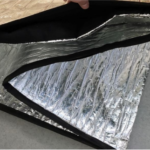
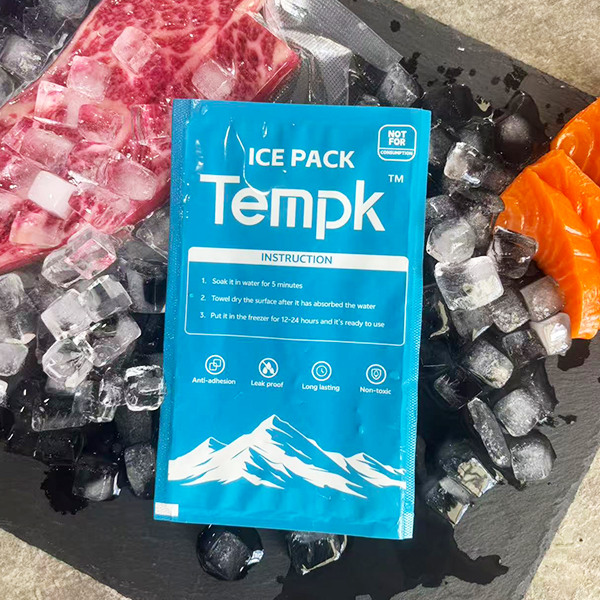
A hydrate sheet begins dry or compact, absorbs water, and is frozen. It is not solid carbon dioxide. Its control variables are water uptake, drainage, hydrated mass, freezing, film or seam integrity, and restraint. A gel or PCM pack has different composition and phase behavior. Require an exact material identity for every sample.
Treat precooling as a release step
Prompt, appropriate precooling is one of the strongest flower-quality controls. USDA and FAO guidance explains that removing field heat reduces respiration and other deterioration processes. Forced-air cooling is frequently used for flower cartons because it can pull cold air through the packaged bunches.
Turn precooling into a release step with defined records:
Cooling method approved for the species
Carton vent and stack arrangement
Product temperature sampling location
Target and tolerance
Time of completion
Maximum staging time before final closure
Action when product misses the target
Do not use the temperature of the cooler as a substitute for flower temperature. Dense bunches, sleeves, paper, and carton geometry can delay the center. A passive shipper loaded with warm flowers may show a mixed condition for hours.
The tropical exception must remain visible. A process built for roses may injure anthurium or ginger flowers. In a multi-product packhouse, color coding, separate storage zones, and line-clearance checks can prevent the wrong recipe from being used.
Cooling vents create a technical trade-off. They speed forced-air cooling but can admit ambient heat later and remove structural material from the carton. A design may place the ventilated flower carton inside an insulated overpack, use closable flaps, or rely on a refrigerated carrier. The chosen state during each lane stage should be explicit.
Make humidity, condensation, and ventilation separate controls
High relative humidity helps limit flower water loss. Free water on petals or in fiberboard can damage quality and packaging. Ventilation can remove respiration heat and ethylene but may also increase moisture loss or heat entry. One material feature cannot optimize all three automatically.
Create a moisture map:
Where does water enter the system?
Are stems shipped in water, gel, wrap, or dry?
Is the hydrate sheet fully drained?
Where could coolant leak or meltwater collect?
Which surfaces become cold enough for condensation?
Can liquid reach flower heads, carton seams, labels, or adhesives?
How does the package dry, drain, or absorb incidental water?
For roses and other Botrytis-sensitive flowers, stable temperature and dry petals are especially important. Perforated film, absorbent paper, and liners may manage water loss or condensation, but they also influence airflow and cooling rate. Trial the complete combination.
Ventilation has a fourth meaning if solid carbon dioxide is present. Dry-ice venting releases carbon dioxide gas to prevent pressure buildup. Flower ventilation manages the plant environment. The design must satisfy both functions without confusing them.
Ethylene review should identify product sensitivity and route sources. Sensitive flowers should not share uncontrolled storage with ripening produce or contaminated plant waste. Low temperature can reduce ethylene production and sensitivity for many flowers, but it cannot justify chilling a tropical species.
Engineer contact barriers and movement restraints
Cold injury often begins at a contact point. A frozen pack touching a sleeve can cool one group of petals or stems far below the carton average. A loose pack may move after the package passes the pack station.
A reliable barrier has:
Helpful decision tools
Check the details before you choose packaging
These quick tools can help you compare route risk, sizing needs, coolant choices, and packaging details before you request a quote.
Coolant & PCM Reference
Compare coolant and PCM options when a route needs added temperature support.
Compare optionsBox Liner & Pallet Cover Sizing
Check box liner and pallet cover sizing logic for insulated packaging projects.
Estimate sizingCompliance Checklist Generator
Build a practical checklist for packaging review, shipping, and documentation.
Build checklistFull coverage of the possible contact area
Known material and thickness
Fixed position after shock and vibration
Enough mechanical strength when cold and wet
No sharp edge that bruises flowers
Compatibility with airflow and usable payload
Do not specify a universal separation distance. Performance depends on coolant state and mass, barrier conductivity, flower load, duration, ambient exposure, and geometry. Establish the arrangement through mapping and testing.
Flower movement also deserves product-specific control. Long stems can slide lengthwise. Heads can strike the carton end. Spadices can puncture neighboring anthurium spathes. Upright spikes can curve if held horizontally under certain conditions. The shipper should restrain the product without compressing petals or blocking precooling.
Coolant changes the mechanical load. A rigid pack can act like an impactor. Hydrated sheets can become heavy and flexible. A PCM panel may consume sidewall space and push bunches inward. Use final commercial components during distribution testing.
Ask the manufacturer for a claim-to-evidence file
Instead of collecting disconnected certificates, create a claim register. Each claim should name its scope, evidence, and limitation.
Examples:
Claim: the pack is leak resistant. Evidence should identify the formulation, film, seal, preparation, test method, conditioning, and acceptance criteria. A room-temperature seal test may not represent a frozen, vibrated pack.
Claim: the shipper holds temperature. Evidence should identify the range, ambient profile, duration definition, initial product temperature, payload, coolant, sensor locations, and complete traces.
Claim: the box protects flowers. Evidence should define physical damage criteria, load, orientation, compression, shock, vibration, humidity condition, and post-test inspection.
Claim: the product is reusable. Evidence should define cleaning, drying, inspection, repeated conditioning, retirement criteria, and the number of cycles actually evaluated. Do not infer indefinite reuse.
Claim: the design is sustainable. Evidence may include verified material mass, content, reuse results, cube, recyclability context, or measured reduction in flower damage. Avoid broad claims that have no system boundary.
The file should also contain drawings, bill of materials, safety information, transport classification, preparation instructions, critical production characteristics, lot traceability, and change-control contacts.
Qualify temperature and physical protection together
A strong qualification program uses the intended commercial configuration and predetermined acceptance criteria.
Thermal challenges should include representative warm and cold ambient profiles, minimum and maximum flower loads, specified product temperature at loading, coolant preparation, full sensor maps, and justified duration. ISTA 7E can provide parcel thermal profiles; lane data may support additional or different challenges.
Physical tests should reflect the distribution mode. ISTA 3A is designed for individual parcel shipments and evaluates packaged-product response to general parcel hazards. ASTM D4169 offers a structured approach for shipping-unit performance. Pallet, air-cargo, truck, and local-delivery systems may require other procedures. Standards provide methods, not flower-quality limits.
Sequence matters. A compression or vibration event can move the coolant before the thermal exposure. High humidity can weaken fiberboard before stacking. Conversely, deeply conditioned components can become brittle before a drop. Choose a sequence that represents the route or explicitly assess interactions.
Define both immediate and delayed flower checks:
Temperature at each mapped location
Broken, bent, or displaced stems
Petal and bract bruising
Puncture, friction, and sleeve damage
Wetting, condensation, and carton softening
Chilling or freezing symptoms after flowers return to display condition
Opening and hydration behavior under the buyer's approved quality method
Do not invent a universal vase-life promise. If vase performance is part of acceptance, use a controlled, species-appropriate protocol and state its limitations.
Practical example: scaling three export recipes
Imagine an exporter sells roses, tropical anthuriums, and mixed event boxes. Procurement wants one custom coolant to simplify ordering.
The flower passports show that one thermal recipe would not be safe. Roses are assigned a near-freezing process with rapid forced-air precooling. Anthuriums receive a warmer condition, insulation from cold mixed-load air, and individual protection against puncture. Mixed event boxes are reviewed composition by composition; incompatible bouquets are redesigned or shipped under a shorter service.
The manufacturer proposes a hydrate sheet for roses and an insulated liner without frozen coolant for anthuriums. The sheet's product name contains “dry ice,” but its specification confirms it is water activated and does not contain solid carbon dioxide. The exporter defines hydration mass, drain time, freezer arrangement, and a restrained side channel.
Qualification finds that the rose carton passes a warm profile when full but becomes too cold beside the sheet at minimum load. A barrier and lower coolant configuration are evaluated, followed by repeat thermal and vibration testing. For anthuriums, tests focus on cold external exposure, friction, and puncture. The mixed-event recipe is released only for approved flower combinations.
At the line trial, workers confuse two similar liners. The exporter adds part identification, separate staging, and a scan against the recipe. Production specifications and change notification are added to the purchase agreement.
The example is hypothetical. It shows that standardization can come from a shared control system even when the physical packouts differ.
Turn the successful sample into a manufacturing agreement
Approve drawings and specifications for performance-critical features. Depending on the system, these may include:
Coolant formulation or material grade
Dry and prepared mass
Film, seams, cap, or closure
Phase behavior and conditioning method
Insulation material and geometry
Barrier thickness and coverage
Carton board and moisture performance
Vent dimensions and location
Outer and usable internal dimensions
Print, label, and lot-code location
Define sample-to-production checks. A hand-made sample can differ from a die-cut, heat-sealed, or molded commercial part. Review first production units against approved measurements and functional criteria.
Change control should cover raw material, formulation, supplier, equipment, tooling, process settings, dimensions, production site, and test-method changes that may affect performance. The manufacturer should give notice before implementation where the agreement requires it. The buyer then documents whether no action, limited verification, or requalification is appropriate.
Use complaint and monitoring data as feedback. Trend excursions by route, season, packer, component lot, payload, and failure location. A rising warm-side trend may point to staging or insulation; a localized cold trend may point to conditioning or barrier movement; crush may point to humidity, stacking, or board variation.
Air transport requirements when the coolant is actual dry ice
Solid carbon dioxide requires separate dangerous-goods review. Current IATA acceptance criteria use the identification UN 1845 and the shipping names “Carbon dioxide, solid” or “Dry ice.” The package must release gas. Applicable net-quantity information, marks, labels, documentation, carrier acceptance, aircraft limits, operator variations, and national requirements must be checked for the shipment.
Personnel also need safe storage and handling procedures. Carbon dioxide can accumulate in poorly ventilated spaces, and dry ice can cause frostbite. A flower-quality qualification does not replace dangerous-goods or workplace-safety controls.
If the proposed pack is a hydrated polymer sheet, do not apply dry-ice rules solely because of its marketing name. Obtain the actual safety and transport classification. If the system contains ordinary dry ice, do not hide it behind the generic term “cooling pack.”
Frequently asked questions
What is the first document to send a flower packaging manufacturer?
Send a species and route brief: flower names and maturity, approved precooling and transport condition, chilling and ethylene sensitivity, dry or wet shipping style, box and payload dimensions, minimum and maximum load, handovers, planned duration plus delay, monitoring, and damage criteria. Ask the supplier to identify the coolant and propose a complete configuration.
Can a long hold time compensate for poor precooling?
Not reliably. A passive shipper usually slows heat transfer; it may not remove field heat uniformly from dense, warm flowers. Extra frozen coolant can create local freezing while the center remains warm. Treat precooling as a controlled release step and test the packout from its specified initial product temperature.
Should flower packaging maximize relative humidity?
High relative humidity often reduces water loss, but uncontrolled free water and condensation can promote disease and weaken packaging. The correct design balances humidity retention, ventilation, and liquid management for the species and route. Inspect actual petal, sleeve, liner, and carton wetting during qualification.
Is solid carbon dioxide suitable for tropical flowers?
It is difficult to justify because tropical flowers may be injured below about 10°C while dry ice is vastly colder. A specialized isolated system would need strong evidence that the flower zone never approaches the chilling threshold and that all gas-release and transport controls are met. Insulation without frozen coolant may be more appropriate for some cold mixed-load risks.
How should minimum payload be tested?
Use the smallest permitted commercial flower load, with its actual void control, sleeves, barrier, coolant, and logger position. A light load may cool faster, move more, or leave the coolant closer to flowers. Compare it with the maximum load under relevant warm and cold profiles and physical handling sequences.
What changes should trigger packaging review?
Review changes to coolant formulation, film, hydration, fill mass, PCM grade, insulation, divider, carton board, vent pattern, dimensions, closure, production process or site, payload, route, precooling, and monitoring. Use a documented risk assessment to decide whether specification checks, limited testing, or full requalification is needed.
Can a manufacturer guarantee vase life?
A universal guarantee would be inappropriate. Vase performance depends on species, cultivar, maturity, preharvest conditions, treatments, temperature history, water quality, handling, and retail care. A manufacturer can support a defined package test; the flower owner should set and verify any vase-life method and claim.
Source the control system, then select the components
Reliable flower transport comes from a chain of aligned controls: a species passport, lane clock, precooling release, identified coolant, moisture and ventilation plan, restrained packout, route-relevant qualification, trained operators, monitoring, receiving, and manufacturer change control.
That control system may use a hydrate sheet, gel, PCM, ordinary dry ice in a rare justified architecture, or no supplemental coolant. It becomes defensible only when the final configuration protects the actual flower and can be reproduced at production scale.
About Tempk
Tempk provides hydrate dry ice packs, gel ice packs, insulated bags and boxes, and custom temperature-control packaging. We can review a buyer's stated flower, route, coolant format, usable payload, and sample requirements to frame a packaging discussion. Because flower species and distribution conditions differ, final suitability should remain tied to the buyer's handling brief, representative testing, line controls, and change-management process. We avoid treating a loose coolant as proof of complete flower protection.
Send Tempk your flower passports, lane clock, load configurations, and required test evidence to compare practical packout samples before production sourcing.