Wholesale Dry Ice Pack for Seafood Shipping: Specify Before You Scale
The safest way to buy a wholesale dry ice pack for seafood shipping is to postpone the price comparison until the technical specification is clear. First state whether the seafood must arrive chilled or frozen. Then identify whether “dry ice pack” means solid carbon dioxide or a water-activated frozen sheet. Finally, define the insulated packout, route challenge, safety controls, and acceptance evidence. This sequence prevents three costly errors: buying the wrong coolant technology, relying on a duration claim from an unrelated test, and scaling a package that the carrier or receiving team cannot handle consistently.
Gate 1: Write the Delivery Outcome
A purchase specification should begin with the condition of the seafood at dispatch, throughout the risk period, and at receipt. “Fresh,” “cold,” and “frozen” are not sufficient acceptance terms.
For chilled product, document the required refrigerated range or other product-specific limit, whether surface freezing is allowed, and which seafood safety hazards depend on time and temperature control. For frozen product, define the acceptable frozen condition and the organization’s rule for evidence of thawing or excursions. For live seafood, use a separate biological transport specification that addresses the species, oxygen, moisture, temperature, carbon dioxide, and handling.
The food-safety basis matters. FDA’s Seafood HACCP regulation requires covered processors to analyze hazards and, when appropriate, implement controls in a written plan. FDA guidance discusses refrigerated controls for pathogenic bacterial growth and toxin formation and specific controls for scombrotoxin-forming fish. Packaging should help execute the established control strategy. It should not create a new generic limit detached from the product and process.
Also define the time boundary. Include conditioning, packing, pre-carrier staging, pickup, transfer, customs or inspection, final delivery, and the receiver’s internal handling. Add a justified contingency rather than assuming every shipment follows the published transit time.
At this gate, the output is a user requirement, not a chosen product.
Gate 2: Remove “Dry Ice Pack” Ambiguity
Ask the supplier to classify the offered item in plain language.
Solid carbon dioxide is real dry ice. It is extremely cold and sublimates into gas. It is commonly supplied separately from the insulated package as blocks, slices, or pellets. The packout must release gas safely, and air or vessel movement may require dangerous-goods marks, labels, operator arrangements, documentation, and trained preparation.
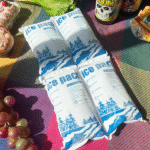
A hydrate dry ice pack is a supplier term for a different product. Tempk’s published instruction, for example, describes a sheet that is soaked in water and frozen and explicitly distinguishes it from dry ice. It is a water-based coolant sheet, not UN 1845 carbon dioxide. It does not create sublimation gas, but it can expand during hydration, leak if damaged, and produce cold spots when frozen.
Gel and PCM packs are also distinct. A gel pack generally contains a sealed aqueous gel. PCM is a broad engineering category for materials that absorb heat during a phase change; purpose-formulated PCMs may be selected around a target phase point. The phase-change point, conditioning state, packaging form, and test evidence determine fit.
The classification should appear on the approved technical sheet and purchase order. Product names can remain for catalog continuity, but the actual material identity must drive safety, declaration, storage, and qualification.
Gate 3: Design the Complete Packout
The packout is a bill of materials plus an assembly method. It includes:
seafood primary packaging;
any secondary leak-resistant liner;
absorbent or separator material;
coolant or refrigerant by exact item and defined condition;
payload arrangement and allowable load range;
insulated container and lid;
structural outer package;
closures, tamper evidence, and labels;
temperature monitor when required;
packout and receiving instructions.
Each component can change heat transfer. A liner may introduce an air gap. A separator can protect a pouch from dry ice but reduce direct cooling. Void fill can prevent movement but consume payload space. A larger carton can add surface area and heat load. Even tape placement matters if it restricts the intended gas-release path.
For chilled seafood, map both warm and cold risk. Coolant immediately against a fillet can freeze the surface while the center of the shipper warms. For frozen seafood with solid dry ice, study dry-ice placement, sublimation space, payload contact, insulation, and venting. A package should remain structurally secure without becoming airtight.
Leak control deserves its own drawing. Seafood can release purge or thaw liquid even though solid dry ice produces no meltwater. A water-based sheet or gel pack can also leak after puncture or seal failure. Use primary and secondary containment appropriate to the credible liquid source, then ensure the construction remains compatible with thermal performance and carbon dioxide release.
The Evidence Gate: What a Buyer Should Demand
The following table can serve as the technical annex to a request for quotation.
| Specification item | What the supplier or project team should state | What must not be assumed |
|---|---|---|
| Coolant identity | Solid carbon dioxide, hydration sheet, gel, PCM, or other material; include current instructions and safety information | That all products called “dry ice pack” behave like dry ice |
| Seafood condition | Chilled, frozen, or another defined state, with product-specific acceptance criteria | That “keeps cold” is an acceptance limit |
| Conditioned dimensions | Size and mass in the condition used for packing, including hydration expansion | That a flat dry sample represents usable payload space |
| Packout configuration | Container, payload, coolant placement, liners, separators, closures, and outer | That coolant performance transfers to any box |
| Thermal support | Test profile, duration, payload, starting conditions, sensor map, instrument status, raw data, and pass criteria | A universal hold time from a brochure |
| Physical support | Distribution test or assessment relevant to drop, vibration, compression, and wet strength risks | That a thermal pass proves structural survival |
| Food and material documentation | Documents applicable to the exact item, intended contact, and destination market | That “food grade” is globally self-explanatory |
| Dangerous-goods review | Mode-specific requirements for solid dry ice, including venting, marks, quantity, documents, training, and operator acceptance | That a Class 9 label alone completes compliance |
| Production control | Approved specification, lot traceability, inspection, change notice, and sample-to-production process | That all future lots match the sales sample |
| End-of-life or reuse | Disposal, recycling, return, cleaning, inspection, and retirement instructions as applicable | That reusable or recyclable means it will actually be reused or recycled |
This annex turns marketing statements into reviewable obligations. Unknown values do not need to be invented to complete it. They can be listed as “to be established by testing” or “supplier to confirm,” with a responsible owner and due date before approval.
Qualify Thermal Performance Without Inventing a Quantity
There is no universal dry-ice-to-seafood ratio and no fixed number of hydration sheets that works for every parcel. Quantity depends on heat entry, route, payload, insulation, starting conditions, coolant behavior, placement, contingency, and carrier constraints.
Use a staged qualification process.
Characterize the lane
Collect planned and actual transit information. Identify docks, transfer points, unrefrigerated periods, aircraft or vehicle segments, weekend exposure, customs, and receiving delay. Choose an ambient test profile supported by standard methods, lane data, or a documented risk assessment. ISTA thermal profiles can support parcel-package evaluation, but a standard profile does not automatically represent every seafood route.
Map the payload
Use representative seafood or a justified simulant with comparable mass, geometry, thermal properties, primary packaging, and starting condition. Place calibrated sensors at credible warm and cold locations. The refrigerant temperature alone is not the product temperature.
Challenge the configuration
Test the defined packout against predetermined criteria. Examine high and low excursions, not merely the average. Include a justified payload range and seasonal conditions. If one configuration is intended for multiple products, document the bracketing rationale.
Check physical integrity
Apply relevant handling stresses and inspect carton, insulation, coolant seals, liners, seafood packages, venting, and component movement. A package that holds temperature but leaks or cannot survive sorting has failed its operational purpose.
Run an operator pilot
Have trained personnel hydrate or condition components, assemble the box, mark it, tender it, receive it, retrieve data, and make a disposition decision. Record timing and common errors. Revise the SOP or design when execution is fragile.
The approved quantity and claimed duration are outputs of this work. They should be tied to the exact configuration, not presented as inherent properties of one pack.
Align Seafood Controls With Shipping Evidence
Seafood safety is product specific. The packaging team should review the hazard analysis and HACCP plan with the food-safety owner before setting thermal criteria.
For refrigerated seafood, time-temperature control may address pathogen growth. For scombrotoxin-forming fish, poor chilling before or during transit can contribute to histamine formation. Re-cooling does not demonstrate that the earlier exposure was acceptable. Receiving evidence may include carrier records, a time-temperature record, product measurement, ice condition, coolant condition, or another control established in the plan.
Frozen seafood should be loaded in the required state. Passive packaging is generally designed to maintain condition, not to freeze a warm payload. If partially thawed seafood is packed with more dry ice, the final cold reading can conceal the dispatch problem.
The receiver needs a written action path:
inspect the outer for damage, wetness, blocked vents, or altered closures;
Helpful decision tools
Check the details before you choose packaging
These quick tools can help you compare route risk, sizing needs, coolant choices, and packaging details before you request a quote.
Route Risk Checker
Review lane conditions before selecting packaging for real operating requirements.
Check route riskPackaging Selector
Compare insulated packaging options by product, route, and temperature need.
Find packagingIce Pack Calculator
Estimate gel ice pack quantity for chilled shipments and practical route planning.
Estimate ice packshandle solid dry ice in a ventilated area with appropriate protection;
verify shipment identity and required records;
retrieve the monitor or take defined measurements;
isolate shipments that fail or present uncertain evidence;
escalate disposition to the authorized food-safety or quality role;
retain data and document the decision.
Do not ask receiving staff to judge safety by smell, touch, or residual refrigerant alone.
Control Solid Dry Ice From Packing Room to Carrier
Solid dry ice presents two linked hazards: cold contact and carbon dioxide gas. Appropriate gloves, eye protection, and handling tools help prevent cold injury. Ventilation and safe storage help prevent carbon dioxide accumulation in rooms, vehicles, and other confined spaces. Occupational controls should be based on a site assessment and current safety guidance.
Package venting is mandatory in relevant transport rules because sublimating carbon dioxide can build pressure. In the United States, air and water requirements call for packaging designed to release gas. Air shipments require arrangements with the operator and include net-mass marking and other dangerous-goods information. The proper shipping identity is carbon dioxide, solid or dry ice, UN 1845, Class 9.
Exact marks, labels, documentation, exceptions, and quantity limits depend on the package and transport. International air rules, national implementation, airline variations, and courier acceptance must be checked for the lane. Only trained employees should prepare shipments when dangerous-goods training is required.
Warehouse planning should account for dry ice received before packing, sublimation during staging, and net quantity at tender. A purchasing quantity is not necessarily the declared shipping quantity. The organization needs a controlled way to measure and record the amount in the completed package.
Scale From Approved Sample to Wholesale Production
The transition from pilot to bulk order is where many packaging programs lose control. The approved sample may be hand-selected, while production introduces normal variation in film, seals, hydration, dimensions, carton board, insulation, or printing.
Create an approved component specification with tolerances that matter to the packout. For a hydration sheet, that may include dry and conditioned dimensions, cell construction, film or fabric, absorbent content, seal pattern, hydration method, and visual defects. For gel or PCM packs, include formulation identity, fill, seal, dimensions, conditioning, and lot marking. For an insulated container, identify materials, wall and lid construction, internal dimensions, and critical interfaces.
Agree on pre-production samples and incoming inspection. Inspection should be risk based: identity, count, dimensions, mass where meaningful, seals, leakage, print, lot information, and conditioned fit may be checked. Record nonconformities and define segregation.
Require notice before changes that could affect fit, food-contact status, safety, thermal performance, or disposal. A small film or seal-process change can alter frozen durability. A carton substitution can affect compression or wet strength. Evaluate changes against the qualified baseline and retest when the risk justifies it.
Wholesale terms such as minimum order, lead time, packaging of components, pallet pattern, storage life, and customization should be requested rather than assumed. Custom printing may improve packout identification, but it should not obscure required dangerous-goods marks on a finished shipment.
Calculate Total Delivered Cost
Unit price is only one line in a seafood packout cost model. Include:
insulated package and coolant components;
solid dry ice procurement and sublimation before use;
hydration, freezing, and storage energy;
packing labor and protective equipment;
lost payload space and parcel dimensional weight;
dangerous-goods training, documentation, and carrier fees;
temperature monitors and data handling;
package damage, leaks, holds, and rejected seafood;
return freight, cleaning, inspection, and losses for reusable systems;
disposal or recovery at destination;
requalification after material, lane, or service changes.
Compare candidates against the same delivery outcome. A reusable pack may have a higher purchase price and lower component consumption but only if return and inspection work. A hydration sheet may store compactly before conditioning but expand into payload space. Solid dry ice may support a frozen lane while creating added handling and carrier obligations. The appropriate metric is total cost per accepted delivery, with food loss and safety treated as material risks.
Hypothetical Pilot: From Keyword to Controlled Packout
A buyer searches for a wholesale dry ice pack for seafood shipping because a new retailer wants parcel delivery of chilled fish portions. Several suppliers offer “dry ice packs,” but one offer is solid carbon dioxide and another is a hydration sheet.
The buyer rejects the idea of choosing between them on price. The food-safety team confirms that the portions must remain chilled and that freezing against the product is undesirable. That makes unqualified direct solid-dry-ice contact a poor starting point. The team obtains hydration-sheet samples and a purpose-conditioned PCM candidate.
Packaging engineers hydrate, freeze, and measure the sheet, then build payload mock-ups in the intended insulated box. They define liner and absorbent placement for seafood leakage, map cold and warm locations, and challenge the candidates under a justified route profile. No quantity or duration is assumed; both are determined during development.
The receiving team reviews blind test shipments using written acceptance rules. Packers report that one sheet format folds inconsistently and occasionally presses against a primary seal, so the design is revised before formal qualification. Procurement then locks the successful configuration, obtains production samples, and agrees on lot and change controls.
This example is hypothetical, but the decision path is transferable. The keyword opened a supplier search; the user requirement and evidence created the purchase.
Frequently Asked Questions
Which is better for seafood, solid dry ice or hydration coolant sheets?
Neither is universally better. Solid dry ice may fit an appropriately designed frozen shipment, while a conditioned hydration sheet may fit certain chilled packouts or other tested uses. The seafood state, route, insulation, carrier, safety obligations, cold-side risk, and qualification results determine the answer. Confirm that a product called a dry ice pack is actually identified by material.
Can a supplier’s hold-time report replace the buyer’s testing?
It can reduce uncertainty if the tested box, payload, coolant, starting temperatures, ambient profile, sensor map, and acceptance criteria closely match the proposed shipment. It rarely answers every lane-specific question. Review relevance and conduct qualification or verification appropriate to the risk before scaling. Document any gap.
Why must a dry-ice package vent if seafood leakage must be contained?
The functions are different. Seafood and credible liquids need a containment path, while carbon dioxide gas needs a safe release path. A well-designed packout can use sealed primary seafood packaging, a secondary liquid barrier, and a vented dry-ice and outer-package construction. Do not make the complete package airtight.
Is the coldest logger reading the most important result?
No. For chilled seafood, the coldest location may reveal unwanted freezing; for all payloads, the warmest credible location can reveal loss of control. Review the mapped distribution over time and apply product-specific criteria. A logger beside the refrigerant does not represent the entire payload during transit.
What should be frozen before packing?
The answer depends on the approved SOP. Seafood should enter the packout in its specified dispatch condition. Hydration sheets, gel packs, or PCM components need the defined conditioning state throughout. Solid dry ice is supplied as a refrigerant and loses mass through sublimation. Do not use the shipper as an undocumented method to pull warm seafood down to specification.
Approve the System, Then Place the Order
A purchase-ready seafood packout has a defined delivery outcome, an unambiguous coolant identity, a controlled bill of materials, relevant thermal and physical evidence, seafood safety alignment, transport acceptance, and repeatable procedures. Solid dry ice requires ventilation, cold-contact protection, carbon dioxide controls, and mode-specific dangerous-goods review. Hydration sheets are frozen water-based coolants, not solid carbon dioxide; they need hydration, conditioning, fit, and leakage controls. Wholesale scale should follow qualification and production control, not precede them.
About Tempk
Tempk’s published range includes hydration coolant sheets described as hydrate dry ice packs for food-cooling uses such as seafood. The company’s user instruction distinguishes these sheets from solid dry ice and directs users to hydrate and freeze them. That verified boundary is useful for specification: buyers can assess the product as a flexible water-based coolant component rather than carbon dioxide. Tempk can provide candidate product information and discuss bulk or format needs, while the buyer remains responsible for confirming relevant documentation and qualifying the finished seafood packout for its product, route, and operating process.
Send Tempk your user requirement, packout drawing, seafood state, route details, and expected wholesale volume. Request the exact conditioned sample and documentation needed to make a controlled qualification decision.