Cool Brick Vaccine Pack-Outs Need Five Release Gates
A shipment should not be released because the bricks are frozen, the lid closes, and the display shows a good starting temperature. A cool brick vaccine pack-out is ready only when five connected decisions have been cleared: product requirements, container compatibility, coolant preparation and placement, performance evidence, and operational control. This gate-based approach keeps a small reusable component from being mistaken for the whole cold chain. It also gives procurement, quality, and field teams one shared question at dispatch: are we using the exact system that was reviewed for this vaccine and this route?
The five-gate release model
The gates are intentionally sequential. A team that starts with a coolant quotation may spend time testing a configuration that the vaccine instructions or carrier design would never support. Begin with the payload, then work outward.
Gate 1: The vaccine requirement is explicit
Record the exact product, presentation, and current handling instructions. Many vaccines stored in refrigerators use a 2°C to 8°C range, but not all vaccines share that range. Frozen and ultra-cold products exist, and individual products can have special transport, light-protection, thawing, dilution, or beyond-use conditions. The manufacturer’s current information and applicable immunization-program rules decide the requirement.
Avoid writing “vaccines” as a single line item in the route specification. List each product that may enter the carrier. Confirm whether diluents travel with it and whether their preparation creates a freezing concern. If a frozen product is permitted to spend limited time under refrigerated conditions, transport may count within that allowance. The release record must therefore connect time out of storage to product-specific limits.
Gate 1 also defines the payload envelope. State minimum and maximum load, secondary packaging, usable dimensions, starting condition, and expected dose quantity. A pack-out qualified with a dense full load should not be assumed to protect a small partial load. Empty spaces alter heat flow and may allow cartons or spacers to shift.
Gate 1 fails when: the product is identified only by disease, all vaccines are assigned a generic refrigerated range, a diluent is overlooked, or the approved load configuration is unknown.
Gate 2: The container and coolant belong to one configuration
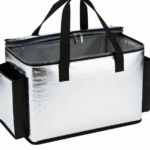
A cool brick is a thermal-storage component. It needs an insulated carrier, cold box, medical box, or qualified shipper around it. It does not provide insulation, monitoring, route control, or proof of compliance by itself.
WHO PQS category E004 covers cold boxes, vaccine carriers, and other passive insulated containers for vaccine transport or temporary use. E005 addresses coolant packs used with those products. The catalog relationship matters: compatible packs, quantity, position, and instructions contribute to the listed container’s performance. WHO recognizes standard 0.3, 0.4, and 0.6 litre coolant-pack sizes for E005-listed transport products, but matching one of those volumes does not grant another brick WHO status or make it suitable for any carrier.
For an existing WHO-listed carrier, use the specified packs and instructions unless an authorized, supported change process establishes otherwise. For a commercial qualified shipper or a locally developed pack-out, maintain a configuration record that identifies the exact container, insulation, brick or PCM plate, barriers, payload arrangement, closure, and monitor. Similar appearance is not equivalence.
Fit needs a physical check. Measure internal space with the intended payload and barriers in place. Make sure the lid closes without compressing vials, stressing caps, or displacing spacers. Confirm that rigid bricks cannot migrate into direct contact during vibration or carrying. If the component geometry changes, treat the change as a potential impact to performance.
Gate 2 fails when: a loose brick is called a vaccine carrier, a general cooler replaces qualified equipment, a standard volume is used as evidence of WHO listing, or the coolant model cannot be traced to the released layout.
Gate 3: Thermal state and placement are reproducible
“Cold” is not a preparation instruction. Water packs may be used fully frozen, conditioned after freezing, cooled without freezing, or warmed for a cold-climate operation. Engineered PCM plates follow their own formula-specific phase preparation. These states impose different thermal boundaries on the payload.
A conditioned frozen water pack is not the same as a cool water pack. Conditioning begins with frozen water and uses a defined warming process before loading. A cool pack begins in a refrigerated region. A warm pack serves a different protective function in cold conditions. Staff need the carrier-specific method, observable readiness criteria, allowable staging time, and status segregation.
Freeze-preventive vaccine carriers solve a particular operating problem through their design. WHO guidance describes a barrier between fully frozen water packs and the vaccine compartment, allowing the instructed use of frozen packs without ordinary initial conditioning. The carrier’s barrier and loading method are essential. An improvised liner in an ordinary box is not evidence of freeze prevention.
PCM is also not a shortcut around process control. Identify the formula or controlled range, shell and fill configuration, preparation equipment, staging duration or release condition, and transfer time to loading. A plate may be solid at the surface and not fully prepared at its center. Separate ready units from returns and in-process units so operators cannot select by touch or color alone.
Placement controls conduction. Tested spacers or barriers limit direct cold contact, while a stable layout preserves intended heat paths. Record the orientation of every brick and the position of the payload. Photographs or diagrams are valuable because phrases such as “place around the vaccine” leave too much room for shift-to-shift variation.
Gate 3 fails when: the SOP gives only a waiting time with no readiness criterion, frozen gel packs replace specified PCM, a barrier is missing, or the operator cannot distinguish ready and unprepared components.
Gate 4: Performance and monitoring evidence fit the route
Qualification asks whether the assembled system maintains the required conditions under defined challenges. It should identify the container, coolant count and state, payload, barriers, sensors, ambient profile, duration, access events, and acceptance criteria. The report supports that configuration and those conditions, not every route that uses the same brick.
ISTA Standard 7E offers heat and cold profiles for thermal transport packaging in parcel delivery systems. It can support evaluation when that distribution mode is relevant. It does not qualify a coolant component in isolation, and a lane with long airside exposure, refrigerated vehicles, walking segments, or repeated outreach access may need other or additional evidence.
Development testing should map likely hot and cold locations with calibrated sensors. That is how a team discovers a cold boundary near a brick, a warm point under the lid, or a shift caused by partial loads. The operational temperature monitoring device can then be placed in a location justified by the mapped design.
CDC’s July 2026 toolkit favors continuous temperature monitoring for vaccine transport, preferably a digital data logger (DDL) capable of showing minimum and maximum readings. A buffered probe placed with the vaccine better reflects the payload than a display left outside the box. Device selection should cover the needed measurement range, calibration status, logging interval, memory, clock, battery, and data retrieval.
Helpful decision tools
Check the details before you choose packaging
These quick tools can help you compare route risk, sizing needs, coolant choices, and packaging details before you request a quote.
Insulation Material Reference
Compare insulation material choices for different cold chain packaging needs.
Compare materialsCoolant & PCM Reference
Compare coolant and PCM options when a route needs added temperature support.
Compare optionsBox Liner & Pallet Cover Sizing
Check box liner and pallet cover sizing logic for insulated packaging projects.
Estimate sizingMonitoring does not rescue a weak pack-out. It records what happened. Define who starts the logger, checks its identity, records dispatch readings, reviews alarms, downloads data, and decides whether the record is complete. If an excursion is suspected, keep the vaccine under correct conditions, mark it against use, document magnitude and duration, and follow the appropriate assessment process rather than discarding it immediately.
Gate 4 fails when: a component datasheet is treated as route qualification, a duration claim lacks test conditions, the logger sits against the brick without justification, or nobody owns data review.
Gate 5: People can execute, receive, and repeat the system
Even a well-tested pack-out can fail through staging, handover, or receiving. The SOP should be short enough to use and detailed enough to reproduce. Assign trained staff and backups for preparation, packing, driving, receipt, and excursion response. Record container and logger identities, vaccine inventory, load revision, dispatch time, handovers, arrival time, and storage transfer.
Routine transport, professional-carrier shipping, and emergency relocation require separate decisions. Current CDC guidance prefers powered portable vaccine units or qualified containers and pack-outs for provider transport. Its provisional conditioned-water-bottle method belongs to specified emergency use, not routine outreach. Manufacturer shipping materials are a last-resort emergency option in that framework, and household food coolers are not a substitute.
Receiving is part of thermal control. The destination must have trained staff and appropriate storage ready. On arrival, inspect physical condition, security, monitor status, product identity, quantity, and dates. Review the temperature record promptly and transfer vaccines to the product’s required storage. Do not place an unopened shipper in a refrigerator; coolant in the box may drive local product temperature too low.
For reusable bricks, add a reverse process: recovery, cleaning, drying, inspection, quarantine, re-preparation, and end-of-life removal. Reject leaking, cracked, swollen, distorted, contaminated, or unidentifiable units. Track formula, mold, cap, label, and batch or revision at a level appropriate to the risk. A color code can help operators, but it should support rather than replace traceable identification.
Change control closes the gate. A new brick volume, PCM formula, shell geometry, cap, carrier, payload, spacer, logger location, route, or conditioning method can invalidate assumptions. Review every change and decide whether documentation, targeted testing, or full requalification is needed.
Gate 5 fails when: the receiving site is unprepared, the emergency method becomes routine, returned bricks bypass inspection, or a supplier substitution enters use without review.
One release table for quality and operations
| Release gate | Evidence available before dispatch | Hold the shipment if |
|---|---|---|
| Product | Current product instructions, product list, load and time limits | Any vaccine or diluent requirement is unresolved |
| System | Approved carrier, exact coolant identity, layout diagram, barriers | A component is substituted, damaged, or does not fit the released configuration |
| Preparation | Recorded coolant state, readiness check, staging status | Packs are mixed, incompletely prepared, or cannot be identified |
| Proof | Applicable qualification, calibrated DDL, correct probe position | Test scope does not cover the configuration or monitoring is unavailable |
| Execution | Trained sender and receiver, route and contingency, SOP, traceable records | Receiving, emergency response, or data-review ownership is missing |
This is a release tool, not a replacement for the full SOP. It gives the dispatcher a defensible stop point when a critical fact is missing. It also makes deviation records more useful because the failed gate identifies which part of the system needs investigation.
Make the configuration record survive a shift change
The best configuration record can be understood by someone who did not design the pack-out. Give the configuration a revision code. Include a bill of materials, photographs from more than one angle, coolant preparation instructions, minimum and maximum loads, barrier placement, probe position, closure method, label positions, and accepted carrier condition.
Keep training practical. Ask operators to demonstrate preparation and loading rather than only signing that they read a document. Use deliberately incorrect examples in training: a PCM plate from the wrong status area, a shifted spacer, a low-battery logger, an unreadable brick label, or a carrier with a damaged barrier. Staff should be able to stop the process and state why.
At dispatch, record only information that supports control or investigation. At receipt, make the record easy to reconcile with the shipment and logger file. If electronic data are used, define file naming, access, review, retention, and correction practices. A DDL file separated from the container and route identity loses much of its value.
Trending can identify a slow loss of margin. Review alarms, near-limit readings, delay time, brick rejection, loss rate, carrier damage, and repeat deviations by route or season. Trends do not alter product limits. They indicate when the route risk or pack-out assumptions deserve review.
Hypothetical decision: adding one vaccine to a stable route
Consider a program with an established weekly refrigerated route using a tested medical box, reusable rigid bricks, barriers, and a DDL. A new vaccine is added to the formulary. Because the current route has performed reliably, operations proposes placing the new cartons into the next shipment.
The five gates stop the shortcut. At Gate 1, the team checks the new product instructions and discovers that its presentation and time accounting differ from the existing load. Gate 2 shows that adding cartons changes the minimum spacing and pushes one brick toward the payload. Gate 3 identifies that the current conditioning method may still be usable, but this is not assumed. Gate 4 requires a risk-based test with the new minimum and maximum loads and mapped cold points. Gate 5 updates inventory, receiving, excursion, and training records.
The result could be acceptance, a revised pack-out, a separate carrier, or rejection of the shared route. This hypothetical example offers no performance result. Its value is the decision sequence: stable history for one configuration is evidence about that configuration, not automatic authorization for a new vaccine.
Two final questions
Can one qualified pack-out cover several vaccines?
Potentially, but only when each product’s current requirements are compatible with the tested temperature conditions, payload configurations, time limits, and operating process. Document the products included in the qualification scope. Adding a vaccine later requires change assessment rather than relying on the general phrase “refrigerated vaccine.”
What information should accompany a custom brick sample?
Request controlled dimensions, shell material, nominal volume or fill, coolant or PCM identity, cap and seal design, preparation instructions, label revision, and carton identification. Use the sample in complete-system testing. If the production unit changes in a way that may affect fit, thermal behavior, leakage, or traceability, evaluate the change before release.
Release the system, not the component
The five gates turn a vague coolant request into a controlled vaccine-transport decision. Product instructions define the goal. The carrier and coolant define the physical system. Preparation and placement create the starting boundary. Qualification and DDL monitoring provide evidence. SOPs, receiving, traceability, and reuse controls keep the design intact in daily work.
No brick can clear those gates alone. That is precisely why a reusable coolant can be selected responsibly: its role is narrow, measurable, and connected to the rest of the pack-out.
About Tempk
Within a controlled vaccine pack-out, Tempk can supply the rigid coolant component selected for evaluation. Available product categories include reusable HDPE ice bricks and PCM ice plates used with cooler bags, medical boxes, and insulated cartons. Where a project needs a defined fit or identity, customization may address volume, mold, cap, shell color, PCM formula, label, and carton packing. Component selection is only one release gate: Tempk products do not themselves establish WHO PQS status, vaccine suitability, carrier qualification, or route performance. The full system still needs product-specific review, monitoring, SOPs, and pack-out qualification.
Send Tempk the released design inputs—not only a requested brick size—to discuss samples for fit and full-system evaluation.