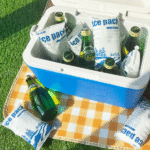
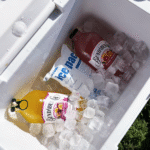
The phrase “dry ice pack” is not enough to determine how long a coolant lasts. Solid CO₂ loses mass through sublimation; water, gel and phase-change packs behave differently. Identify the actual material, then evaluate how long the complete shipping arrangement protects the product.
Start with the product label and specification
Ask whether the pack contains solid CO₂, a prefilled water or gel coolant, a phase-change formulation, or a sheet activated with water. Do not infer composition from a trade name. Obtain the preparation instructions and safety information for the exact component.
| Material identity | What “lasts” means |
|---|---|
| Solid CO₂ | How much solid remains, and whether product temperatures remain acceptable. |
| Water or gel pack | Its state and thermal contribution in the tested packout, rather than visible condensation. |
| Phase-change pack | Performance of the specified formulation after the required conditioning. |
| Water-activated sheet | Performance after the product-specific activation and conditioning procedure. |
Distinguish three different endpoints
Coolant depletion is the loss or warming of the cooling material. Useful hold time ends when the product no longer meets its specified temperature limits. Service life concerns the suitability of a reusable component for further cycles.
These endpoints are not interchangeable. A container may still contain coolant while a distant product location is too warm. A product next to the coolant may be too cold. A reusable pack can remain physically present after its useful cooling contribution has changed.
Build a duration assessment around the load
- Define the product’s permitted temperature range.
- Record payload mass, dimensions and starting temperature.
- Identify the container, coolant amount and packing positions.
- Use the preparation method intended for routine dispatch.
- Monitor justified product locations through representative exposure and delays.
- Assess the complete temperature record against the acceptance criteria.
A stated duration without these conditions is not a dependable basis for choosing a shipping service. Avoid copying an 18–48-hour range from a different container or product.
Respond to depletion using an approved plan
For a route that includes coolant replenishment, specify the receiving point, responsible personnel, permitted handling and the process for maintaining product conditions. Do not improvise replenishment during transport or assume every carrier offers it.
Helpful decision tools
Check the details before you choose packaging
These quick tools can help you compare route risk, sizing needs, coolant choices, and packaging details before you request a quote.
Insulation Material Reference
Compare insulation material choices for different cold chain packaging needs.
Compare materialsCompliance Checklist Generator
Build a practical checklist for packaging review, shipping, and documentation.
Build checklistIce Pack Calculator
Estimate gel ice pack quantity for chilled shipments and practical route planning.
Estimate ice packsIf a shipment arrives outside its conditions or without adequate records, preserve the evidence and follow the product’s assessment procedure. Adding coolant after an excursion does not undo earlier exposure.
Dry ice releases CO₂; storage and handling need appropriate ventilation. CDC: dry ice exposure and ventilation explains the exposure hazard.
Frequently asked questions
Is a dry ice pack always reusable?
No. Solid CO₂ is a consumable. A reusable pack must be identified and accepted under its supplier instructions.
Does visible dry ice prove the shipment passed?
No. The relevant result is product temperature over the required period.
Can I replace dry ice with gel packs for the same duration?
That is a different system. Confirm product suitability and test the revised arrangement.
Use a more specific planning guide
For a compatible bag, see dry ice duration in insulated bags. For repeated use, see reusable ice pack inspection and hold time. For quantity, use measurement-based dry ice planning.