Selecting an Insulated Box Vendor for Agricultural Products: Procurement Framework
The right insulated box vendor for agricultural products is a supplier whose proposed packout, evidence, production controls, and operating support match the product, payload, route, season, and receiving reality. A strong procurement process therefore starts with requirements, converts them into a packout, tests the packout under defined conditions, and controls it after launch. This article combines the thermal, operational, supplier, and quality decisions needed for fresh produce, flowers, seedlings, seeds, breeding materials, specialty crops, and selected agricultural samples without treating insulation as a universal guarantee.
Convert the shipping problem into a controlled specification
A useful requirement names the product, approved condition, payload range, route, maximum operational window, seasonal exposure, receiving process, and consequence of failure. It also states what the packaging must not be expected to do. For this application, insulation buffers external conditions but does not remove field heat, manage respiration indefinitely, or replace commodity-specific postharvest practices. That sentence prevents scope drift and makes missing controls visible before quotations are compared.
The requirement should distinguish fixed inputs from variables. Fixed inputs may include external-size limits, a regulated inner package, a product carton, or a destination procedure. Variables may include insulation type, coolant arrangement, payload insert, closure, outer carton, and monitoring plan. Allowing suppliers to propose alternatives can improve the design, but each alternative should be assessed against the same acceptance criteria.
Agricultural products have commodity-specific temperature and humidity needs; some tropical produce can be damaged by temperatures that are safe for temperate crops. Record the source and owner of that product requirement. A procurement team should not create a temperature band merely to make supplier comparison easier.
- What product or product family will be shipped, and who owns the stability decision?
- What are the minimum and maximum payloads, including physical dimensions and starting condition?
- What is the full packing-to-storage duration, including contingency and receiving delay?
- What hot, cold, mechanical, moisture, hygiene, and regulatory exposures can occur?
- What evidence, operating instructions, production controls, and post-launch support are required?
Select the architecture by constraint
Start with the dominant constraint. A one-way express shipment may prioritize low mass, parcel durability, and simple packing. A reusable hospital or distributor loop may prioritize impact resistance, cleanability, replaceable components, and return efficiency. An export biotech lane may prioritize a long contingency window, documentation space, dry-ice compatibility, or high insulation efficiency within an airline size limit. The architecture follows the constraint.
Foam-lined corrugated boxes can be practical for many single-use routes. Molded EPS provides shaped insulation at relatively low mass. EPP can support repeated handling where the operating model justifies return and inspection. Panel systems can support custom dimensions. VIP-based designs can save insulation thickness but require careful edge, puncture, aging, and quality controls. No material choice removes the need to test the finished packout.
Geometry should be reviewed alongside freight. More insulation and coolant can increase external dimensions while reducing payload space. A smaller high-performance solution may lower dimensional cost, but it may add material complexity. A larger simple solution may be easier to pack but expensive to store and ship. Compare the entire program rather than an isolated unit price.
Build the thermal system around controlled starting conditions
A passive system works from stored thermal energy and resistance to heat flow. Product, coolant, insulation, air space, and external exposure interact. If the product is loaded warm, the refrigerant must remove that heat before it can buffer the route. If the payload is very small, it may respond quickly to local gradients. If coolant is placed directly against a sensitive item, the package can create cold damage while successfully resisting external heat.
The packout specification should identify the exact coolant or PCM, required conditioning state, quantity, placement, barriers, payload limits, void-fill method, monitor location, and closure. Components should be restrained so parcel handling cannot rearrange the tested geometry. For dry-ice applications, gas release, material compatibility, worker safety, transport-mode rules, and destination handling need dedicated review.
Consider the complete operating capacity. Conditioning freezers, staging space, packing benches, staff time, backup coolants, and dispatch cutoff rules can limit a program even when the box performs well. A design that requires more frozen components than the site can consistently prepare is not operationally robust.
Qualification should answer the intended-use question
Ask for evidence tied to the proposed construction and packout. The report should identify the package version, materials, dimensions, coolant, conditioning, payload, sensor locations, ambient profile, duration, opening events if any, and acceptance criteria. A standardized parcel profile can support comparison, while lane-specific profiling can improve relevance. Neither is meaningful if the supplied production unit differs from the tested design.
Review minimum and maximum payloads and hot and cold seasonal conditions where they represent different risks. Repeated-use systems may need aging or reuse assessment. Mechanical testing may be appropriate when drops, compression, vibration, or frozen-bag fragility can change the geometry or damage the product. Thermal and mechanical evidence should reflect how the package is actually handled.
The report supports a decision; it does not make the decision by itself. The quality or product owner evaluates whether the observed profile is acceptable for fresh produce, flowers, seedlings, seeds, breeding materials, specialty crops, and selected agricultural samples. When a deviation occurs, the team should compare actual shipment conditions with the qualified envelope and the product's approved excursion process.
Production consistency deserves its own review
A polished prototype can hide weak production control. Ask how the supplier manages material identity, dimensions, tolerances, assembly, closure fit, printing, final inspection, nonconforming units, traceability, and changes. For custom products, approve a drawing, bill of materials, artwork, packout, and golden sample. Define which substitutions or process changes require notification and whether additional testing is needed.
Assess support for commodity temperature, pre-cooling, respiration, humidity, ventilation, chilling sensitivity, payload density, multi-stop handling, and export inspection requirements. The answer should show awareness of the application without crossing into unsupported product or regulatory claims. A supplier can provide construction details, samples, packout drawings, test reports, training aids, and change records. The buyer retains responsibility for product requirements, route decisions, local compliance, and quality disposition.
Commercial terms should reflect the controlled scope. Compare tooling, samples, test work, coolants, inserts, cartons, labels, minimum order expectations, lead-time assumptions, storage, replacement parts, and change management. Where a value is not yet known, state it as a question rather than inventing a number for the business case.
Living products keep producing heat and moisture
Fresh produce continues to respire after harvest. That biological activity generates heat and water vapor, and its rate can change with temperature, maturity, damage, and gas composition. A fully sealed insulated box may therefore create condensation or an unsuitable atmosphere for some commodities. Ventilation, absorbent materials, perforated liners, pre-cooling, and load density should be selected for the actual crop rather than copied from a pharmaceutical shipper.
Helpful decision tools
Check the details before you choose packaging
These quick tools can help you compare route risk, sizing needs, coolant choices, and packaging details before you request a quote.
Packaging Selector
Compare insulated packaging options by product, route, and temperature need.
Find packagingRoute Risk Checker
Review lane conditions before selecting packaging for real operating requirements.
Check route riskCoolant & PCM Reference
Compare coolant and PCM options when a route needs added temperature support.
Compare optionsThis issue should be visible in the design review, operating procedure, and supplier evaluation. It is not a minor application note. It changes which components are acceptable, what staff must verify, and how a shipment is released or escalated.
Chilling injury is another important boundary. Bananas, mangoes, cucumbers, and other sensitive commodities can lose quality when held too cold even though they are not frozen. The vendor should ask for the product, variety, harvest condition, maturity, route, and target shelf life. For seeds, seedlings, floral products, or biological agricultural samples, the priorities may shift toward moisture control, orientation, light protection, or regulatory documentation.
Pilot the people and process, not only the package
A pilot should run through normal staff, equipment, cutoff times, carrier handovers, receiving locations, and data systems. Observe conditioning, picking, packing, labeling, dispatch, receipt, unpacking, monitoring, cleaning, and returns. Record confusion and workarounds. A package that only succeeds when the engineer is standing beside the operator is not ready for routine use.
Define release criteria for the pilot. These can include correct component selection, packout completion, closure integrity, scan and label quality, temperature results, package damage, receiving time, data retrieval, and staff feedback. When failures occur, separate design weakness from process deviation and route disruption before selecting a corrective action.
After launch, protect the approved state. New products, payload dimensions, suppliers, materials, coolants, artwork, carriers, destinations, seasons, or cleaning chemicals can affect performance. A change-control review decides whether documentation updates, additional testing, training, or requalification are necessary.
Failure-mode review before purchase approval
| Failure mode | Question before approval | Possible control |
|---|---|---|
| Warm excursion | Is the route longer or hotter than the evidence? | Revise profile, capacity, service, dispatch rule, or contingency. |
| Cold excursion | Can coolant or winter exposure overcool the payload? | Condition coolant, add barriers, revise placement, and test cold-season risk. |
| Insufficient payload space | Was usable volume measured with every component installed? | Approve a packout drawing and physical fit sample. |
| Process variation | Can operators confuse components or skip a critical step? | Kit parts, simplify instructions, use visual controls, and audit packing. |
| Package damage | Can drops, compression, moisture, or reuse alter the geometry? | Strengthen shell or closure, inspect units, and include mechanical testing. |
| Receiving delay | Who receives, unpacks, stores, and reviews the shipment? | Confirm hours, send alerts, define instructions, and add contingency. |
| Unsupported claim | Does the statement identify conditions and evidence? | Request the full report or rewrite the requirement as a verification point. |
The value of this review is its specificity. “Reliable packaging” is not a testable requirement, while the listed failure modes can be linked to drawings, reports, work instructions, and responsibilities. Add application-specific items where necessary, especially assuming colder is always better and ignoring respiration, chilling injury, moisture, ventilation, ethylene sensitivity, and product maturity.
The review can also prevent unnecessary overdesign. Once the dominant failure modes are controlled and evidence shows adequate margin, the team can evaluate whether excess material, coolant, freight, or process complexity can be reduced through a documented change.
A practical decision path
An exporter packs tropical fruit with frozen gel packs to survive a hot airport transfer. The pulp near the packs becomes overcooled while fruit in the center remains warm, demonstrating why coolant placement and commodity tolerance must be balanced. Begin by verifying the product requirement and mapping every minute from packing to controlled receipt. Select a candidate architecture that fits the payload and operating constraints. Create a defined packout, test it under representative conditions, and run a pilot through the real network. Review evidence with quality, logistics, operations, and procurement before approval.
If the shipment changes, return to the affected step rather than restarting blindly. A new label may require only a document review. A larger payload, different coolant, longer route, colder winter profile, or new customs process may require additional testing. This risk-based path keeps the program controlled without treating every change as identical.
Questions procurement and quality teams often ask
What is the first step in evaluating an insulated box vendor for agricultural products?
Confirm the product requirement and map the complete operational lane. Define payload, starting condition, maximum packing-to-storage time, seasonal exposure, handovers, receiving process, and failure consequence. Those inputs create a fair basis for comparing designs and prevent the supplier from guessing what “cold” or “long duration” means.
What is the most important evidence to request?
Request a report for the proposed construction and packout that identifies components, conditioning, payload, sensor positions, ambient profile, duration, and acceptance criteria. Pair it with drawings, a bill of materials, and production controls. Evidence is strongest when the tested unit and the supplied unit are demonstrably the same.
Should procurement choose the coolant or the supplier?
The choice should be collaborative. The product owner defines the acceptable condition; packaging specialists evaluate heat flow and gradients; operations confirms conditioning capacity and packing practicality; safety and compliance teams review transport restrictions; and the supplier proposes compatible components. No single party should decide without the others' constraints.
How do I know whether customization requires retesting?
Assess whether the change can affect heat flow, coolant capacity, payload geometry, closure, mechanical durability, monitoring, or the operating process. Artwork alone may not affect thermal performance, while a dimensional, material, lid, coolant, or payload change often deserves deeper review. Document the decision under change control.
What should be included in a purchase specification?
Include approved drawings, materials, dimensions and tolerances, usable payload space, closure, component list, packout instructions, test evidence, production inspection, labeling, packaging for delivery, change notification, nonconformance handling, and any cleaning or reuse requirements. Mark assumptions that still require confirmation instead of turning them into unsupported facts.
Conclusion
Select an insulated box vendor for agricultural products through a controlled sequence: confirm the product requirement, map the route, compare proposed architectures, review evidence, qualify production controls, pilot the operation, and protect the approved state through change control. This approach gives procurement, quality, and operations a common basis for selecting both the supplier and the packout.
About Tempk
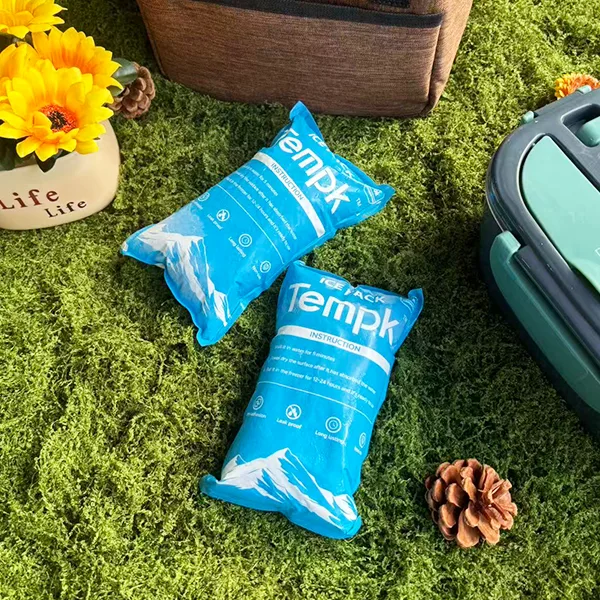
Tempk is a cold-chain packaging brand of Shanghai Tempk Industrial Co., Ltd. Its product range includes gel packs, insulated bags and liners, EPP boxes, VIP medical cool boxes, and related passive packaging components. Depending on the selected product, buyers can discuss size, insulation structure, coolant matching, branding, carton packing, and bulk supply requirements. Any temperature or duration claim should be tied to a defined packout, payload, ambient profile, and supporting test evidence.
Next step
Tell Tempk the agricultural product, harvest condition, pre-cooling method, route, payload, ventilation needs, and receiving plan to review an insulated packaging approach.