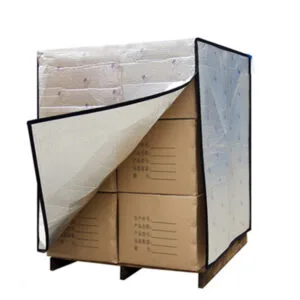
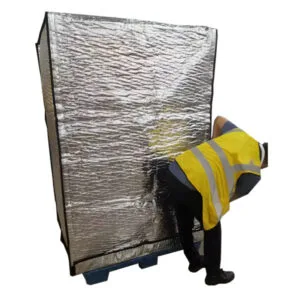
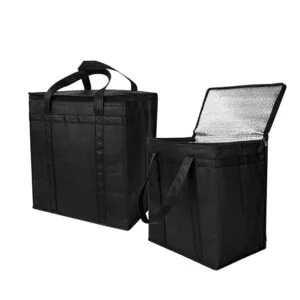
Thermal pallet covers are passive protection layers for palletized temperature-sensitive cargo. They are used when products may leave controlled storage and face temporary exposure during staging, truck-to-airport handoff, security queues, ULD build-up, tarmac dwell, loading, unloading, customs inspection, or warehouse transfer. They do not replace refrigerated transport or active temperature control. Their role is to reduce heat gain, cold shock, solar exposure, airflow-driven drift, and short exposure spikes during vulnerable handoff windows.
This article explains how to choose and specify thermal pallet covers for air freight cold chain programs, including food, seafood, flowers, pharmaceuticals, biologics, chemicals, and other temperature-sensitive palletized products.
Why Air Freight Creates Temperature Excursion Risk
Air freight can be fast, but it includes many short handoffs where controlled conditions may pause. Pallets may wait in a warehouse, move through a loading dock, sit near aircraft, pass through inspection, or stand in a non-refrigerated area before being loaded. IATA describes perishable cargo regulations and handling guidance as tools to develop loss-minimizing processes for perishable shipments, and the IATA Temperature Control Regulations address temperature management for healthcare cargo, including packaging, documentation, and handling requirements.
A thermal pallet cover is most valuable during these exposure windows. It is not a substitute for route planning, precooling, active containers, refrigerated trucks, or qualified cold storage. It is a risk-reduction layer between controlled environments.
Table 1. Where air freight temperature excursion risk occurs.
| Air Freight Risk Point | What Can Happen | How a Thermal Pallet Cover Helps |
|---|---|---|
| Warehouse staging | Pallet waits outside the correct temperature zone. | Slows temperature drift during short waiting periods. |
| Truck-to-airport handoff | Cargo experiences warm dock or cold outdoor exposure. | Adds a passive insulation layer around the pallet. |
| Tarmac dwell | Sun, wind, rain, or cold air affects pallet surfaces. | Reduces direct solar and ambient exposure depending on cover design. |
| ULD build-up | Pallet is consolidated before aircraft loading. | Protects palletized cargo during handling and queuing. |
| Customs or security inspection | Cover may be removed or opened. | Design should support fast opening and reclosing to reduce exposure time. |
| Destination unloading | Cargo waits before pickup or cold room transfer. | Helps bridge the final handoff window. |
What Thermal Pallet Covers Can and Cannot Do
A thermal pallet cover can reduce exposure rate; it cannot create refrigeration. If the cargo enters the route too warm, the cover will not fix it. If the pallet sits for many hours in extreme heat, a passive cover alone may not be enough. If the product requires strict 2-8°C control through a long route, the cover may need to be used together with refrigerated storage, active containers, PCM shippers, temperature monitoring, and service-level controls.
Table 2. Practical role of thermal pallet covers.
| Can Help With | Cannot Replace |
|---|---|
| Short-term heat gain or cold shock during handoffs. | Refrigerated warehouse or truck when continuous control is required. |
| Solar radiation and direct weather exposure when reflective or weather-resistant layers are used. | Correct product preconditioning and route planning. |
| Pallet-level protection during staging and loading. | Qualified parcel shipper or validated pharma container when required. |
| Reducing risk for palletized goods during airport dwell. | Temperature monitoring, lane qualification, or regulatory compliance procedures. |
| Brand and handling discipline through visible pallet identification. | Carrier documentation and trained cold chain handling. |
Key Specification Parameters
A thermal pallet cover should be specified from the pallet outward. Buyers should define pallet footprint, loaded height, product temperature range, exposure windows, route lane, ambient conditions, weather risks, cover material, fastening method, bottom protection, reusability, and documentation. The cover must be easy for warehouse and ramp teams to install correctly. If it is difficult to use, it may be removed or installed poorly.
Table 3. Thermal pallet cover specification fields.
Helpful decision tools
Check the details before you choose packaging
These quick tools can help you compare route risk, sizing needs, coolant choices, and packaging details before you request a quote.
Insulation Material Reference
Compare insulation material choices for different cold chain packaging needs.
Compare materialsInsulation Material Drop Resistance
Review drop resistance and handling factors before choosing insulation materials.
Check resistanceIce Pack Calculator
Estimate gel ice pack quantity for chilled shipments and practical route planning.
Estimate ice packs| Specification Field | Options to Define | Why It Matters |
|---|---|---|
| Pallet footprint | US pallet, Euro pallet, air cargo pallet, custom skid, or ULD-compatible format. | Poor fit leaves gaps or creates handling problems. |
| Loaded height | Full cover height, skirt length, and clearance for labels or straps. | The cover must protect the actual loaded pallet, not only a standard empty footprint. |
| Thermal layer | Foil bubble, foam, multilayer insulation, reflective surface, or custom laminate. | Layer choice affects thermal resistance, weight, durability, and cost. |
| Closure and fastening | Velcro, zipper, buckle, tape flap, elastic skirt, straps, or reusable closure. | Fast installation and secure closure reduce exposure and handling errors. |
| Bottom protection | Top-only cover, full pallet cover, base sheet, or pallet wrap integration. | Heat gain can occur from the bottom if the pallet sits on warm ground or metal surfaces. |
| Reusability | Single-use, limited-use, or reusable cover. | Reusable covers need recovery, inspection, cleaning, and loss control. |
| Monitoring | Logger window, label window, sensor access, or inspection flap. | Temperature data and shipment labels must remain accessible. |
Choose the Cover by Cargo Type
Table 4. Cover priorities by cargo type.
| Cargo Type | Common Temperature Concern | Cover Design Priority |
|---|---|---|
| Pharmaceuticals and biologics | 2-8°C or controlled room temperature excursions. | Lane risk assessment, monitoring access, tight closure, and documentation. |
| Seafood and frozen food | Heat gain, thawing, condensation, odor, and leakage. | Moisture-resistant materials, strong seams, and fast handling. |
| Fresh produce and flowers | Heat gain, cold injury, humidity effects, and airflow exposure. | Breathability vs insulation must be evaluated by product. |
| Chocolate and confectionery | Heat spikes, melting, bloom, and surface quality defects. | Reflective outer layer and short exposure protection. |
| Chemicals and ingredients | Temperature drift outside product stability range. | Compatibility, labeling, and route documentation. |
Route Risk Questions Before Ordering
The same pallet cover may perform differently in Dubai summer, Chicago winter, Miami rain, or a cool indoor transfer lane. Before ordering, map the route exposure points. Ask where the pallet leaves refrigerated control, how long it waits, whether the airport has cool dollies or covered loading, whether the airline offers temperature-controlled handling, and whether the destination pickup is immediate.
- What product temperature range must be protected?
- What is the maximum expected exposure time outside controlled storage?
- Is exposure mostly heat, cold, solar radiation, rain, wind, or mixed?
- Will the pallet be broken down, inspected, or opened during transit?
- Does the carrier provide temperature-controlled handling at origin and destination?
- Where will temperature loggers be placed?
- Will the cover be single-use, returned, or reused?
- What evidence is needed for customer acceptance or quality review?
Thermal Testing and Lane Qualification
A pallet cover should be tested in a realistic configuration. Testing should include the actual pallet size, loaded height, product or surrogate payload, cover installation method, exposure duration, ambient profile, and logger placement. If the route involves pharmaceuticals, biologics, or other regulated goods, lane qualification and documentation may be required by the customer quality system. IATA TCR and PCR references should be reviewed for applicable shipment requirements and best practices.
Table 5. Data to capture in pallet cover testing.
| Test Element | What to Record |
|---|---|
| Pallet configuration | Footprint, height, payload mass, carton pattern, stretch wrap, and cover fit. |
| Ambient profile | Temperature, solar exposure if applicable, humidity, wind, and exposure duration. |
| Logger placement | Top corner, sidewall, center, bottom edge, and product-level locations as needed. |
| Handling step | Installation time, opening/reclosing procedure, and label visibility. |
| Result criteria | Maximum internal temperature, minimum internal temperature, excursion duration, and product acceptance rules. |
Common Mistakes
- Using a pallet cover as a replacement for refrigerated transport.
- Ordering by pallet footprint only and ignoring loaded height.
- Leaving gaps around the pallet base or top corners.
- Covering shipment labels, airway bill information, or temperature logger access points.
- Not training warehouse teams on how to install and secure the cover.
- Skipping route testing and assuming a reflective cover will protect every lane.
FAQ
Are thermal pallet covers a replacement for refrigerated trucks?
No. They are passive protection layers for exposure windows. Use refrigerated trucks, cold rooms, active containers, or qualified shippers when continuous temperature control is required.
Do pallet covers work for both heat and cold?
Many covers are designed to slow heat gain and heat loss, but performance depends on material, fit, closure, exposure time, and route conditions.
Can pallet covers be customized?
Yes. Buyers can specify footprint, height, material, closure, printing, label windows, logger access, and reusable or single-use construction.
Where should data loggers be placed?
Logger placement depends on cargo and risk points. Common locations include top corners, side surfaces, center areas, and product-level positions, but the test plan should define them.
Do thermal pallet covers need testing?
Testing is recommended whenever products are high value, temperature-sensitive, shipped repeatedly, or exposed to long or severe air cargo handoff conditions.