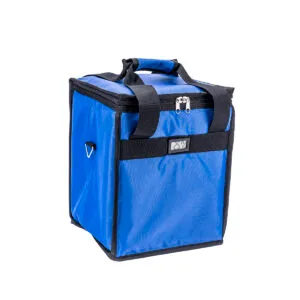
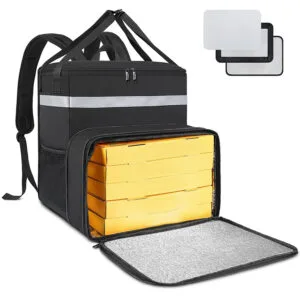
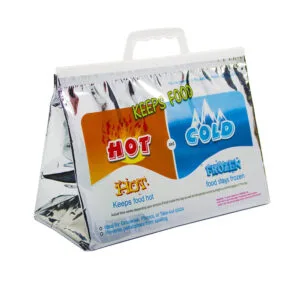
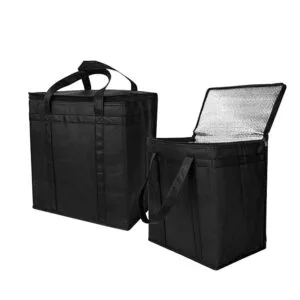
“Dry ice bag” can describe different products: packaging used with solid CO₂, an insulated transport bag, or a cold pack sold under that name. Determine which product is being offered and what it contains. A name alone does not establish coolant chemistry, insulation performance or safe gas handling.
Ask whether the item is coolant or packaging
| Possible meaning | What to establish |
|---|---|
| Bag containing solid CO₂ | Its permitted use, material compatibility and gas-release arrangement. |
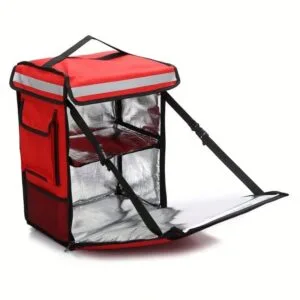
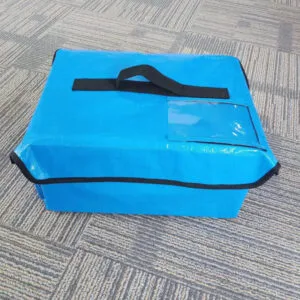
| Insulated delivery bag | Its construction, closure, loading and supported thermal application. |
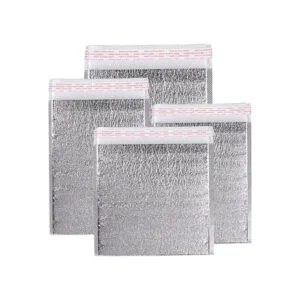
| Hydratable sheet or cold pack | Actual formulation, activation and conditioning instructions. |
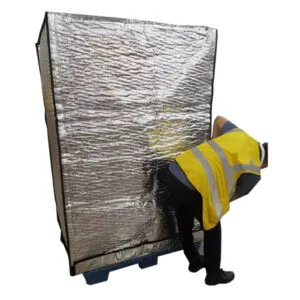
| Outer protective bag | Its physical role and whether it changes the assembled package’s gas release. |
Do not classify a water-activated sheet as solid carbon dioxide. Do not assume an ordinary plastic pouch becomes an insulated shipper because it contains dry ice.
Separate containment from gas sealing
Dry ice sublimates to CO₂ gas. A package used with it must release gas safely, rather than prevent all gas leakage. Do not seal solid-CO₂ packaging airtight to contain the gas.
Primary food or product containment can serve a different purpose. Check the complete assembly so leak protection does not create an airtight dry-ice vessel. Applicable US aircraft and water packaging provisions are in 49 CFR 173.217: carbon dioxide, solid.
Specify the material and function
- Identify the actual liner or film construction.
- Check the manufacturer’s permission for the intended coolant.
- Record which layer provides insulation or physical protection.
- Define the closure and gas-release features.
- Measure usable space for the intended payload and coolant.
- Request evidence for the complete assembled configuration.
A glossy surface, thicker film or a listed material does not prove a particular temperature duration. Compare actual construction and test conditions, not only names.
Review the claim with the right endpoint
Remaining dry ice is not the same as useful product hold time. A sealed reusable cold pack also has a different endpoint from disappearing solid CO₂. Define the product limits, load and exposure before reviewing the supplier’s duration evidence.
Helpful decision tools
Check the details before you choose packaging
These quick tools can help you compare route risk, sizing needs, coolant choices, and packaging details before you request a quote.
Insulation Material Drop Resistance
Review drop resistance and handling factors before choosing insulation materials.
Check resistanceDry Ice Calculator
Estimate dry ice needs for frozen or ultra-cold shipments before packing.
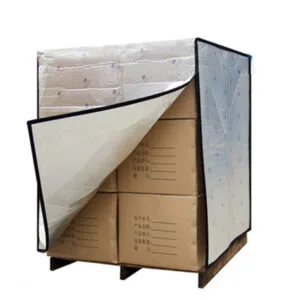
Estimate dry iceBox Liner & Pallet Cover Sizing
Check box liner and pallet cover sizing logic for insulated packaging projects.
Estimate sizingEven when the coolant does not form liquid water, moisture from the environment or contents can affect the outer package. Keep the mailing or shipping protection appropriate to the application rather than promising that every dry-ice parcel stays dry.
Frequently asked questions
Is every dry ice bag reusable?
No. Establish which component is meant and what the manufacturer permits.
Can I choose a bag from its advertised material alone?
No. The construction, closure, compatibility and complete-packout evidence matter.
Does a dry ice bag remove transport restrictions?
No. The actual coolant and contents determine the applicable transport category.
Choose a specific guide after identifying the item
For a compatible insulated bag, see bag construction and hold-time checks. For a marketed cold pack, see the solid-CO₂ versus refreezable-pack distinction.