


Run the coolant estimate
Use payload weight, box size, route time, and seasonal temperature before finalizing gel pack or PCM mass.
Oysters are not handled like fish fillets. The packout must keep live shellfish cold and damp, protect shells and tags, avoid freezing injury, and prevent oysters from sitting in meltwater. The best design depends on shellfish rules, season, order size, and carrier time.
The coolant amounts below are starting ranges for planning. Final packout should be validated with the exact payload, insulation size, carrier lane, and season.
| Route condition | Temperature intent | Tempk packaging setup | Coolant planning range | Coolant position |
|---|---|---|---|---|
| Local restaurant delivery, 8-18 h | Cold and damp, not frozen | Insulated carton or EPP box, shellstock bag or tray, damp liner, absorbent base. | 0.5-1.0 kg conditioned gel packs for small parcels, adjusted by order size. | Coolant above or beside shellstock with a divider; avoid direct shell contact. |
| Overnight live shellfish, 18-30 h | 0-4 C planning range unless supplier states otherwise | Stronger insulation, non-airtight design where required, tag-protective inner layout. | 1.0-1.8 kg conditioned gel packs for small to mid-size parcels. | Keep shellfish out of standing meltwater and protect the harvest tag from moisture damage. |
| Hot season or longer lane, 30-48 h | Validated non-freezing lane | Higher insulation, route risk check, reduced headspace, earlier carrier pickup. | 1.8-3.0 kg conditioned gel packs, confirmed by seasonal test. | If shells show freezing, reduce contact risk before increasing coolant mass. |
For a tighter first estimate, use the Ice Pack Calculator and then compare coolant families in the Coolant & PCM Reference.
Small layout changes can decide whether the receiver sees a clean chilled seafood parcel or a wet, pressured, partially frozen product.
Use the supplier's range, labeling, tag, and ventilation rules before choosing a closed shipper design.
Use damp food-safe material for humidity and a separate absorbent base for meltwater or condensation.
Pack oysters so they cannot crush labels or each other during parcel handling. Keep the shellfish tag readable at receiving.
Check shell closure, odor, moisture, shell damage, tag condition, and any freezing signs.
Use these receiving checks when adjusting coolant quantity, insulation thickness, or internal separation.
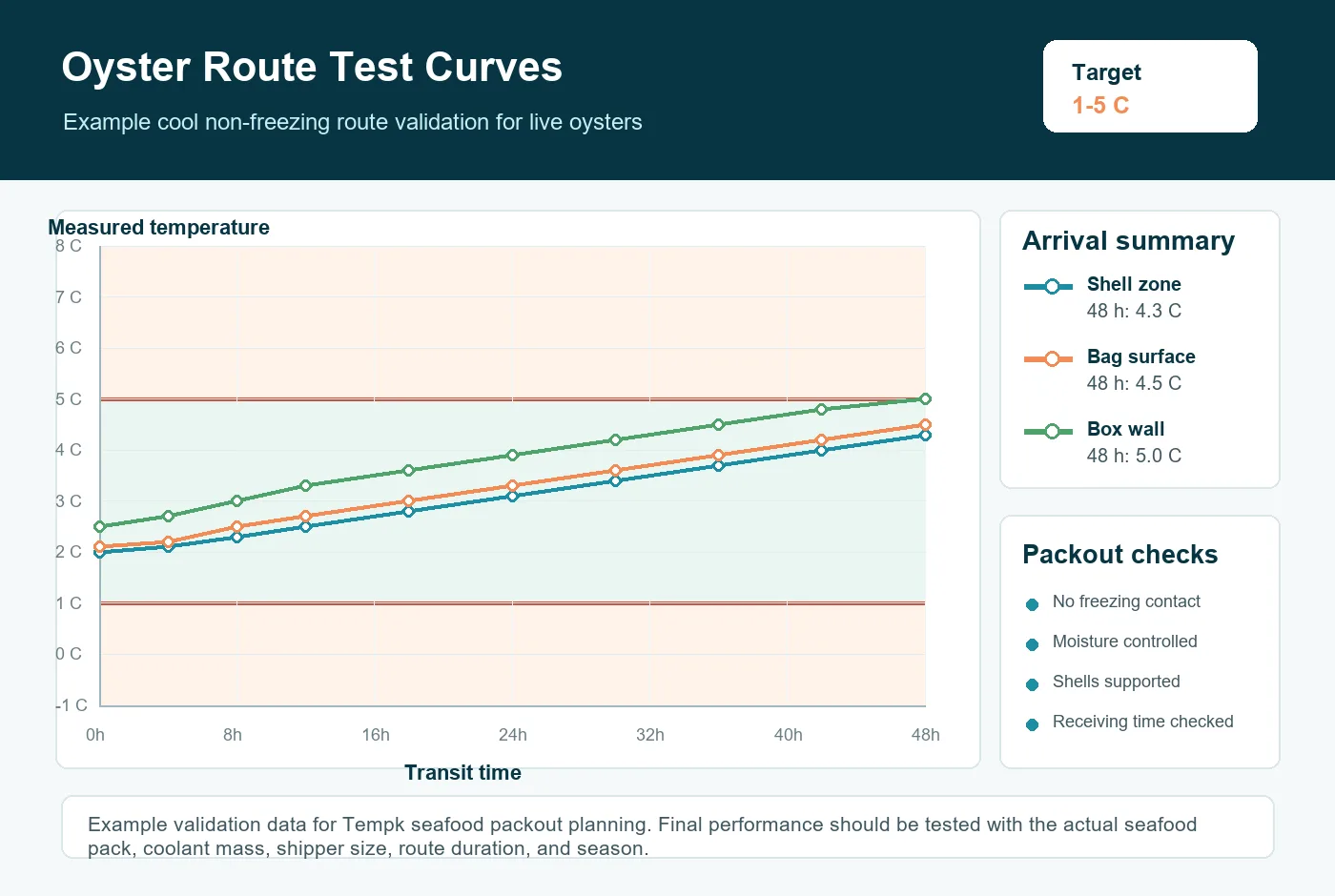
Use the product page for the packaging logic, then use the tools to size the first trial packout before a lane test.
Use payload weight, box size, route time, and seasonal temperature before finalizing gel pack or PCM mass.
Compare frozen gel packs, conditioned gel packs, and 0 C PCM so the product is cooled without direct freeze injury.
Review lane time, pickup dwell, last-mile delay, and receiver process before launch.
Share the seafood form, payload weight, box size, service level, origin temperature, lane season, and receiving window. Tempk can help compare insulation, coolant mass, placement, and validation steps.
Custom packout support
For fixed carton sizes, payload limits, branding requirements, seasonal lanes, or validation targets, Tempk can adapt this solution into a custom cold-chain packout.