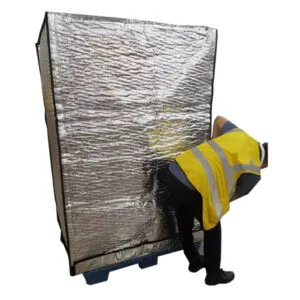
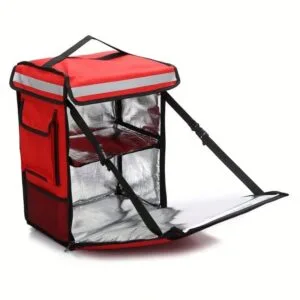
Yes, you can use dry ice in some coolers—but only when the cooler manufacturer permits it, carbon dioxide gas can escape continuously, and the cooler will be handled and transported in a well-ventilated setting. If the model is not approved for dry ice, the container is airtight, or the surrounding space cannot be ventilated, treat that as a no-go.
Dry ice is solid carbon dioxide (CO₂). It changes directly from a solid to a gas, so it creates two separate hazards: the solid can cause frostbite, and the released gas can build up where air exchange is poor. The right question is therefore not simply “Will the cooler stay cold?” but “Is this cooler-and-use setting designed to manage extreme cold and continuous gas release?”

Make the go/no-go decision before adding dry ice
Use the cooler only after all three controls are confirmed: material and component compatibility, a safe route for CO₂ to escape, and ventilation around the cooler. A strong shell or tight gasket does not prove compatibility. Follow the current instructions for the exact model, including any excluded models or limits.
| Situation | Decision | What to verify |
|---|---|---|
| Manufacturer explicitly permits dry ice and specifies safe use | Conditional go | Follow the model-specific instructions, provide gas release and control human exposure. |
| Compatibility is unknown or instructions are unavailable | No-go until confirmed | Ask the manufacturer; do not infer suitability from thickness, price or appearance. |
| Container is airtight or has no designed means for gas release | No-go | Do not rely on opening the lid occasionally as a pressure-control method. |
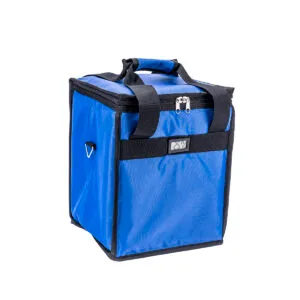
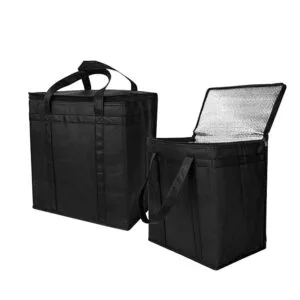
| Soft cooler or insulated bag | Model-specific | Use only when the manufacturer explicitly allows dry ice and explains the configuration. |
| Occupied vehicle, small room or other poorly ventilated space | No-go until exposure is controlled | Assess ventilation, transport time, unloading and the possibility of CO₂ accumulation. |
Choose the cooler by manufacturer guidance, not by material alone
Hard-sided coolers are not automatically compatible
A rotomolded or thick-walled cooler may tolerate low temperatures, but the lid, gasket, drain, latches and other components still matter. Confirm that the manufacturer names the exact product family or model as dry-ice compatible. Also check whether the instructions require wrapping the blocks, leaving headspace, using a drain or vent, or taking other model-specific steps.
Soft coolers require explicit approval
Flexible liners, seams, zippers and adhesives may react differently to extreme cold. Do not assume that a zipper makes a bag safely vented. If your use case involves a flexible bag, read the separate guide to dry ice in a soft cooler and follow the manufacturer’s instructions for that exact model.
Venting must work throughout the use period
CO₂ generation continues while dry ice remains. A cooler must never become a pressure vessel. Gas release needs to remain available during packing, storage and transport—not only when somebody remembers to open the lid. Keep the venting route unobstructed, and do not add tape, shrink wrap or an outer case that defeats the intended gas release.
Protect people from cold contact and carbon dioxide exposure
Prevent frostbite and cold damage
Use insulated gloves suitable for handling dry ice and eye protection appropriate to the task. Use tools when the site procedure calls for them, and keep unprotected people, children and pets away from the work area. Avoid direct skin contact. Separate dry ice from fragile containers and from products that can be damaged by deep-freezing. The CDC dry ice safety guidance identifies both frostbite and CO₂ accumulation as hazards.
Control the surrounding atmosphere
Carbon dioxide is colorless and odorless, so smell cannot confirm that the air is safe. The NIOSH Pocket Guide for carbon dioxide lists headache, dizziness and breathing difficulty among potential exposure symptoms. Work in a well-ventilated area. For vehicles, minimize time in an occupied enclosed space, provide effective outside-air ventilation, secure the cooler, unload promptly and follow the employer’s or carrier’s risk controls. If anyone develops symptoms, move to fresh air and obtain appropriate medical help.
Keep packing advice at the right level
Once the go/no-go decision is positive, use a documented packout rather than improvising. Precondition the payload as required, prevent direct contact where it could damage the product, keep the gas-release path open, and minimize unnecessary lid openings. The placement of dry ice depends on the payload, cooler geometry, duration and validated temperature range.
Helpful decision tools
Check the details before you choose packaging
These quick tools can help you compare route risk, sizing needs, coolant choices, and packaging details before you request a quote.
Box Liner & Pallet Cover Sizing
Check box liner and pallet cover sizing logic for insulated packaging projects.
Estimate sizingInsulation Material Reference
Compare insulation material choices for different cold chain packaging needs.
Compare materialsRoute Risk Checker
Review lane conditions before selecting packaging for real operating requirements.
Check route riskFor a layer-by-layer procedure, use the separate cooler packing guide. For quantity planning, use the large-cooler dry ice calculation framework or the Dry Ice Calculator. Any estimate still needs verification in the intended cooler, payload and route; a universal pounds-per-day rule cannot prove performance.
Can you put dry ice in a YETI cooler?
Use the answer for the exact YETI model, not the brand as a whole. At the time of this review, YETI’s official hard-cooler guidance says Tundra and Roadie hard coolers, including wheeled models, are dry-ice compatible, while the Silo 6G Water Cooler is excluded. The same guidance calls for wrapping blocks, leaving headspace for gas and venting before opening. Product instructions can change, so recheck the current model page before use. Do not extend that statement to Hopper soft coolers or any model not named by the manufacturer.
Can you bring dry ice on a plane?
For U.S. passenger baggage, the FAA PackSafe dry ice page applies a specific exception. It is not a global rule, a guarantee that an airline will accept the package, or a substitute for commercial cargo requirements.
| FAA passenger-baggage condition | Requirement |
|---|---|
| Quantity | No more than 2.5 kg (5.5 lb) per package and per passenger when used to pack perishables. |
| Airline approval | Required before travel. |
| Package design | The package must not be airtight and must permit CO₂ gas release. |
| Checked baggage marking | Mark “Dry ice” or “Carbon dioxide, solid” and show the net quantity, or indicate that it is 2.5 kg (5.5 lb) or less. |
Confirm the airline’s current policy before arriving at the airport. For commercial shipments, international routes or larger quantities, use the applicable dangerous-goods rules and trained shipping personnel rather than this passenger-baggage summary.
Choose another coolant when dry ice is a poor fit
Dry ice is not the default coolant for every cold product. A conditioned gel pack or phase-change material may be more appropriate when the payload must remain chilled rather than frozen, when a compatible vented package is unavailable, or when the handling environment cannot manage CO₂ safely. Select the coolant from the required product temperature range and verify the complete system; do not substitute based only on advertised hold time.
Questions people ask before using dry ice in a cooler
Can you put dry ice directly in any cooler?
No. Use it only in a model the manufacturer permits and only when CO₂ can escape safely. “Heavy-duty,” “airtight” and “waterproof” are not evidence of dry-ice compatibility.
Does the cooler lid need to stay open?
Not necessarily, but the container must never be airtight. Use the manufacturer’s designed gas-release method and keep it functional throughout use. A partially open lid is not a universal engineering control.
How much dry ice should go in the cooler?
There is no reliable amount based on cooler size alone. Payload temperature, starting condition, ambient exposure, opening frequency, route duration and the cooler’s measured loss behavior all matter. Estimate with route-specific inputs, then test the intended packout.
Final check: use dry ice only when every control is present
- The exact cooler model is approved by its manufacturer for dry ice.
- The package cannot become airtight, and its gas-release path will remain open.
- Handlers have suitable gloves, eye protection and a documented procedure.
- The payload can tolerate the expected low temperatures and contact is controlled.
- The room, vehicle and storage location have an appropriate ventilation plan.
- Any passenger-air-travel or shipping requirements have been checked for the actual route.
If any item is uncertain, pause and verify it before loading the cooler. That decision is more important than any packing shortcut.