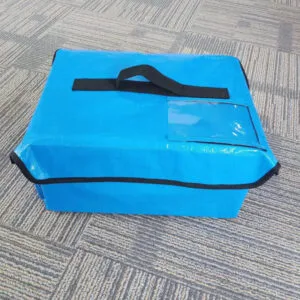
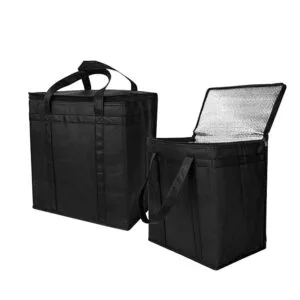
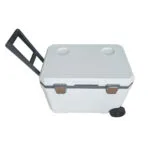
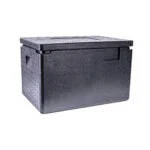
To pack solid carbon dioxide dry ice in a cooler, first confirm that the cooler permits dry-ice use and can release gas. Define whether the payload must stay frozen or merely chilled, wear suitable cold-protection gloves and eye protection, separate the dry ice from the product and vulnerable surfaces, follow a recorded layout, and never make the container airtight. The correct mass and placement cannot be set by one pounds-per-day rule: they depend on the payload, cooler, ambient profile, opening pattern, route and acceptance limit.
1. Identify which “dry ice pack” you have
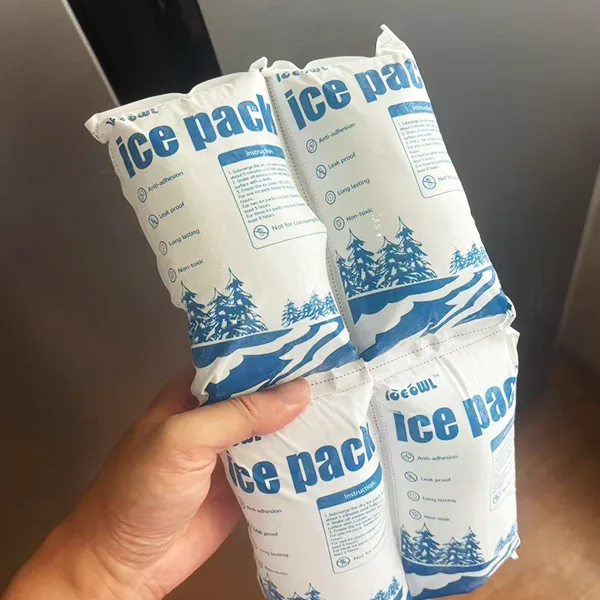
The phrase dry ice pack is used for different products. Solid dry ice is carbon dioxide (CO2) and is transported as UN1845. It sublimates into gas and creates both cold-contact and ventilation hazards. A hydrate, gel or PCM pack contains a coolant inside film or a rigid shell. It is conditioned in a freezer and does not become solid carbon dioxide.
This distinction controls the handling procedure. Use the workflow below for solid CO2 dry ice. For a water-activated sheet, follow its hydration, freezing, inspection and reuse instructions instead. Tempk’s hydrate dry ice pack, for example, is a water-activated coolant rather than UN1845 dry ice.
2. Confirm the packout before opening the dry ice
Start with the product requirement, not the coolant. A frozen food load, a chilled product that must not freeze and a diagnostic specimen do not have the same limits. Record the required product condition, planned transit and dwell time, expected ambient exposure, number of openings, payload mass and receiving process.
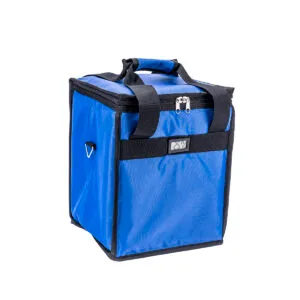
Then check the cooler manufacturer’s instructions. A thick wall or tight gasket does not prove dry-ice compatibility. The material must tolerate the low temperature, the closure must not trap pressure, and the vent path must remain open throughout use. If the manufacturer does not permit solid dry ice, choose a compatible shipper or another coolant. The separate dry-ice cooler safety guide explains this go/no-go decision, while the soft-cooler checklist covers flexible bags.
Do not use a generic mass promise as the release criterion. The Dry Ice Calculator can provide an early planning estimate, but a commercial or temperature-critical lane should use a defined packout and evidence appropriate to its risk.
3. Pack the cooler in ten controlled steps
- Prepare a ventilated work area. Keep people who are not involved in the task away from the handling zone. Review the dry-ice supplier’s safety data and site procedure.
- Inspect the cooler. Check the liner, lid, hinges, drain or designed gas-release path. Reject a cracked cooler or any arrangement that could become airtight.
- Condition the payload and packaging. Use the temperatures defined by the packout plan. Dry ice should not be expected to pull a warm, uncontrolled load to the correct condition during transit.
- Prepare protective equipment and tools. The CDC advises insulated gloves and safety goggles for dry-ice handling. Use suitable tongs or a scoop when required by the form of dry ice and your procedure.
- Weigh and record the dry ice. Record the actual mass at packing. Use the value required by the approved plan and any applicable transport marking or documentation.
- Install the specified barrier. Use the cooler manufacturer’s approved separator or the tested packout component. The barrier should prevent direct contact with vulnerable product and surfaces without blocking gas release.
- Load the payload in the documented orientation. Keep the same product count, spacing and arrangement used in the packout plan. Separate freeze-sensitive goods from the cold source.
- Place dry ice according to the defined layout. Do not improvise a top, bottom or surrounding arrangement at the packing bench. Placement changes the coldest locations and sublimation behavior.
- Fill nonfunctional voids without sealing the vent. Suitable void fill can limit product movement and reduce air exchange, but it must not create an airtight package or obstruct the intended gas-release path.
- Close, mark and release the packout. Confirm the closure, venting, dry-ice mass, required markings, logger status where used, route documents and receiving instructions before handoff.
4. Match placement to the product requirement
“Dry ice on top” or “dry ice on the bottom” is not a universal rule. The right layout is the one that protects the defined payload throughout the expected exposure without blocking gas release or producing unacceptable cold spots.
| Shipment condition | Packout decision | Evidence to retain |
|---|---|---|
| Product must remain frozen | Use a dry-ice-compatible cooler, an approved separator and a repeatable solid-CO2 layout. | Payload condition, dry-ice mass, layout, route duration and acceptance check. |
| Product is chilled and freeze-sensitive | Do not add dry ice by default. Consider gel or PCM media, or use only a qualified dry-ice system with adequate separation. | Product limits, cold-source choice, sensor positions and test results for the complete packout. |
| Mixed frozen and chilled contents | Separate the requirements into different compartments or containers unless a tested design controls both zones. | Zone layout, barriers, opening sequence and receiving criteria. |
| Regulated or high-value shipment | Use the organization’s approved SOP, carrier conditions and qualified configuration rather than a consumer packing rule. | Current procedure, training, qualification record, logger plan and release authorization. |
The related coolant hold-time guide explains why duration changes with insulation, payload, ambient conditions, dry-ice form and opening frequency.
5. Control gas release and occupied-space exposure
Dry ice changes directly from solid CO2 to gas. The CDC states that dry ice should be stored in a container that allows gas release and should not be kept in a tightly sealed container. Its dry-ice safety sheet also calls for insulated gloves, eye protection and a well-ventilated area.
Container venting and room or vehicle ventilation solve different problems. A vented cooler prevents pressure buildup inside the package; it does not make a closed vehicle, small room or other occupied space safe. CO2 is colorless and odorless, so smell cannot be used as a warning. The NIOSH carbon-dioxide guide identifies inhalation and frostbite hazards. Plan transport, temporary storage and receiving so gas cannot accumulate around people.
Helpful decision tools
Check the details before you choose packaging
These quick tools can help you compare route risk, sizing needs, coolant choices, and packaging details before you request a quote.
Ice Pack Calculator
Estimate gel ice pack quantity for chilled shipments and practical route planning.
Estimate ice packsInsulation Material Reference
Compare insulation material choices for different cold chain packaging needs.
Compare materialsCoolant & PCM Reference
Compare coolant and PCM options when a route needs added temperature support.
Compare options6. Check the transport mode before handoff
Packaging rules depend on the mode, jurisdiction, quantity and whether the dry ice is passenger baggage or a commercial shipment. Do not copy an air-passenger allowance into a freight SOP.
- Passenger air travel in the United States: the FAA’s current PackSafe guidance permits no more than 2.5 kg (5.5 lb) per package and per passenger for perishables, requires airline approval, prohibits airtight packaging and requires checked baggage to identify the dry ice and its net quantity.
- Commercial transport by aircraft or vessel under U.S. rules: 49 CFR 173.217 requires packaging that permits gas release and includes mode-specific marking, documentation and operator-arrangement provisions.
- Other routes and markets: confirm current carrier acceptance, national rules and any dangerous-goods training obligations before packing. A carrier may impose conditions beyond a general article or calculator.
Markings and documents must match the actual shipment. This page does not replace the applicable regulation, carrier instructions or a trained dangerous-goods review.
7. Diagnose a packout before repeating it
| Observation | Likely question | Corrective action |
|---|---|---|
| Lid bulges or closure becomes tight | Is the package trapping CO2? | Move people away, follow the site emergency procedure and stop using the configuration until the gas-release design is corrected. |
| Product is colder than allowed | Is dry ice too close to freeze-sensitive payload? | Quarantine the affected product as required and redesign separation, placement or coolant choice before the next shipment. |
| Dry ice disappears earlier than planned | Did the route, ambient exposure, opening pattern, cooler or actual mass differ from the plan? | Compare the recorded packout with the planned profile; do not compensate by adding an arbitrary amount. |
| Cooler liner cracks or becomes brittle | Did dry ice contact an incompatible surface? | Retire the damaged cooler and use a manufacturer-approved barrier or a compatible container. |
| Temperature record is ambiguous | Was the logger placed where the decision requires? | Review logger location and acceptance rules; a logger records conditions but does not prove the entire payload was protected. |
8. Unpack and dispose of remaining dry ice safely
Receiving is part of the packout. Open the cooler only in an appropriately ventilated location, keep protective equipment available and prevent untrained staff from handling residual dry ice. Follow the receiver’s excursion and product-release procedure before using temperature-sensitive contents.
The CDC advises allowing unwanted dry ice to sublimate in an open container in a well-ventilated area and warns against putting it in a sink, toilet or trash. The site’s dry-ice and ice-pack disposal guide separates this solid-CO2 process from the disposal or recycling checks used for gel, PCM and hydrate-pack components.
9. Release checklist for a repeatable dry-ice packout
- The coolant has been identified as solid CO2, not a gel, PCM or hydrate pack.
- The payload requirement says frozen storage is appropriate, or a qualified configuration addresses freeze sensitivity.
- The cooler manufacturer permits dry-ice use and the liner is undamaged.
- The designed gas-release path is open and cannot be blocked by void fill or tape.
- Required gloves, eye protection and handling tools are available.
- The actual dry-ice mass and form match the packout record.
- Separators, payload orientation, dry-ice placement and void fill match the approved layout.
- Monitoring equipment, if required, is active and placed according to the plan.
- Mode-specific carrier approval, marking and documentation have been checked.
- The driver or receiver has ventilation, opening, emergency and residual-dry-ice instructions.
If any item is unresolved, hold the packout rather than improvising. For a new route, use the Packaging Selector to compare the insulation and coolant direction, then verify the chosen system under the conditions that matter to the shipment.
Frequently asked questions
How much dry ice should go in a cooler?
There is no reliable universal amount. The cooler, payload, dry-ice form, ambient profile, route duration and opening frequency all change the result. Use a planning estimate only as a starting point, then set the released mass from a documented packout or appropriate test.
Should dry ice go above or below the payload?
Use the placement defined for the product and container. A frozen load may use dry ice above, around or in another controlled position, but a freeze-sensitive load can be damaged by an improvised arrangement. Keep the layout consistent and preserve the gas-release path.
Can a cooler be sealed to make dry ice last longer?
No. Solid CO2 generates gas as it sublimates. A tightly sealed container can build dangerous pressure. Use a compatible cooler with a designed method of releasing gas and keep the surrounding area appropriately ventilated.
Can a hydrate dry ice pack follow this same procedure?
No. A hydrate pack is activated with water and frozen; it is not UN1845 solid carbon dioxide. Follow the product’s preparation, freezing, inspection and packout instructions. Select the coolant according to the payload temperature and route rather than the marketing name alone.