A bag alone does not give dry ice a dependable number of hours. A thin paper or plastic bag provides little insulation and must never be sealed around solid carbon dioxide. A soft insulated bag may slow heat gain, but only if its materials, seams and closure are suitable for dry ice and the complete package can release gas. For shipping, useful duration belongs to the entire packout: dry-ice mass and form, insulation, payload, starting temperatures, empty space, route exposure and handling.
This page answers the ambiguous “in a bag” question. It does not replace a shipment hold-time study. If the coolant is a sealed gel, water or PCM pouch rather than solid CO2, start with the dry ice versus reusable coolant identification guide.

First identify what “bag” means
People use the word bag for several different parts of a dry-ice setup. Those parts do not perform the same job, so they cannot share one duration claim.
| Bag or package | What it can do | What it cannot prove | Decision |
|---|---|---|---|
| Loose paper wrap or supplier carry bag | Helps with short handling and separates pieces | Insulation, gas control or shipment hold time | Move the dry ice promptly into an approved, vented insulated setup |
| Ordinary plastic bag | May contain small particles when left open as instructed | Safe storage or meaningful thermal protection | Never knot, heat-seal or otherwise make it pressure-tight |
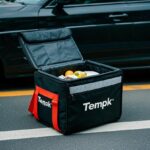
| Soft insulated bag | May reduce heat gain if its construction is suitable | Compatibility with -78.5°C dry ice or route performance | Verify the exact material, liner, closure and gas-release design, then test |
| Vented inner bag inside a rigid insulated shipper | May organize or contain dry-ice pieces while the outer shipper supplies most insulation | Payload temperature control by itself | Evaluate the inner bag, outer container and payload as one packout |
Do not confuse solid dry ice with a frozen pouch
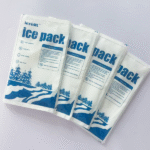
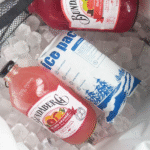
Solid dry ice is carbon dioxide, UN1845, and disappears by sublimating into gas. A reusable pouch can contain water, gel or phase-change material and follows different handling, reuse and duration rules. Read the label or safety data before choosing a bag or estimating time.
A zipper or tight closure is not automatically better
Reducing warm-air exchange can help thermal performance, but dry ice continuously releases gas. A closure that traps that gas can create pressure. The correct design must balance thermal control with a safe gas-release path; “seal it as tightly as possible” is unsafe advice.
Why a universal 18–48-hour answer is unreliable
The previous version of this page promised 18–48 hours without defining the bag, dry-ice mass, payload or ambient profile. That number cannot be transferred from one setup to another. Two bags that look alike can have different foam thicknesses, liner materials, seams, closures and usable volumes. The same bag can also behave differently when half empty, opened repeatedly, placed in direct sun or carried through a delayed route.
Dry-ice form and starting mass change the result
Blocks generally have less exposed surface area per unit of mass than pellets or small pieces, so form affects loss rate. Starting with more dry ice may extend availability, but it also changes package weight, gas generation, handling and transport requirements. More dry ice is not a substitute for a compatible package or a defined test.
Useful hold time belongs to the payload
Some dry ice remaining does not prove the product stayed within its required temperature range. A sensor near the coolant can read differently from a sensor at a warm corner or inside the payload. Define the payload acceptance range and sensor positions before deciding when hold time ends.
What public sublimation rates can and cannot tell you
The CDC frozen-specimen packing guidance states that dry ice may sublimate at 5–10 lb (about 2.3–4.5 kg) per 24 hours in its described shipping context and specifies a Styrofoam cooler with walls at least two inches thick. Youngstown State University’s dry-ice procedure gives the same broad rate for a typical storage cooler and notes that blocks last longer.
| Use the 5–10 lb/day reference to | Do not use it to |
|---|---|
| Screen whether a proposed starting mass is obviously too small for an overnight plan | Promise that a particular flexible bag will last 24 hours |
| Plan how much dry ice might be lost before dispatch or during a delay | Infer payload temperature without measuring the payload |
| Set a conservative first trial that will be refined with measured mass loss | Replace a route profile, repeat test or carrier review |
Use the public rate as a planning screen only. Record your own starting and ending mass, elapsed time, openings, ambient exposure and payload temperatures. Those observations are more relevant to the next trial of the same controlled configuration.
Factors that shorten dry-ice life in a bag setup
Thin insulation and thermal bridges
Flexible walls compress, fold and develop warm paths at seams, zippers and handles. A shiny liner may reflect radiant heat, but it does not by itself establish insulation thickness or route performance.
Helpful decision tools
Check the details before you choose packaging
These quick tools can help you compare route risk, sizing needs, coolant choices, and packaging details before you request a quote.
Packaging Selector
Compare insulated packaging options by product, route, and temperature need.
Find packagingInsulation Material Drop Resistance
Review drop resistance and handling factors before choosing insulation materials.
Check resistanceBox Liner & Pallet Cover Sizing
Check box liner and pallet cover sizing logic for insulated packaging projects.
Estimate sizingEmpty space and a warm payload
Air volume, warm products and unconditioned packaging add heat that the dry ice must absorb. Condition the payload and packaging according to the approved process; do not assume adding loose filler corrects an undefined packout.
Openings, sun and route delays
Each opening admits warm air. Direct sun, a hot vehicle, an outdoor loading wait or a missed connection can change the heat load. Plan the route and a credible delay case rather than testing only an uninterrupted indoor hold.
Placement and contact risk
Dry ice concentrated against one flexible wall can create a local cold spot and stress materials. Direct contact can also overcool or damage some products and primary containers. Use the placement and separation specified for the product and package.
Choose the configuration by the job
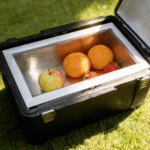
For a brief transfer from a supplier, the original loose wrap may be adequate only for the instructed handling interval before the dry ice enters a compatible container. For a soft insulated bag, review material compatibility, closure, seams and venting before testing. For a regulated or high-value shipment, a vented rigid insulated outer package is usually a clearer basis for documenting the full packout than a loose bag alone.
If the exact soft-bag design is already confirmed as compatible, use the dedicated guide to test insulated-bag closure and seam performance. That page covers failure modes and repeat testing; this page remains focused on deciding what kind of “bag” is actually being discussed.
Run this seven-step bag and hold-time check
- Identify the coolant. Confirm solid carbon dioxide and its UN1845 identity rather than assuming every frozen pouch is dry ice.
- Define the payload requirement. Record the product’s permitted temperature range, required transport window and delay allowance.
- Classify the bag. Document whether it is loose wrap, ordinary plastic, a soft insulated bag or an inner component of a rigid shipper.
- Verify compatibility and gas release. Obtain the bag or package instructions, material limits and closure method. Do not create an airtight enclosure.
- Record the complete starting configuration. Note dry-ice form and mass, payload, conditioning, placement, empty space, sensors and package dimensions.
- Test the route and a delay case. Reproduce relevant ambient exposure, handling and openings while logging payload temperatures.
- Review and repeat. Compare acceptance results, remaining mass and failure locations. Repeat after any change to bag, supplier, dry-ice form, payload, route or packing method.
Safety and shipping controls still apply
Wear suitable insulated gloves and eye protection when handling solid dry ice. Work where carbon-dioxide gas cannot collect, and never leave dry ice in a sealed bag, airtight cooler, occupied vehicle or other unventilated space. Do not use a household freezer as a dry-ice storage method.
For air transportation, the FAA dry-ice fact sheet says packaging must permit carbon-dioxide gas release and shippers must follow the applicable hazardous-material and carrier instructions. Confirm the current rules for the origin, destination, mode, quantity and carrier instead of treating a bag label as approval.
Use the related guide that matches the next decision
- For a general 24-, 48- or 72-hour shipment, use the complete packout hold-time planning guide.
- For dry ice received before packing, follow the receipt-to-dispatch usable-mass record.
- For full package architecture and validation, review how dry-ice packaging systems protect frozen payloads.
- For a defined large cooler, use the large-cooler dry-ice planning method.
Frequently asked questions
How long does dry ice last in a normal plastic bag?
A normal plastic bag provides little thermal protection, so it does not support a reliable duration claim. Never tie or seal the bag around dry ice. Move the dry ice into a compatible vented insulated setup according to the supplier’s handling instructions.
Can I put dry ice in a reusable insulated food bag?
Only after the exact bag manufacturer or responsible package designer confirms material compatibility and a safe gas-release method. Many food-delivery bags are designed for gel packs, not -78.5°C solid carbon dioxide. Test the complete configuration before relying on it.
Does remaining dry ice mean the shipment stayed frozen?
No. Remaining dry ice shows that some coolant is still present, not that every part of the payload remained within range. Use appropriately placed temperature sensors and a defined acceptance criterion.
What should I do with dry ice left after delivery?
Do not put it in a trash can, drain, freezer or sealed container. Follow the sender’s instructions and the safe post-delivery dry-ice disposal guide.