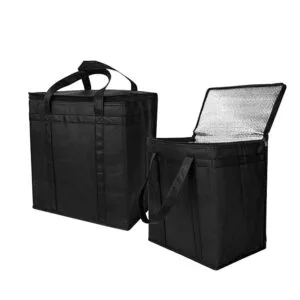
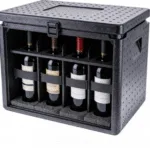
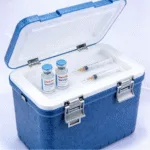
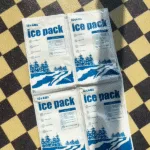
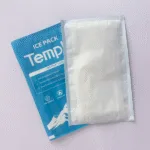
Dispose of the bag only after every piece of solid dry ice is gone. If the bag is still very cold, stiff, bulging, hissing, or contains white solid pieces, do not sort it with ordinary packaging. Leave it open or vented in a secure, well-ventilated place and follow the solid dry ice disposal steps. Once the bag is empty and has warmed, read its label, identify the material, check for contamination, and use only a waste or recycling route that accepts that exact item.
This page starts after the dry ice is gone
Dry ice is solid carbon dioxide. It does not melt into a liquid; it changes directly into gas. That distinction creates two separate jobs:
- Job 1: manage any remaining solid dry ice. Protect skin and eyes, provide ventilation, and never trap it in a sealed container.
- Job 2: sort the empty bag or liner. This begins only after no solid remains and the packaging is no longer dangerously cold.
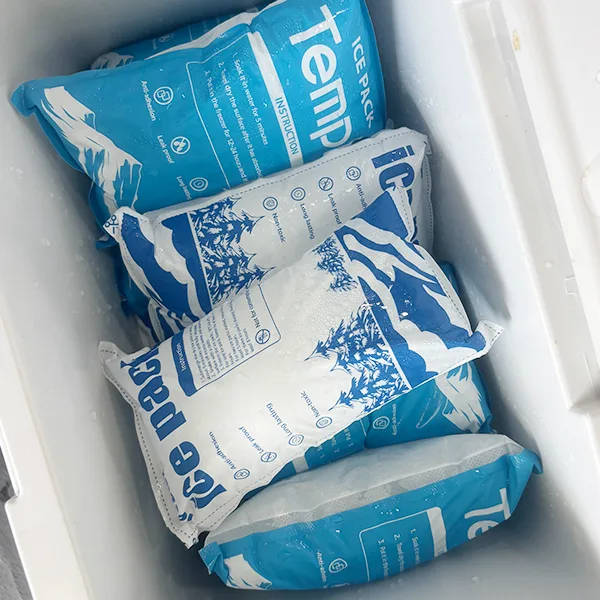
Do not use the word “ice pack” as proof of what is inside. A flexible gel pack, a phase-change material pack, and a bag that held solid carbon dioxide can look alike in a delivery box but require different decisions. If you are unsure, use the coolant identification guide before opening, draining, or discarding anything.
First check: is the bag truly empty?
Treat the package as if dry ice remains when you can see or feel solid pieces, when the package is intensely cold, or when gas pressure appears to be building. Do not squeeze it, tie it shut, place it in a sealed bin, or put it into household trash. Do not put remaining dry ice in a sink or toilet.
Instead, place the package where unauthorized people, children, and animals cannot reach it, keep the opening vented, and allow the dry ice to finish sublimating in a well-ventilated area. Wear insulated gloves and safety goggles when contact with remaining dry ice is possible. The CDC’s dry ice safety guidance explains these controls. A workplace, laboratory, clinic, or food operation should also follow its own safety data sheet, standard operating procedure, and environmental health and safety rules.
A six-step decision for the empty bag
- Wait until no solid remains. The bag should be empty, no longer producing visible cold vapor, and safe to approach under your local procedure.
- Read the label and sender instructions. Look for a material description, return or take-back instruction, disposal statement, and warnings against opening or reuse.
- Identify the construction. Separate plain film, paper, nonwoven fabric, foam, and foil or multilayer laminates. A recycling symbol does not by itself prove that the local program accepts the whole bag.
- Check the condition. Is the item clean and dry? Is it torn, wet, oily, food-soiled, or exposed to a biological or chemical shipment? Contamination can change the route.
- Ask the receiving program. Confirm the exact material, size, labels, closures, cleanliness requirements, and whether a store drop-off or company take-back is available.
- Use one approved route. Reuse only when the packaging is designed and approved for it; recycle only where accepted; otherwise follow the local residual-waste or controlled-waste instruction.
Match the material to the right question
| What the empty item appears to be | What to check | Practical route |
|---|---|---|
| Single-layer plastic film bag or liner | Film type, handles or zippers, cleanliness, and local drop-off rules | Keep it out of curbside recycling unless the local program explicitly accepts it. A store collection may accept clean, dry film, but confirm first. |
| Paper or kraft outer bag | Plastic coating, foil layer, wet strength, tape, and contamination | Recycle only if the paper stream accepts that construction and it is clean and dry; otherwise use the instructed waste route. |
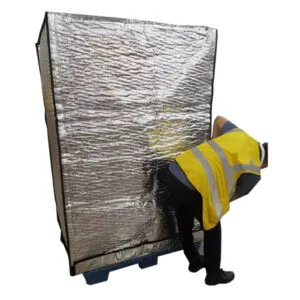
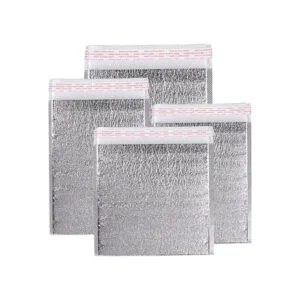
| Foil, bubble, woven, or multilayer laminate | Whether layers can be separated and whether a specialist or sender take-back exists | Do not assume curbside acceptance. Ask the sender, manufacturer, or local program. |
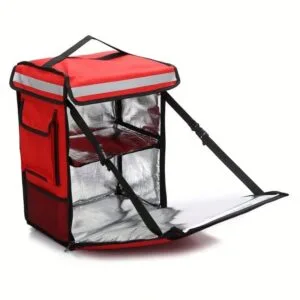
| Foam insert or insulated liner | Exact foam type and a named local collection point | Use a verified special collection where available; otherwise follow local residual-waste guidance. |
| Unknown, damaged, or contaminated packaging | Shipment contents, leak history, sender instructions, workplace controls | Do not improvise. Isolate it as required and ask the sender or responsible waste/safety contact. |
The U.S. EPA notes that plastic bags and wraps generally should not go into curbside recycling and that acceptance varies by local program. Its recycling FAQ is a useful starting point, but your local collector’s current rules remain decisive.
When is reuse reasonable?
Reuse is not automatically better or safer. Consider it only when the manufacturer or sender permits reuse, the bag was designed for more than one trip, its closure and seams are intact, and the previous shipment did not create a contamination concern. Clean it only by the method specified for that material.
Do not reuse an unknown bag for food contact, medicines, biological materials, or another temperature-critical shipment. A bag that is punctured, delaminated, brittle, stained, or difficult to clean should not be promoted back into a safety-critical role. Business users should record the decision in the packaging or waste procedure rather than relying on an employee’s visual guess.
Helpful decision tools
Check the details before you choose packaging
These quick tools can help you compare route risk, sizing needs, coolant choices, and packaging details before you request a quote.
Dry Ice Calculator
Estimate dry ice needs for frozen or ultra-cold shipments before packing.
Estimate dry iceCompliance Checklist Generator
Build a practical checklist for packaging review, shipping, and documentation.
Build checklistCoolant & PCM Reference
Compare coolant and PCM options when a route needs added temperature support.
Compare optionsHousehold and workplace routes are not identical
At home
Finish the dry ice step in a ventilated, controlled location. After the bag is empty, check the delivery instructions and your municipal or hauler rules. Keep films and flexible bags out of the curbside bin unless the program names them as accepted. If a retailer offers film collection, confirm that this bag’s material and condition qualify before bringing it.
At work, in a laboratory, or in a clinic
Use the shipment record, safety data sheet, internal SOP, and waste profile. Do not place packaging exposed to specimens, medicines, hazardous chemicals, or unknown leaks into an ordinary recycling stream without authorization. The NIH compressed-gas safety guidance reinforces the need for ventilation and local controls when dry ice is used at work.
Do not confuse an empty dry ice bag with a gel or PCM pack
A sealed pouch that is still heavy, flexible, slushy, or filled with gel or liquid is not an empty dry ice bag. Do not cut it open or pour its contents down a drain based on appearance alone. Use the dedicated gel and PCM pack disposal guide. For a delivery containing several materials, use the complete cold-chain packaging sorting guide to separate the coolant, liner, box, film, and insulation.
Common mistakes to avoid
- Tying the bag shut while dry ice remains. Carbon dioxide gas needs a safe escape path.
- Putting solid dry ice into trash, a sink, or a toilet. Finish the controlled sublimation step first.
- Putting film into curbside recycling by default. This can contaminate the recycling stream or tangle sorting equipment.
- Assuming every “dry ice pack” contains dry ice. The product may instead contain water, gel, hydrated material, or a phase-change formulation.
- Rinsing an unknown residue into a drain. Identify the contents and follow the label or responsible waste contact.
- Reusing compromised packaging. A cold-chain bag can look reusable while its seams, barrier layer, or hygiene status no longer meets the job.
Frequently asked questions
Can an empty dry ice bag go in the trash?
Only after all solid dry ice is gone and only if the bag is not subject to a different return, recycling, contamination, or workplace waste rule. Check the label and local instructions. Never use a closed trash container as a place for remaining dry ice to sublimate.
Can I put the bag in plastic-film recycling?
Sometimes, but not by assumption. The program must accept that exact film construction, and it commonly requires the bag to be clean and dry with unacceptable attachments removed. Multilayer, foil-lined, bubble, woven, or contaminated bags may be excluded.
Should I cut the bag open to check it?
Not while dry ice remains and not when the label says to keep it sealed or the contents are unknown. Use visible label information, shipment records, and the sender’s instructions. If the item is a sealed gel or PCM pack, opening it may create a leak rather than solve the identification problem.
What if the bag came from a medical or laboratory shipment?
Do not put it into household recycling based only on appearance. Follow the organization’s SOP and ask the responsible safety or waste contact, especially when contamination, specimen leakage, or regulated contents are possible.
Bottom line
Separate the coolant decision from the packaging decision. First make sure the dry ice has completely sublimated under safe, ventilated conditions. Then identify the empty bag, check its condition and shipment history, and follow a verified reuse, take-back, recycling, or waste route. If the material or contamination status is unclear, the safest next step is to ask the sender, manufacturer, local program, or workplace safety contact—not to guess.