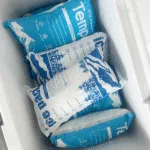
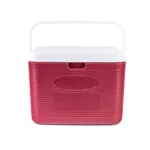
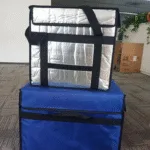
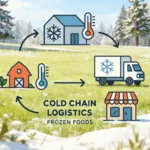
There is no universal number of gel ice packs for cold chain shipping. The correct quantity depends on the product temperature range, payload mass, carton size, insulation type, route duration, ambient exposure, gel pack size, starting temperature, and required safety margin. A small chilled meal shipment may need a different coolant-to-payload ratio than a seafood parcel, a grocery box, or a medical sample kit.
This article explains how enterprise buyers can estimate gel pack quantity before requesting samples. It does not replace thermal validation. Instead, it gives a practical framework for preparing shipment data, avoiding common under-sizing mistakes, and using a calculator or sample test more effectively.
Start with the required arrival condition
The first question is not “how many gel packs?” The first question is “what temperature must the product maintain?” A chilled food packout, a 2-8°C medical shipment, and a frozen seafood shipment require different coolant logic.
FDA food guidance states that cold food should be kept at 40°F / 4°C or below. FedEx describes gel coolants for products that should remain between 34°F / 1°C and 50°F / 10°C. For frozen food, FDA safe handling guidance references freezer storage at 0°F / -18°C or below. These source-backed values show why one gel-pack quantity cannot fit every program.
Key variables that change gel pack quantity
| Variable | Why it changes gel pack quantity | What to provide to your supplier |
|---|---|---|
| Product temperature target | Lower target temperatures usually require more coolant or stronger insulation. | Required temperature range and acceptable arrival condition. |
| Payload mass | A larger payload may hold cold longer but also requires more total heat protection. | Total product weight and product dimensions. |
| Starting temperature | Pre-chilled product needs less pull-down energy than warm product. | Product loading temperature and pre-cooling method. |
| Box size and headspace | More air space increases thermal instability and can change coolant placement. | Inner carton dimensions and product layout. |
| Insulation type | Foam box, EPP box, VIP box, or liner changes heat gain rate. | Insulation material, thickness, and whether the carton is fixed. |
| Route duration | 24-hour and 48-hour routes need different safety margins. | Door-to-door time plus possible delay. |
| Ambient exposure | Summer heat, winter freeze risk, truck dwell, airport dwell, and doorstep dwell matter. | Seasonal and lane information. |
| Gel pack size | A few large packs and many small packs can behave differently. | Pack dimensions, fill weight, and placement requirement. |
| Product sensitivity | Medicine, chocolate, produce, and salad may be damaged by direct frozen contact. | Freeze sensitivity and product separation requirement. |
A practical estimation workflow
A gel-pack estimate should be built in steps.
First, define the product target. Is the goal below 4°C, within 2-8°C, below 10°C, or simply “arrives cool”? Second, confirm the starting condition. Gel packs should not be expected to pull warm product down to safe temperature during shipping. Third, choose the insulation format. A carton liner, EPS shipper, EPP cooler, VIP box, or insulated bag will change the heat gain rate. Fourth, estimate the route time and delay margin. Fifth, select gel pack size and placement. Sixth, test the complete packout with data loggers.
The basic thermal logic is:
Required coolant capacity = heat entering through the package + heat from product and air space + handling and delay margin.
This is a planning equation, not a finished validation method. The final quantity should be confirmed with a sample packout under realistic ambient conditions.
Source-backed design references
| Reference point | Source-backed detail | How it affects gel pack planning |
|---|---|---|
| Chilled food safety | FDA says cold food should be kept at 40°F / 4°C or below. | Defines chilled food packout target and receiving acceptance checks. |
| Gel coolant use range | FedEx describes gel coolants for 34°F / 1°C to 50°F / 10°C shipments. | Helps determine whether gel packs are suitable for the requested range. |
| Foam insulation reference | FedEx recommends an insulated foam container with minimum 1.5 in / 4 cm walls for perishables. | Shows that insulation thickness can reduce the coolant burden. |
| Absorbent and liner use | FedEx recommends plastic liners and absorbent material for perishables. | Helps protect cartons from condensation and leaks. |
| Dry ice distinction | FedEx identifies dry ice for frozen shipments, not general chilled gel-pack shipments. | Prevents using gel packs where a frozen packout or dry ice design is needed. |
Gel pack placement matters as much as quantity
More gel packs do not automatically mean better performance. Placement determines how the cold source interacts with the payload and the warmest surfaces of the package. FedEx guidance for cold or frozen items recommends placing coolants on all sides and on top of the product. In practice, the best layout depends on box orientation, payload shape, and product sensitivity.
For chilled food, gel packs may be placed above and around the food to reduce heat gain from the top and sides. For medicine, a product chamber or divider may be required to prevent frozen coolant from touching the payload. For seafood, the coolant plan may prioritize direct cold contact if the product is packed to tolerate it. For chocolate or produce, buffering and separation are more important.
Helpful decision tools
Check the details before you choose packaging
These quick tools can help you compare route risk, sizing needs, coolant choices, and packaging details before you request a quote.
Route Risk Checker
Review lane conditions before selecting packaging for real operating requirements.
Check route riskDry Ice Calculator
Estimate dry ice needs for frozen or ultra-cold shipments before packing.
Estimate dry iceIce Pack Calculator
Estimate gel ice pack quantity for chilled shipments and practical route planning.
Estimate ice packsExample planning table for a supplier RFQ
Use the following table to prepare data before using a calculator or requesting samples. Do not use it as a validated packout specification.
| Input category | Buyer should define | Why the supplier needs it |
|---|---|---|
| Product profile | Product type, weight, loading temperature, sensitivity to freezing or moisture. | Determines coolant type and whether separation is required. |
| Temperature goal | Maximum allowed temperature at arrival and whether freeze is prohibited. | Determines gel pack temperature, quantity, and placement. |
| Shipment duration | Planned service time and realistic delay margin. | Drives total thermal capacity needed. |
| Carton and insulation | Box size, liner or foam type, wall thickness, closure style. | Determines heat gain and available space for gel packs. |
| Operating process | Warehouse freeze capacity, packout labor, pack sequence, storage before pickup. | Determines whether the design is practical at scale. |
| Acceptance method | Data logger, receiving temperature check, customer visual inspection. | Determines how performance will be verified. |
Common gel pack under-sizing mistakes
The most common mistake is designing for the carrier label time rather than the real route. A “one-day” shipment can still experience pickup delay, sorting hub dwell, hot vehicle exposure, and doorstep dwell. A second mistake is ignoring payload starting temperature. If warm product is placed into a cold box, the gel packs will be consumed cooling the product rather than protecting it through transit. A third mistake is using a thinner liner or larger carton after the original packout has already been tested.
Another common issue is freeze damage. A buyer may add extra frozen gel packs to solve summer warming, but the additional packs can freeze the product during the early hours of transit. This is especially relevant for medicine, salads, chocolate, and produce. In those cases, the packout may need PCM, a divider, a warmer gel conditioning method, or a two-stage insulation layout.
When to use a calculator and when to test
An ice pack calculator is useful for early design. It helps the buyer compare payload mass, route time, insulation format, and coolant assumptions before ordering samples. However, a calculator should not be the final acceptance method for a cold chain program. It cannot fully reproduce every carrier lane, carton orientation, warehouse process, or customer receiving condition.
Use a calculator for screening. Use sample testing for approval. Use route trials when the product is high value, regulated, perishable, or brand-sensitive.
FAQ
Can I copy the gel pack quantity used by another brand?
No. The other brand may use a different box size, product weight, insulation material, loading temperature, lane profile, or arrival requirement. Copying pack counts can create under-cooling, over-freezing, or unnecessary cost.
Should gel packs go on top or around the product?
In many parcel packouts, top exposure is important because heat can enter from the top and because packages may be handled in different orientations. FedEx recommends placing coolants on all sides and on top for cold or frozen items, but the final layout should be tested.
Do more gel packs always improve food safety?
Not always. More gel packs increase cold capacity, but they can also add weight, reduce product space, increase condensation, and freeze sensitive products. Use the minimum validated quantity with a realistic delay margin.
Can gel packs keep frozen food frozen?
Standard gel packs are often better for chilled ranges. For true frozen shipping, dry ice or a frozen PCM system may be needed depending on product, route, and insulation.
Final takeaway
The number of gel packs should be calculated from the full shipment profile: temperature target, payload mass, starting temperature, insulation, box size, route time, ambient exposure, and safety margin. Use calculators to narrow the design, then approve the final packout through sample testing or route trials. For B2B cold chain programs, the goal is repeatable in-range arrival, not simply adding the largest possible number of ice packs.