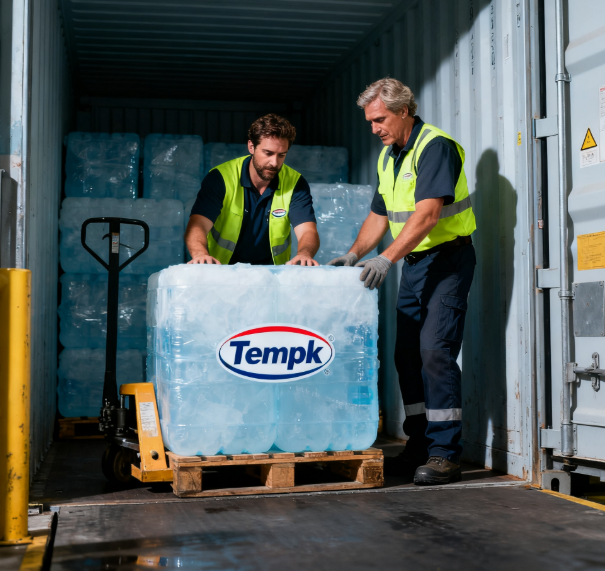
Temperature Controlled Packout Define It Before Testing
A temperature controlled packout is not a box with coolant added at the last minute. It is a documented shipping configuration: payload, insulation, cooling or phase-change media, separation layers, packing geometry, closure, preparation method and operating instructions. The configuration must be clear before a sample test can answer a useful question.
This matters because materials do not perform in isolation. The same shipper can behave differently when payload mass, fill level, coolant conditioning, void space, staging time or ambient exposure changes. A complete packout is the unit that should be designed, reviewed and, where required, qualified.
Start with a shipment brief not a component request
The best starting point is a small set of agreed inputs. These do not have to be perfect, but unconfirmed items should be visible rather than silently replaced with assumptions. The product owner defines the handling requirement; packaging and operations define what must be built and checked.
| Input | Question to settle | What it changes |
|---|---|---|
| Product requirement | What condition must the product remain within, and is it vulnerable to freezing, heat, orientation, humidity or shock? | The acceptable thermal direction and required barriers. |
| Payload profile | What are the dimensions, mass, starting condition and permitted fill range? | Usable space, thermal mass, restraint and the layout to evaluate. |
| Distribution exposure | What are the expected transit duration, handoffs, delays, season and ambient extremes? | The design profile and margin to assess. |
| Operating model | Where will materials be stored, conditioned, assembled and handed to the carrier? | Whether the configuration can be reproduced outside a controlled trial. |
| Evidence required | Is the immediate need a fit check, a development test, an operational check, a lane review or a formal qualification? | The test plan and the claims that may be made afterward. |
Specify the packout as a controlled configuration
The configuration should be identifiable enough that another trained person can build the same unit. A configuration sheet or controlled drawing should include component names and sizes, coolant count and state, payload position, barrier or divider location, void-control material, closure method, any monitoring device and the sequence of assembly.
Define the permitted payload range rather than approving only an ideal full box. A lower fill can create more air space, change restraint and alter the relationship between payload and coolant. If an arrangement has not been evaluated, it should be treated as a new condition to review rather than as an automatic extension of the largest load.
Design for both heat ingress and local cold exposure
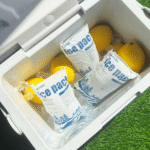
Insulation slows heat transfer; it does not set a safe payload temperature on its own. Cooling media can provide thermal reserve, but can also create a local cold-side risk when the layout or preparation method is wrong. Separation layers, spacing and the position of the payload are therefore functional parts of the packout, not cosmetic additions.
For medicines under the relevant regulatory scope, EU GDP guidance says cool-packs in insulated boxes should be positioned to avoid direct product contact where freezing is a concern, and that personnel should be trained on assembly procedures. The specific protection method must still be selected against the actual product requirement and evidence.
Helpful decision tools
Check the details before you choose packaging
These quick tools can help you compare route risk, sizing needs, coolant choices, and packaging details before you request a quote.
Ice Pack Calculator
Estimate gel ice pack quantity for chilled shipments and practical route planning.
Estimate ice packsCoolant & PCM Reference
Compare coolant and PCM options when a route needs added temperature support.
Compare optionsDry Ice Calculator
Estimate dry ice needs for frozen or ultra-cold shipments before packing.
Estimate dry iceTest a question that has boundaries
A test report is useful only when it names the question it answered. The protocol should state the configuration, payload, coolant-conditioning method, external profile, duration, sensor locations and acceptance criteria. The result applies to those documented conditions. It should not be converted into a universal hold-time promise for other routes, loads or seasons.
Health Canada guidance uses the same practical framing for drugs when a thermal packout is the main means of environmental control: container selection should consider product requirements, volume, route-related ambient extremes and estimated maximum transport time; qualification should match expected ambient extremes. These are useful questions for any risk-sensitive packout, even though the legal context differs by market and product.
Deploy the design with a short work instruction
Once a configuration is selected, convert it into a packing instruction that a warehouse team can execute consistently. Use a photo or drawing at the point of assembly and make the checks observable. The goal is not paperwork for its own sake; it is to ensure the tested arrangement and the shipped arrangement are the same.
- Before assembly. Verify product applicability, component identity, physical condition and coolant preparation.
- During assembly. Follow the approved sequence, keep required barriers in place and control the time-sensitive steps.
- Before release. Confirm closure, label, documents, logger status where used and any required configuration record.
- At handoff and receipt. Define the carrier handoff, receiver checks and the path for delay, damage or a temperature concern.
Review the packout when a meaningful input changes
A packout should be reviewed when the product, payload, insulation, coolant, conditioning method, packing geometry, route, season, carrier process or acceptance basis changes. Not every change requires a full redevelopment, but each deserves a deliberate decision about whether existing evidence still applies.
A temperature controlled packout earns confidence when its design, evidence and operation stay connected. Select the components around the shipment profile, document the arrangement, assess it under defined conditions and train the assembly team to reproduce the result.
Next step
For a useful packout review, provide the product condition, payload dimensions and mass, starting condition, expected duration and route risks, current packing layout, coolant preparation method and the result you need to support. This allows the packaging discussion to begin with the system rather than a generic box specification.
References
- WHO Technical Supplement Temperature Controlled Transport Operations by Road and Air
- European Commission Guidelines on Good Distribution Practice of Medicinal Products for Human Use
- Health Canada Guidelines for Temperature Control of Drug Products during Storage and Transportation