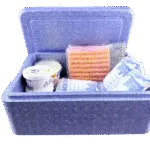
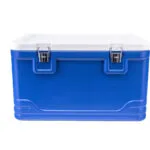
No. A normal household or commercial food freezer cannot preserve solid dry ice for long-term storage. Dry ice is solid carbon dioxide (CO2) and sublimates at about -78.5°C (-109.3°F), while a food freezer is normally around -18°C (0°F). It will therefore keep changing directly into gas. Buy it close to the time of use and hold it only briefly in a compatible insulated container that can vent, in a well-ventilated location. Never seal dry ice in a freezer, cooler, jar or other container.

First confirm that the material is solid dry ice
The phrase “dry ice pack” is ambiguous. Some sellers use it for solid CO2; others use it for a gel pack, water-activated sheet or phase-change-material (PCM) pack that must be frozen before use. The storage decision is completely different.
Check the label, shipping paperwork, product instructions and Safety Data Sheet (SDS). The same-site coolant identification guide gives a fuller comparison.
| What you observe | Material category | Storage decision |
|---|---|---|
| Label says “dry ice,” “carbon dioxide, solid,” “CO2” or “UN1845”; solid pieces gradually disappear without leaving liquid | Solid carbon dioxide | Do not use a normal freezer for long-term storage; use the short-term vented method below |
| The pack becomes soft, liquid or gel-like after thawing | Water, gel or PCM coolant pack | Follow the manufacturer’s freezing, conditioning and reuse instructions; this page’s solid-CO2 method does not apply |
| The sheet is soaked or filled with water before freezing | Water-activated coolant | Keep its instructions with the product and freeze only as directed |
| No readable label or the contents are uncertain | Unknown coolant | Do not guess from appearance; ask the supplier and review the SDS or shipment documents |
Why an ordinary freezer does not preserve dry ice
The freezer is much warmer than solid CO2
The USDA recommends about 0°F (-17.8°C) for a food freezer. That is cold enough for frozen food, but far warmer than the temperature at which dry ice exists at normal atmospheric pressure. North Dakota Health and Human Services states directly that normal freezers cannot keep dry ice frozen. Lowering the appliance setting does not bridge that gap.
Sublimation continues inside the appliance
Dry ice does not melt into a puddle under ordinary conditions. It changes directly into carbon-dioxide gas. Insulation can slow heat entering the container, but it cannot stop sublimation indefinitely. Every opening, warm surface, empty air space and heat leak changes the loss rate, so a freezer does not create a reliable “shelf life.”
A freezer is not a pressure-relief or ventilation system
The CDC dry-ice safety sheet says to use a container that releases gas and to keep dry ice in a well-ventilated room. A tightly sealed container can build dangerous pressure. A closed appliance or poorly ventilated room can also allow CO2 to accumulate. Do not assume that a door gasket, drain or appliance vent provides safe pressure relief.
Temporary freezer use during a power outage is a different task
Government food-safety guidance sometimes describes putting dry ice in a household freezer to keep food frozen during an outage. The FDA treats this as temporary emergency cooling, and the New York State Department of Health gives precautions for using dry ice with food-storage appliances.
This does not mean the freezer preserves the dry ice. The dry ice is deliberately consumed while it absorbs heat from the food compartment. Follow the relevant public-health instructions for the appliance, food load, placement and ventilation. Do not lock the appliance, block its intended vents or enter a walk-in freezer or cooler containing dry ice without an approved workplace procedure. NIH safety guidance warns against using or storing CO2 and dry ice in confined spaces, walk-in refrigerators and cold rooms.
Helpful decision tools
Check the details before you choose packaging
These quick tools can help you compare route risk, sizing needs, coolant choices, and packaging details before you request a quote.
Ice Pack Calculator
Estimate gel ice pack quantity for chilled shipments and practical route planning.
Estimate ice packsCoolant & PCM Reference
Compare coolant and PCM options when a route needs added temperature support.
Compare optionsInsulation Material Drop Resistance
Review drop resistance and handling factors before choosing insulation materials.
Check resistanceUse this short-term holding procedure
- Order close to the time of use. Buy only the amount supported by the packout plan, expected delay and supplier replenishment schedule. A normal freezer is not backup inventory storage.
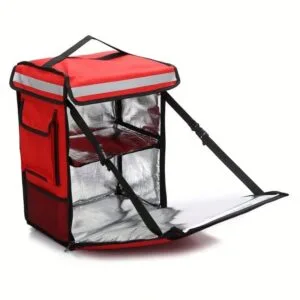
- Use a compatible insulated vessel. Select a container intended for dry ice or confirmed by its manufacturer for solid CO2. Do not improvise with glass, a thermos, a screw-top jar or an appliance compartment.
- Keep the vessel able to vent. The lid must not create an airtight seal. Do not tape, latch or wrap it closed in a way that traps gas.
- Choose a well-ventilated location. Keep the container out of closets, cold rooms, cellars, occupied vehicles and other confined or low-ventilation spaces. Workplace quantities may require an EHS ventilation assessment.
- Protect people from contact. Use loose-fitting insulated gloves or suitable tongs and eye protection. Do not touch dry ice with bare skin, place it in the mouth or leave it where children or untrained staff can reach it.
- Open the container only when needed. Each opening adds heat. Never put your head inside the container because CO2 can collect near the bottom.
- Plan the remaining material. Record when the dry ice was received and when it will be packed or allowed to sublimate under the approved disposal procedure. Do not expect the original mass to remain unchanged.
Match the action to the real use case
| Situation | Correct approach | Common mistake to avoid |
|---|---|---|
| You need dry ice for a shipment tomorrow | Arrange near-use delivery and hold it briefly in a vented insulated container in a ventilated location | Putting it in a sealed freezer and assuming no mass will be lost |
| You want to stock dry ice for recurring weekly shipments | Use a supplier replenishment plan, documented quantity limits and an approved storage area | Treating a household or walk-in freezer as long-term inventory storage |
| A power outage threatens frozen food | Follow current FDA or local public-health instructions for temporary emergency cooling | Confusing food protection with preservation of the dry ice itself |
| The product is a reusable gel or PCM pack | Follow its labeled freezing and conditioning instructions | Applying solid-CO2 ventilation rules to a sealed reusable coolant pack, or calling the pack “dry ice” without checking |
| A workplace wants to hold a large quantity | Have EHS review the room ventilation, vessel, access control, monitoring and emergency procedure before storage | Relying on odor to detect CO2; the gas is colorless and odorless |
There is no universal freezer storage time
A claim such as “dry ice lasts 24 hours in a freezer” is not dependable without the starting mass, form, insulation, container size, room conditions and opening frequency. Useful hold time for a shipment is a complete-system result, not a property of the dry ice alone. The 24-, 48- and 72-hour dry-ice planning guide explains which inputs change the result.
For shipping, use the Dry Ice Calculator only as a planning estimate, then verify the actual insulated container, payload, coolant layout, route profile and delay case. The solid-CO2 packaging explainer covers the role of the complete packout.
Workplaces should define controls before dry ice arrives
A laboratory, clinic, warehouse or shipping station should not decide where to put dry ice after delivery. Its written procedure should identify the approved vessel and location, maximum planned quantity, ventilation review, PPE, trained users, signage, access limits, spill response, disposal route and escalation contact. Keep the current SDS available.
- Confirm that the container manufacturer permits solid CO2 and that gas can escape.
- Keep receiving, storage, packing and disposal responsibilities clear.
- Assess whether CO2 monitoring is required for the quantity, room volume and ventilation; do not substitute a generic recommendation for the site’s EHS assessment.
- Reassess the procedure if the room, quantity, container, supplier or operating schedule changes.
Common storage questions
Can I keep dry ice in a freezer overnight?
A freezer will not stop sublimation, and it is not the preferred storage vessel. For a short interval, use a compatible vented insulated container in a well-ventilated location. If the purpose is emergency food cooling, follow the applicable FDA or local public-health instructions rather than treating the freezer as dry-ice storage.
Will dry ice damage a freezer?
It can expose shelves, liners, seals and nearby food to temperatures far below the appliance’s normal operating range. Thermal shock may crack some materials, and direct contact may freeze items that were not intended for ultra-cold exposure. Do not place dry ice directly on glass or an unverified surface; follow the appliance manufacturer’s instructions.
Can I seal dry ice in a cooler so it lasts longer?
No. Trapping the gas creates a pressure hazard. Insulation may slow heat gain, but the container must still vent. Never trade pressure relief for a slower sublimation rate.
What if my “dry ice pack” is soft after thawing?
It is not solid dry ice. It is likely a water, gel or PCM coolant pack. Keep it sealed and follow the product’s freezing, conditioning, reuse and disposal instructions.