A Procurement Plan for Supplier Dry Ice Pack for Cheese Packaging
The best cooling pack is not the one that stays frozen longest. It is the one your team can identify, condition, place, document, and reproduce inside a packout that protects the specific cheese. A procurement search for a supplier dry ice pack for cheese packaging should therefore begin with a short technical brief, not a price request. The brief must also remove a naming trap: solid carbon dioxide dry ice is an extreme refrigerant that releases gas, while hydration sheets, gel packs, and PCMs are reusable or reusable-capable coolants with different behavior. Once that boundary is clear, procurement can compare suppliers on evidence, production control, operational fit, and total delivered quality.
Build the Technical Brief
Prepare a Cheese and Route Brief
Create one brief for each meaningful product family. It should be concise enough for a supplier to understand but detailed enough to prevent a generic quotation.
Identify the cheese type, moisture and ripening category, retail format, primary packaging, case dimensions, payload mass range, dispatch condition, approved transport requirement, expected route, maximum evaluated time, and receiving process. Add the defects that matter: unsafe temperature exposure, freezing, crumbling, purge, oiling, rind damage, package leakage, label failure, odor transfer, condensation, or crushed presentation.
Use the producer’s food-safety plan, label, and shelf-life evidence. General transport guidance often places cheese in a chilled range and warns against both heat and freezing, but varieties differ. Properly ripened hard cheese may have a different safety and quality profile from fresh or soft cheese. The product owner must classify each SKU.
Map the route beyond line-haul time. Include cold-room picking, assembly, dock staging, carrier collection, cross-dock, vehicle or aircraft transitions, customs if relevant, delivery, and recipient handling. Identify low and high payloads. A small order in a large box can be a more difficult thermal case than a full one.
The brief should state who approves excursions. A packaging supplier can support thermal development, but it should not decide whether a temperature-exposed cheese is safe or saleable.
Make Coolant Identity a Pass-or-Fail Question
If the supplier calls a product a dry ice pack, require a plain-language identity.
Actual dry ice is solid carbon dioxide around minus 78.5 degrees Celsius at atmospheric pressure. It sublimates into gas and cannot be enclosed in an airtight package. It can freeze chilled cheese, alter texture, embrittle materials, and create carbon dioxide hazards. Air transport may require UN 1845 marking, quantity information, documentation, training, and carrier acceptance under current rules.
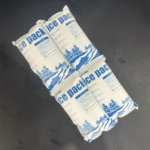
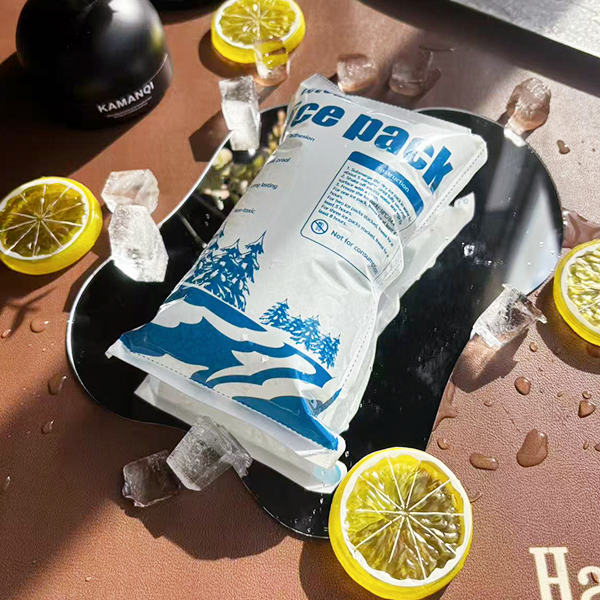
A hydrate sheet is activated with water and frozen. A gel pack contains a sealed coolant. A PCM pack contains a formulation with a defined phase-transition region. These products are not automatically dangerous goods and are not actual dry ice, though their composition must still be reviewed. They can nevertheless cause local freezing if used directly from a freezer without the separation or tempering required by the tested design.
Ask for:
- Material and coolant identity.
- Safety and intended-use information.
- Phase-transition data for PCM.
- Activation and conditioning procedure.
- Dimensions and mass in the used state.
- Film, seams, valves, and closures.
- Intended contact scenario and relevant declarations.
- Transport classification based on composition.
- Supported reuse and inspection instructions.
Reject phrases such as “food grade,” “long lasting,” or “pharma quality” when they appear without defined evidence. None establishes performance in a cheese shipper.
Engineer a Packout With Two Margins
A useful packout has a margin against warming and a margin against freezing. The margins are not visible from coolant count alone.
Insulation resists environmental heat. The coolant absorbs energy. Cheese and packaging add thermal mass. Dividers slow local cold conduction. Air space allows movement and convection. Lid seams and corners can become warm bridges. Direct contact between a frozen brick and a thin vacuum pouch can become the cold extreme.
Lay out the system on a controlled drawing. Identify every layer from outer carton to cheese. Fix coolant location and restraint. Prevent heavy packs from pressing on tubs or gift boxes. Use a defined divider or buffer when direct contact is not supported. Control voids for low payloads with a qualified insert rather than random paper.
Conditioning needs a written recipe. State equipment, load pattern, temperature range, minimum time, tempering if applicable, ready-state check, and staging limit. For hydration sheets, define water addition, soak, drainage, expanded weight or condition, freezing, and inspection. A compact dry sheet can be efficient in storage but only if activation is repeatable.
Moisture and odor should be design inputs. Keep pack condensation away from labels, paper dividers, and exposed surfaces. Use primary packaging suitable for the product’s intended gas and moisture exchange. Evaluate insulation, inks, gel, films, adhesives, and cleaning agents for off-odor. In mixed gift boxes, separate crackers, chocolate, or fruit when their humidity needs differ.
Ask Test Reports the Questions Marketing Leaves Out
“Keeps cold for two days” has little value without a test method. Ask which outer box, insulation, coolant quantity, conditioning, payload, ambient profile, sensors, and acceptance range produced the result. Confirm whether the components came from normal production and whether the test was repeated.
For your approval test, predefine:
| Protocol element | Why it matters |
|---|---|
| Product acceptance criteria | Determines whether the trace and product condition pass |
| Minimum and maximum payload | Captures different mass, void, and contact conditions |
| Hot and cold external profiles | Challenges warming and freezing risks |
| Sensor locations and attachment | Finds local extremes rather than a misleading average |
| Component lots and conditioning | Connects performance to controlled materials and process |
| Quality inspection after exposure | Captures texture, purge, oiling, condensation, seal, and odor |
Use representative cheese and packaging or justify a surrogate. A bottle of water may match mass but not geometry, fat, contact, or package behavior. Place sensors near suspected hot corners and coolant contact points, as well as representative product positions. State whether each measurement represents air, package surface, or product.
Standard parcel profiles can support development and comparison. A lane-specific program should incorporate actual handovers and exceptions. Test results establish performance within defined boundaries; they do not guarantee an unlimited journey or every cheese variety.
Approve a report connected to a bill of materials, drawings, photographs, conditioning instructions, and deviations. If a component changes, assess whether the evidence still applies.
Score the Supplier on What Protects Production
After technical fit is established, compare suppliers with a weighted scorecard. Avoid allowing a low unit price to hide weak lot control or high activation labor.
Helpful decision tools
Check the details before you choose packaging
These quick tools can help you compare route risk, sizing needs, coolant choices, and packaging details before you request a quote.
Packaging Selector
Compare insulated packaging options by product, route, and temperature need.
Find packagingCoolant & PCM Reference
Compare coolant and PCM options when a route needs added temperature support.
Compare optionsInsulation Material Drop Resistance
Review drop resistance and handling factors before choosing insulation materials.
Check resistanceEvaluate five areas:
- Material control: formulation, film, fill, dimensions, seals, and phase data.
- Quality process: lot release, traceability, nonconformance, complaint response, and corrective action.
- Change discipline: advance notice for formula, site, tooling, material, process, and sub-supplier changes.
- Operational fit: storage, activation, conditioning, labeling, pack speed, and freezer capacity.
- Commercial continuity: minimum order, lead time, case quantity, samples, customization, and backup supply.
Treat unknown commercial figures as supplier questions, not assumptions. Ask for normal-production samples. Compare flat, hydrated, and frozen dimensions. Inspect seams and odor. Run a packing-line trial before full launch, because a component that fits slowly on a bench may create mistakes at seasonal volume.
Define incoming inspection around risk. Verify identity and lot, packaging condition, critical dimensions or mass, leakage, cleanliness, and documents. Establish quarantine and escalation for unexplained variation. Retain reference samples where the quality system finds value.
Change notification is not administrative detail. A film change can alter seal strength or cold flexibility. A gel change can alter phase behavior. A new cell pattern can change coverage and pack fit. The buyer should decide whether review, inspection, confirmation testing, or requalification is required.
Design Routine Work Before the Launch Date
Make the qualified configuration easy to execute. Use unmistakable product codes, photographs, component kits, and status zones. Similar-looking coolants should be segregated. Define how packers verify conditioning and what happens to a pack that has warmed too long.
The work instruction should include cheese starting condition, payload range, coolant count and position, divider, logger placement, closure, labels, and maximum assembly time. Record pack completion and shipment identity according to the food-safety and quality program. Coordinate collection so packed cheese does not wait unnecessarily.
Receiving instructions should cover outer damage, insulation, leakage, cheese package condition, temperature or indicator status, and movement into approved storage. Where the food requires temperature control for safety, applicable sanitary transport responsibilities may include specified operating conditions and assessment at receipt. Confirm the rules for the market and roles.
Quarantine uncertainty. A cold pack remaining in the box does not prove the cheese stayed acceptable. A single air logger does not show every contact location. Follow the producer’s process for time-temperature excursions and physical damage.
For customer parcels, explain coolant handling in plain language. A reusable frozen sheet should not be described as hazardous solid dry ice. Actual dry ice needs appropriate warnings. Give a simple contact path so the recipient does not rely on odor or taste to assess safety.
Calculate Cost and Sustainability Per Successful Delivery
Unit price excludes activation labor, freezer energy, storage, freight, returns, cleaning, leakage, and cheese loss. Compare total cost per successful delivery for the same product and route requirement.
A water-activated sheet can reduce inbound volume but adds water and line steps. A filled brick can be simple to place but heavy. PCM may reduce temperature swings in a designed system but can cost more and demand tighter grade control. Reusable containers work best when return routes are dense and assets complete enough rotations.
Sustainability uses the same system boundary. Include material, manufacturing, conditioning, washing, return travel, component loss, recycling reality, and rejected cheese. Actual dry ice disappears as gas but is not impact-free and cannot be reused as coolant. A reusable pack is not automatically preferable if it is shipped back long distances or lost after one use.
Pilot returnable systems. Track recovery, damage, cleaning time, and thermal performance after cycling. Use condition-based retirement criteria for leaks, delamination, contamination, deformation, or label loss. Do not publish an unsupported reuse count.
Right-size carefully through controlled tests. Removing one pack may reduce weight but expose a warm corner. Replacing foam may change moisture resistance. Each modification should enter the same change and qualification process that protected the original design.
FAQ
What is the first document to send a cooling-pack supplier?
Send a product-and-route brief stating cheese category, approved condition, primary package, payload range, shipper dimensions, journey, exceptions, and quality failures. It gives the supplier a basis for proposing samples. Do not disclose sensitive formulation details beyond what is needed, but provide enough thermal and handling information to avoid a generic recommendation.
Is a dry ice replacement pack always safer than dry ice?
It avoids the specific gas and extreme-temperature behavior of solid carbon dioxide if it is truly a water-based or PCM pack. It can still leak, create condensation, or freeze cheese through direct contact. Verify identity and evaluate it inside the complete packout. Qualification is still required for the chosen use.
Should hard and soft cheese share one shipper?
They can only if the producer confirms compatible conditions and the qualified arrangement protects both. Soft cheese may drive refrigeration requirements, while hard cheese can be damaged by direct frozen contact. Mixed packs also require moisture, odor, and physical separation. Test the exact assortment or a justified family.
What does “food grade gel pack” prove?
The phrase alone proves little. Ask for material documentation relevant to the intended contact scenario, jurisdiction, temperature, and duration. Review the film, gel, printing, and closures as applicable. Material suitability still does not demonstrate thermal duration or sanitary handling. Ask which materials and exposure conditions the documentation covers.
When should the packout be retested?
Retest or perform an appropriate technical assessment after changes that may affect heat flow, capacity, geometry, hygiene, or reproduction. Examples include coolant formula, mass, film, dimensions, insulation, divider, payload, route, conditioning equipment, or work instructions. The quality system should define the scope based on risk.
Conclusion
Successful cheese cooling procurement follows a deliberate sequence: define product and route, identify the coolant, design warm and freeze margins, demand contextual test evidence, select a repeatable supplier, and control routine work. Solid carbon dioxide should be treated as a separate hazardous refrigerant, not a synonym for reusable cooling packs. Total cost and sustainability should be measured per saleable delivery, with cheese loss, labor, conditioning, freight, and recovery included.
About Tempk
Tempk supplies reusable and water-activated cooling-pack formats, gel packs, ice bricks, and insulated food-shipping products. These components give cheese businesses several geometries and conditioning workflows to evaluate. Tempk can discuss the product-and-route brief, provide component information, and prepare samples for packout trials. The cheese producer or distributor remains responsible for defining safety and quality limits, approving test criteria, and releasing the finished shipment.
Share your brief and proposed packout drawing with Tempk to plan a supplier sample review before commercial scale-up.