How to Specify a Wholesale Dry Ice Pack for Candy Transport
A melted bar is an obvious failure. A glossy assortment that arrives cold but develops sugar bloom the next day is harder to diagnose. Both outcomes can begin with the wrong wholesale dry ice pack for candy transport specification. The phrase itself is the first risk: it may mean solid carbon dioxide, a hydrated cooling sheet, a gel pack, or a phase-change pack. These materials do not share the same temperature, hazards, conditioning, or transport status. A professional specification therefore starts with the candy’s acceptable condition and ends with a controlled shipping system. The pack is one component between those two points.
Write a Product Condition Statement
Before choosing insulation or coolant, write a one-page condition statement for each candy family. It should say what must be protected and how success will be judged. This prevents procurement from turning “keep cool” into an arbitrary low temperature.
For a plain chocolate bar, the concern may be shape, gloss, bloom, snap, odor, and wrapper release. A filled bonbon may add center stability and a shorter handling window. A gummy assortment can be sensitive to tackiness and deformation. A hard-candy product may tolerate normal ambient temperatures but need strong moisture protection. A cream-filled or otherwise perishable confection can have safety controls established by the producer’s food-safety plan.
Include these elements:
- Product name and formulation family.
- Primary and secondary packaging.
- Approved dispatch condition.
- Acceptable temperature or product-condition limits.
- Visual, texture, and food-safety failure criteria.
- Maximum planned time from packing to controlled receipt.
- Any acclimation or receiving instruction.
- Quality authority responsible for excursion disposition.
Do not copy a temperature from a generic chocolate article into this statement. Pure chocolate guidance can inform development, but the exact formulation, filling, geometry, and shelf-life evidence govern the commercial product. If the team cannot define the acceptable condition, it cannot determine whether a test passes.
Resolve the Coolant Identity Before Comparing Prices
Solid carbon dioxide is true dry ice. It is about minus 78.5 degrees Celsius at atmospheric pressure and sublimates into gas. It can create severe local cold exposure and requires a package that releases gas. Depending on transport mode and jurisdiction, dangerous-goods marking, quantity information, documentation, training, and carrier acceptance can apply. It should not be placed in direct contact with candy or enclosed in an airtight container.
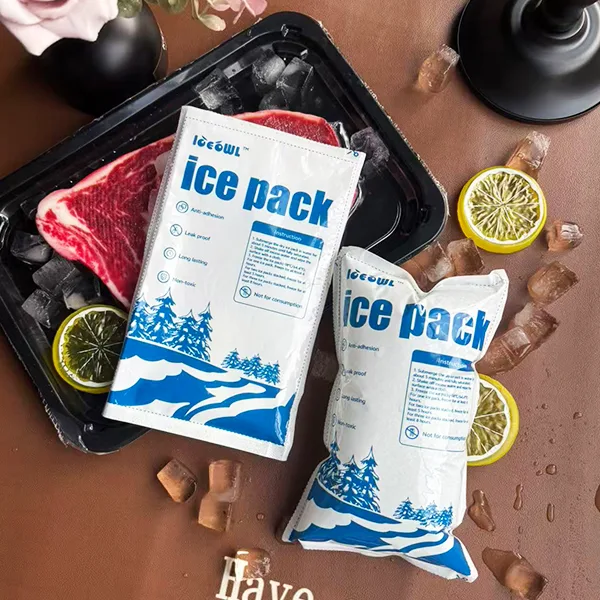
A hydrate sheet is commonly supplied dry, absorbs water, and is then frozen. A gel pack contains a sealed water-based or formulated filling. A PCM pack contains a material selected for a defined phase transition. These reusable or potentially reusable products are not solid carbon dioxide. Their commercial names should not drive classification or performance assumptions.
For most heat-sensitive candy, begin by evaluating an appropriately conditioned water-based or PCM coolant in an insulated shipper. Actual dry ice is a specialized option for a payload genuinely approved for frozen transport, not an upgrade for ordinary chocolate. If a sales quotation simply says “dry ice pack,” require the supplier to state composition, activation, conditioning, transport classification, and safety instructions in plain terms.
This identity check also prevents an operational error. Workers who believe a frozen gel sheet is dry ice may use unnecessary hazardous-material procedures; workers who mistake solid carbon dioxide for a reusable pack may seal it dangerously or handle it without protection.
Convert the Route Into a Thermal Challenge
Route duration is only one input. Record where the package waits, whether it is consolidated, how often it changes hands, and what happens at delivery. The challenge should include realistic hot and cold exposure, assembly delay, payload variation, and receiving conditions.
Consider a premium chocolate parcel shipped from a controlled warehouse. It waits near an open dock, travels in a line-haul trailer, passes through a hub, enters a local van, and may remain on a doorstep. The doorstep is visually dramatic, but the dock or van may be the dominant heat event. On arrival, a cold product is opened in humid air and develops condensation. A test that stops when the carrier scan says “delivered” misses the final quality risk.
Create a route worksheet with:
| Route element | Evidence to collect | Design implication |
|---|---|---|
| Origin staging | Time, temperature, sun exposure, pallet configuration | Assembly limit and outbound insulation |
| Carrier network | Mode, dwell, sortation, orientation, seasonal extremes | External profile and pack restraint |
| Payload variation | Minimum and maximum order family | Coolant mass and air-space control |
| Destination | Delivery timing, shade, receiving capacity, humidity | Last-mile margin and acclimation instruction |
| Exceptions | Weekends, customs, missed delivery, refrigeration loss | Contingency duration and monitoring decision |
The worksheet turns vague “summer shipping” into testable conditions. It also reveals when a carrier or process change needs review, even though the box and coolant have not changed.
Design Against Both Hot Spots and Cold Spots
Insulation slows environmental heat. Coolant absorbs it. Product and packaging add thermal mass. Their arrangement creates gradients, so average air temperature can conceal both a hot corner and an overcooled contact face.
Place cooling components to intercept likely heat paths, but keep them from pressing on delicate display cartons. Use defined dividers or sleeves when direct contact can cause cold damage, abrasion, or wetting. Control headspace because free air can circulate and because different order fills alter thermal capacity. Restrain packs so vibration does not change the evaluated geometry.
Conditioning must be a production process. Specify the equipment setting, loading pattern, minimum time, transfer limit, and any controlled tempering step. For hydrate sheets, define water quality if relevant, soak method, drainage, target hydrated condition, and inspection. For PCM, identify the correct formulation and how workers verify conditioning state. For gel packs, specify rejection of leaks, swelling, delamination, or contaminated surfaces.
Moisture control crosses every layer. Use suitable primary wrappers, protect presentation cartons from pack condensation, and maintain closure integrity. If the product owner approves acclimation in the sealed wrapper, include it in receiving instructions. Never use warm holding as a casual remedy for a confection that requires refrigeration for safety.
Qualify the Configuration, Not the Component
A supplier’s “hours of cooling” claim cannot be transferred to a different box. Qualification should identify the complete bill of materials, payload, packout, conditioning, external challenge, logger method, and acceptance criteria.
Use representative commercial product or a justified surrogate. Include the correct primary and secondary cartons because they influence heat flow and moisture. Test low and high payload configurations when both will be shipped. Place sensors at risk-based locations: near suspected hot corners, near coolant contact faces, and at representative product positions. Document probe attachment because a sensor in air reports a different event from one coupled to the product.
Helpful decision tools
Check the details before you choose packaging
These quick tools can help you compare route risk, sizing needs, coolant choices, and packaging details before you request a quote.
Insulation Material Reference
Compare insulation material choices for different cold chain packaging needs.
Compare materialsDry Ice Calculator
Estimate dry ice needs for frozen or ultra-cold shipments before packing.
Estimate dry iceCoolant & PCM Reference
Compare coolant and PCM options when a route needs added temperature support.
Compare optionsReview the trace rather than only the pass/fail label. An initially low reading may reveal insufficient tempering. A late rapid rise can show that the coolant is exhausted. Repeated spikes may correspond to chamber cycling or door events. Compare repeats to understand packout and material variability.
Standard thermal profiles can support development and cross-design comparison. Lane qualification adds route-specific evidence. Neither means the candy will remain saleable after any delay, nor does it excuse the quality team from setting disposition rules. A data logger records conditions; it does not protect the product.
The approved report should be connected to drawings, photographs, work instructions, training, and a change-control list. A test is valuable only if production can reproduce the tested system.
Make the Wholesale Contract Protect Consistency
Price negotiations should happen after functional requirements are explicit. A robust purchase specification covers:
- Flat, filled, hydrated, and frozen dimensions as applicable.
- Coolant or absorbent fill tolerance.
- Film, barrier structure, and seal construction.
- Cell pattern, valve, closure, and printing.
- Lot coding and production records.
- Leak and visual inspection methods.
- Packaging and storage before use.
- Conditioning and activation instructions.
- Material declarations for the intended contact scenario.
- Change notification for formula, film, dimensions, process, or site.
- Nonconformance, complaint, and corrective-action process.
Request samples from normal production and compare them with later lots. Conduct an incoming inspection that focuses on functional risk instead of cosmetic measurements alone. For example, seam placement and frozen thickness may matter more to a divider fit than minor print variation.
If reuse is planned, assign responsibility for cleaning, inspection, quarantine, and retirement. The supplier may design a durable pack, but only the operator controls what happens after the first trip. Avoid putting an unverified cycle count in the contract. Define condition-based acceptance and collect operational data during the program.
Bulk purchasing also affects freezer and labor capacity. Calculate the space needed for conditioned packs, the time to rotate inventory, and the effect of peak orders. A compact hydration sheet may reduce storage before activation but shifts work to soaking, draining, freezing, and inspection. A filled brick consumes more inbound volume yet may be simpler to condition consistently. Total operating cost is more useful than unit cost.
Put Sustainability and Customer Experience on the Same Scorecard
An oversized box with excessive coolant can prevent some heat exposure, but it increases material, freight, conditioning energy, and disposal burden. An underbuilt packout increases damaged product and reshipment. The goal is a right-sized system that delivers saleable candy reliably.
Compare options per successful delivery. Count the insulated shipper, coolant, outer carton, conditioning energy, return movement, washing, loss, and damaged candy. For a closed local route, durable reusable packs and containers may perform well because returns are predictable. For scattered one-way ecommerce deliveries, return logistics can be impractical, and a compact or locally manageable component may be preferable.
Customer experience belongs in the assessment. The package should identify reusable frozen coolant accurately, contain any moisture, avoid strong odors, and provide clear handling or disposal instructions. Solid carbon dioxide requires specific warnings and must not be presented as an ordinary reusable accessory.
Continuous improvement should use claims, temperature records, receiving photographs, and pack recovery data. Do not react to one melted parcel by adding coolant everywhere. Determine whether the cause was warm product, a late collection, wrong pack conditioning, a closure error, extreme exposure, or an unsuitable design. The corrective action should address the actual failure.
FAQ
What is the best first sample for a wholesale candy program?
Choose a sample that fits the planned carton and represents a feasible conditioning process. Ask for material identity, dimensions in the used state, fill tolerance, activation instructions, seal information, and a production-origin sample. Then build a representative packout rather than testing the pack alone. One sample cannot establish seasonal performance, but it can quickly reveal fit, handling, condensation, and quality concerns.
Can I specify a fixed number of packs per kilogram of candy?
Not safely as a universal rule. Surface area, insulation, empty space, starting temperature, pack geometry, ambient exposure, and acceptance limits all matter. A ratio may be derived for one qualified family of boxes, but it should stay within that family’s approved payload and route conditions. Retest before applying it to a new shipper or assortment.
Should the coolant touch the candy carton?
Only if the evaluated configuration allows it. Direct contact increases heat transfer and may create a cold spot, condensation, abrasion, or crushing. A controlled divider or air gap is often useful for delicate chocolate. The correct arrangement depends on the coolant temperature, wrapper, product sensitivity, and thermal test results.
What happens if a supplier changes the gel formulation?
The change may alter phase behavior, viscosity, leakage response, weight, and thermal performance. Your agreement should require notification and technical assessment before implementation. Depending on the significance and existing evidence, dimensional checks, material review, or repeat thermal testing may be appropriate. Document the decision before accepting production lots.
Is actual dry ice prohibited for candy?
Not categorically. It can be used when the candy or related frozen dessert product is approved for that condition and the package meets safety and transport requirements. It is usually an unnecessarily extreme choice for ordinary chocolate and sugar confectionery. Product compatibility and a qualified, vented packout must drive the decision.
Conclusion
A dependable specification links seven things: product condition, coolant identity, route challenge, packout geometry, test evidence, production control, and receiving practice. Miss any one and a cold pack can still deliver poor candy. Treat solid carbon dioxide as a distinct hazardous refrigerant, not as a synonym for reusable frozen packs. Buy components by their documented composition and repeatability, then approve them only in a shipping configuration that protects heat-sensitive confectionery without causing cold or moisture damage.
About Tempk
Tempk supplies several cooling and insulated-packaging component formats that can be considered for confectionery distribution, including water-activated cellular sheets, gel packs, ice bricks, insulated bags, and boxes. A useful supplier discussion begins with the candy family, shipper dimensions, conditioning capacity, route, and quality limits. Tempk can help narrow component choices and prepare samples for evaluation, while qualification and release decisions remain tied to the buyer’s complete packout and product evidence.
Send Tempk your draft condition statement and route worksheet to discuss a sample-to-production review for a wholesale candy cooling program.