There is no single storage rule that fits every insulin product, device and in-use state. For storage or transport planning, start with the current approved label for the exact insulin, then record whether it is unopened or in use, the permitted temperature range, the allowed time outside refrigeration and the action required after an excursion. In the United States, FDA emergency guidance describes refrigerated storage around 36°F to 46°F (2°C to 8°C) for unopened insulin and warns against freezing, but FDA’s product table also shows that room-temperature limits and in-use periods vary by product and presentation. The product label therefore controls the decision.
Use the exact label, not a generic temperature claim
Insulin is supplied in different formulations and presentations, including vials, cartridges and pens. Storage instructions can change after first use, and the permitted room-temperature period can differ. FDA’s emergency page gives a useful general reference, while its FDA-approved insulin product table documents product-specific differences. Quality teams should retain the current prescribing information or package insert for the exact market and product instead of copying one number into every lane profile.
For patients and caregivers, the prescribing information and advice from a pharmacist or healthcare professional take priority. This page is a storage and shipping control guide, not medical advice and not a substitute for the product label.
Build a storage requirement sheet before choosing packaging
A packaging request should begin with a controlled requirement sheet. Without it, a supplier may protect against heat yet create a freezing risk, or select a coolant layout that does not match the journey.
| Requirement | Evidence to record | Why it changes the packout |
|---|---|---|
| Exact product and presentation | Product name, strength, vial/cartridge/pen, market | Storage instructions and in-use rules may differ. |
| Product state | Unopened, opened or in use | The allowed temperature and time window may change. |
| Labeled storage conditions | Current approved label or manufacturer information | This defines the acceptance range, not the coolant type. |
| Excursion rule | Approved decision process and contact point | A logger reading alone does not decide product disposition. |
| Lane profile | Origin, destination, season, duration, delays and handoffs | Ambient exposure and transit time determine the challenge. |
| Payload configuration | Quantity, dimensions, mass and allowable movement | Payload geometry affects airflow, thermal mass and sensor placement. |
Prevent freezing as well as overheating
Adding more frozen coolant is not automatically safer. FDA advises that insulin should not be frozen and should not be used if it has frozen. A payload placed directly against a deeply frozen pack can experience a local cold spot even when the average air temperature appears acceptable. Use the conditioning method, barriers, spacing and packout layout defined by the approved design. Do not infer whole-system performance from the phase-change point or specification of one cold pack.
Helpful decision tools
Check the details before you choose packaging
These quick tools can help you compare route risk, sizing needs, coolant choices, and packaging details before you request a quote.
Packaging Selector
Compare insulated packaging options by product, route, and temperature need.
Find packagingIce Pack Calculator
Estimate gel ice pack quantity for chilled shipments and practical route planning.
Estimate ice packsBox Liner & Pallet Cover Sizing
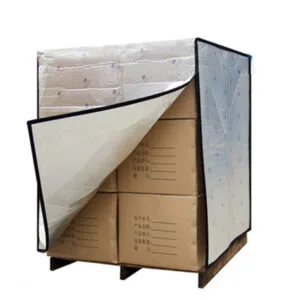
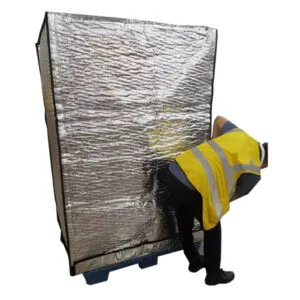
Check box liner and pallet cover sizing logic for insulated packaging projects.
Estimate sizingThe practical design question is not “Which ice pack is coldest?” It is “Which complete packout keeps every monitored payload location within the approved range for the defined lane and operating process?”
Qualify the complete packout for the route
- Define the product requirement. Lock the label version, product state and acceptance range.
- Map the route. Include packing, staging, pickup, hubs, customs or other holds, delivery and receiving.
- Select the system. Match the insulated shipper, coolant, barriers, payload arrangement and closure method.
- Test the assembled configuration. Use a justified ambient profile and representative payload. Record conditioning, packout sequence and sensor locations.
- Write the operating instruction. A qualified design can still fail if coolant is conditioned differently, parts are omitted or the loading order changes.
- Control changes. Reassess meaningful changes in product, payload, route, season, packaging component or handling process.
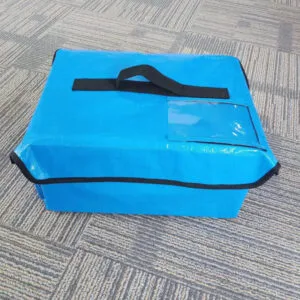
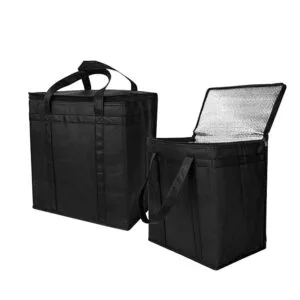
For an application-specific starting point, review Tempk’s insulin pens cold-chain packaging solution. If the labeled requirement is 2°C to 8°C, the pharmaceutical 2–8°C packaging page explains the information needed to discuss a complete packout. Neither page replaces route-specific qualification.
Monitor the shipment and define the receiving decision
A temperature logger records conditions; it does not provide thermal protection and does not automatically determine whether insulin is usable. The monitoring plan should state the logger model, accuracy, sampling interval, start and stop points, sensor position, data ownership and review responsibility. Receiving staff also need a written process for checking the shipment, downloading data, identifying an excursion and holding affected product until an authorized decision is made.
When an excursion is suspected, keep the product identified and segregated, preserve the time-temperature record and contact the responsible pharmacist, manufacturer or quality unit. Do not decide from appearance alone. FDA notes that extreme heat or cold can reduce effectiveness and directs users with product-specific questions to the manufacturer; the FDA insulin storage guidance is a useful public reference, but the exact label remains controlling.
Questions to close before release
- Is the current product label attached to the shipment specification?
- Are opened and unopened products handled under the correct separate rules?
- Has the design been checked for cold spots as well as warm spots?
- Are conditioning, loading, sealing and staging instructions controlled?
- Does the tested duration include realistic delays and handoffs?
- Are logger placement and excursion review responsibilities documented?
Choose packaging from the requirement, not the keyword
For insulin logistics, the safest sequence is label first, route second and packout third. Share the exact product requirement, lane, payload and monitoring plan when requesting a packaging review. Tempk can then discuss component and packout options without presenting a cold pack as a universal insulin-storage solution.