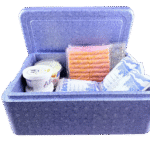
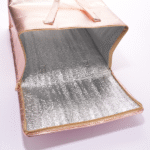
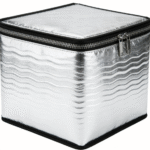
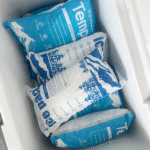
Dry ice packaging keeps a payload frozen only when the entire packout works as one system: insulation slows external heat gain, solid carbon dioxide absorbs heat as it changes directly to gas, the layout controls where that cooling acts, and the package releases gas without losing structural protection. Neither a box specification nor a dry-ice quantity proves performance by itself. The design must be tied to the payload, route, exposure profile, delay allowance, handling method and acceptance criteria, then supported by appropriate test evidence.
This guide covers that system-design decision. It does not provide a universal dry-ice amount, guaranteed hold time or carrier acceptance. Use the separate coolant identification and preparation guide if “dry ice pack” could mean solid CO2, a sealed reusable pack or a water-activated sheet.
1. Define the frozen-shipping result before choosing materials
Start with a written user requirement rather than a preferred box or a rule of thumb. “Keep it frozen” is incomplete unless the product owner defines the acceptable product condition, starting state, payload range and end point. A food shipment, an industrial sample and a regulated pharmaceutical product can require different evidence even when all use dry ice.
| Design input | What to define | Why it changes the packout |
|---|---|---|
| Payload condition | Approved starting condition, allowable exposure and any freeze sensitivity | Determines whether direct dry-ice contact is acceptable and what the test must measure |
| Payload range | Minimum and maximum mass, volume, shape and thermal mass | A lightly loaded shipper can behave differently from a full one |
| Journey boundary | Packing start, pickup, hubs, storage, delivery and unpacking end | Defines the actual duration and where uncontrolled exposure can occur |
| Ambient exposure | Season, geography, transport mode, dwell points and credible delays | Sets the heat challenge that the package must resist |
| Handling constraints | Orientation, vibration, opening risk, available workspace and trained staff | Affects component retention, closure, repeatability and gas release |
| Acceptance criteria | Product limits, sensor rules, test duration, permitted deviations and release decision | Determines whether a test result can support the intended use |
If these inputs are unknown, a supplier can offer component options but cannot establish a defensible complete-system performance claim. The Route Risk Checker can help organize lane and delay inputs before a test profile is selected.
2. Understand how the complete packout manages heat
Dry ice is solid carbon dioxide. It changes directly from solid to gas rather than leaving meltwater. During that change it absorbs heat, while the insulation and outer package limit how quickly heat enters from the surroundings. Payload thermal mass, internal air gaps, conduction paths, openings and component contact all influence where heat moves and how quickly the dry ice is consumed.
The cold source is therefore only one part of the system. Extra dry ice cannot reliably compensate for an undefined payload, a major insulation gap, an unsuitable closure or an exposure profile that was never tested. Conversely, a high-performance insulation material does not establish hold time unless the complete packed configuration is evaluated.
Packaging design can also change the sublimation rate. The FAA notes that operators need packaging-specific sublimation rates and testing data when assessing dry ice for aircraft cargo. Treat a calculator result as an engineering starting point, not a released quantity; the Dry Ice Calculator helps structure inputs that still require package- and route-specific verification.
3. Specify every layer of the packaging system
| System layer | Design question | Evidence or control needed |
|---|---|---|
| Primary product container | Can it tolerate the intended cold exposure and normal transport forces? | Product-owner approval, closure integrity and compatibility limits |
| Secondary containment | Is leakage, contamination or component separation a concern? | Defined containment and absorbent arrangement where applicable |
| Thermal separation | Must direct contact or localized overcooling be prevented? | Divider, spacer or controlled placement in the approved drawing |
| Dry ice | What form, placement and starting quantity does the design use? | Weighed quantity, loading tolerance and replenishment rule if allowed |
| Insulation | What geometry, thickness, joints, lid fit and material condition are required? | Component specification, assembly drawing and incoming inspection |
| Void control | Can the payload or coolant shift during handling? | Cushioning, dunnage and a repeatable loading pattern |
| Gas-release path | Can carbon-dioxide gas escape without opening the structure? | Approved closure and venting method; never an airtight seal |
| Outer protection | Can the package remain intact and keep labels visible? | Closure instruction, damage criteria and transport-mode review |
The insulated cooler selection guide covers material permission, usable capacity, venting and reuse checks. This page owns the next decision: how the selected components work together as one controlled shipping configuration.
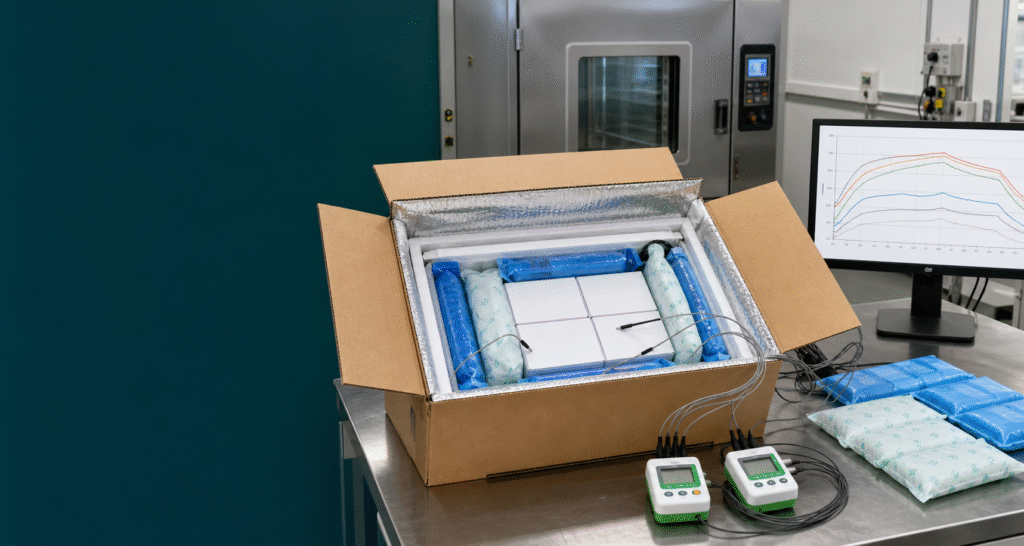
4. Control coolant placement, contact and internal voids
Dry ice placement changes the internal temperature field. A layer above the payload, distribution around several sides or placement in a separate compartment can produce different results. The correct arrangement depends on product tolerance, container geometry, loading pattern and the test evidence supporting that exact configuration.
Do not let a generic instruction override product compatibility. Direct contact may be appropriate for some frozen goods but can damage another product, container closure, adhesive or electronic component. Use the separation defined by the approved design. Control void space so that neither payload nor dry ice migrates into an unintended position during handling.
A packing instruction should identify component part numbers or unambiguous descriptions, loading sequence, dry-ice form and quantity tolerance, orientation, divider position, void fill, closure and gas-release path. For the hands-on packing and final-release sequence, use the dry-ice cooler packing checklist.
5. Convert the real journey into a defensible test challenge
A laboratory test is useful only when its profile and configuration match the decision being made. WHO guidance for time- and temperature-sensitive pharmaceutical products connects container qualification to the complete packaging assembly, conditioning regime, payload range, thermal mass, temperature-monitor placement and anticipated route exposure. That framework is product-specific guidance, not a universal rule for every shipment, but it illustrates the evidence discipline needed for a defensible claim.
Helpful decision tools
Check the details before you choose packaging
These quick tools can help you compare route risk, sizing needs, coolant choices, and packaging details before you request a quote.
Coolant & PCM Reference
Compare coolant and PCM options when a route needs added temperature support.
Compare optionsRoute Risk Checker
Review lane conditions before selecting packaging for real operating requirements.
Check route riskInsulation Material Drop Resistance
Review drop resistance and handling factors before choosing insulation materials.
Check resistanceRoute profiling should cover the journey from packing through receipt, including modes, hubs, storage, weekend or customs delays and seasonal conditions. Package scale matters: a small parcel and a pallet can experience different handling and ambient exposure. When a standard parcel profile is suitable, ISTA describes Procedure 7D and Standard 7E as development and thermal-transport testing resources; ISTA Standard 20 provides a broader design and qualification process for insulated shipping containers.
Select the profile because it represents the intended decision, not because it creates an attractive result. Document why the profile, duration, payload case and acceptance criteria are appropriate.
6. Follow an eight-step design-to-evidence workflow
- Approve the product condition, allowable exposure and start/end points of the protected journey.
- Define minimum and maximum payload cases, including mass, volume, geometry and thermal mass.
- Map the route, modes, handoffs, ambient risks, dwell periods and delay allowance.
- Select compatible primary containment, separation, dry-ice form, insulation, outer protection and gas-release method.
- Create a controlled drawing and packing instruction for every component and loading position.
- Define test profiles, sensor locations, calibration status, acceptance criteria and sample quantity under the governing quality process.
- Run development or qualification tests, investigate deviations and retain the raw data, configuration record and report.
- Release the design with training, routine packing records, change control and a rule for requalification.
The Packaging Selector can help narrow component options, but it does not replace compatibility review or complete-system testing.
7. Place sensors to answer the actual acceptance question
| Evidence | What it can support | What it cannot prove alone |
|---|---|---|
| Material or component data | Specified properties of the tested insulation, box or container component | Complete packout hold time on a real route |
| Development chamber test | Comparison of designs under a defined laboratory profile | Performance outside that profile or with another payload |
| Operational qualification | Operation across defined limits and controlled challenge conditions | Routine execution by every packing site without process controls |
| Performance qualification or field shipment | Performance of the released configuration under the approved protocol | Unreviewed routes, seasons, component substitutions or payload extremes |
| Routine shipment logger | Recorded temperature at its location during that shipment | Temperature protection by itself or conditions at unmonitored locations |
Sensor locations should address likely hot and cold points, not merely the easiest place to insert a logger. Record sensor identity, calibration status, sampling interval, placement and relationship to the product. A center reading can miss a cold boundary near dry ice; a wall reading can miss a warm payload core. The protocol should explain which locations control acceptance.
8. Protect the released design with change control
A passing result belongs to the tested configuration and conditions. Review the evidence before routine use, and escalate any change that could alter heat entry, coolant consumption, internal temperature distribution, gas release or handling.
- payload type, primary container, starting condition, minimum or maximum load;
- dry-ice form, supplier specification, quantity, placement or replenishment practice;
- insulation material, thickness, joints, lid, vent path, outer carton or closure;
- route, carrier, mode, geography, season, dwell time or delay allowance;
- packing site, equipment, instruction, operator sequence or reuse condition; or
- test profile, sensor location, acceptance criteria or product requirement.
The review may conclude that documentation alone is sufficient, that a focused engineering test is needed or that the complete qualification must be repeated. Do not silently substitute a component because its nominal dimensions look similar.
9. Frequently asked questions
How does dry ice packaging keep products frozen?
Insulation limits heat entering the package, while solid carbon dioxide absorbs heat as it changes directly to gas. The payload, dry-ice placement, internal gaps, insulation and ambient exposure determine how the complete system behaves.
How much dry ice should be used in a shipping box?
There is no universal quantity. Define payload, container, route, ambient profile, duration, delay allowance and acceptance criteria, then support the selected quantity and layout with appropriate evidence. A calculation is an input to verification, not a performance guarantee.
Does an insulated box prove a shipment will stay frozen?
No. Insulation is one component. Performance belongs to the complete packout under defined conditions, including the payload, dry ice, arrangement, closure, exposure profile, sensor plan and acceptance limits.
Does thermal qualification also prove carrier acceptance?
No. Thermal evidence and dangerous-goods acceptance are separate. US rules require dry-ice packaging to permit carbon-dioxide gas release, and air carriers may impose additional conditions. Use the FedEx dry-ice acceptance checklist for that carrier-specific task, and verify the current FAA guidance and 49 CFR 173.217 for the applicable US shipment.
If the main question is duration rather than system design, the dry-ice pack duration guide explains why coolant type, payload, insulation and use case must be identified before estimating time.